Hanyanya Community Legal Empowerment Project
The Bernstein Institute’s engagement in Zimbabwe began through the Legal Empowerment Learning Lab, co-facilitated with Mela Chiponda, whose work has long centered on feminist participatory action research (FPAR) with communities affected by mining and climate-related displacement. Through this collaboration, communities in Chimanimani, Odzi, and Hanyanya emerged not only as partners, but as educators—sharing grounded knowledge with global practitioners and researchers. These exchanges revealed a clear demand from community leaders for more targeted legal empowerment tools to support their ongoing advocacy. Since 2023, the Bernstein Institute has undertaken four trips to Zimbabwe, working alongside these communities to co-develop trainings on land rights, indigeneity, free, prior, and informed consent (FPIC), and the rights to culture and water under domestic, regional, and international law.
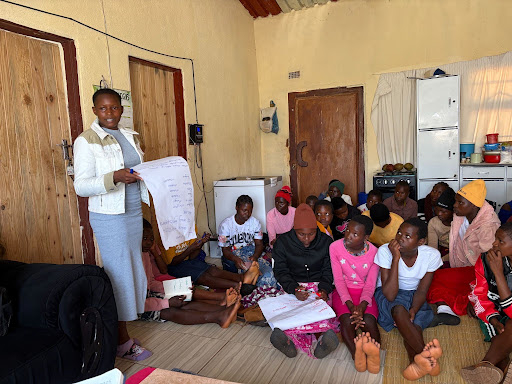
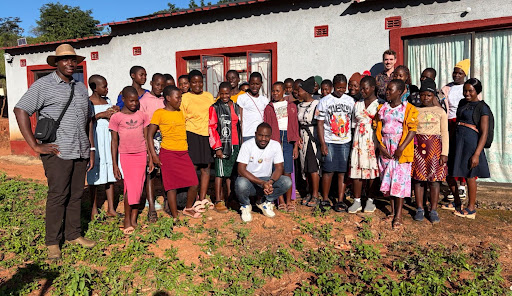
During this time, the Institute has supported a range of community-led initiatives designed to strengthen respect for their local governance and advocacy. This has included facilitating participatory mapping exercises, helping develop a community declaration that documents Indigenous governance structures and traditional decision-making processes, and supporting an Urgent Action submission to the United Nations Committee on the Elimination of Racial Discrimination highlighting the risks posed by lithium mining in Bikita near Hanyanya. During a recent visit in April, the Institute also expanded its engagement with youth in Hanyanya, offering an introduction to legal empowerment that connected civics education with lived community dynamics. Through interactive learning and role play, young people explored how law shapes their lives and how they can contribute to ongoing land protection efforts.
Across these initiatives, the Bernstein Institute’s role has been to support communities in building the knowledge, tools, and collective strategies needed to both mitigate harm and proactively defend their ancestral lands. By strengthening intergenerational leadership and centering community-defined priorities, this work contributes to broader efforts to protect land, water, and sacred sites in the face of increasing extractive pressures.