

Participants
Third Cohort (2025-2026)
The Bernstein Institute has offered two adaptations of the Lab since 2020. Meet our first and second cohorts.
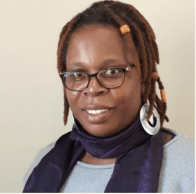
Melania Chiponda (co-organizer) is an African Ecofeminist, popular educator and participatory action researcher. She believes that education should be a collective, transformative and empowering process that should raise critical consciousness and enable participants in the learning process to understand the world in a way that is liberating. Based on her values and beliefs, Melania has landed herself into enriching spaces that challenge structural injustice, systemic oppression, and extractivism as a development model to rethink, reimagine, and nurture hope. Melania works with the working class, peasant and indigenous women and groups across Africa and worldwide to defend lands and territories, build movements, honour, and produce alternative knowledge that speaks to people's realities.
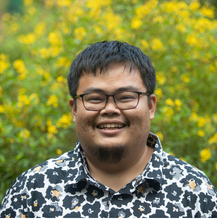
Tom Weerachat (co-organizer) is a community trainer, teacher, and a Mekong Region activist based in Chiang Mai, Thailand. As a Global Lead on Community-led Advocacy at International Accountability Project, Tom supports local communities and civil society groups globally to assert their right to information and meaningful participation in development processes. Tom co-produces global community focused training materials with local partners and leverages community-led expertise to financial institutions and governments. Tom has many years of experience working with local communities and collectives on community-led research and advocacy to change how development is designed, funded, and implemented.
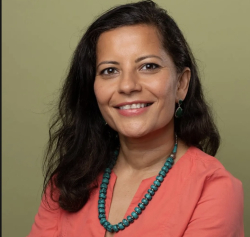
Sukti Dhital (co-organizer) is the Executive Director of the Bernstein Institute for Human Rights at NYU School of Law. She also serves as a Supervising Attorney with the Global Justice Clinic at NYU Law, where she oversees legal empowerment projects spanning jailhouse lawyers and immigrant rights. Previously, Sukti was the Executive Director and Co-Founder of Nazdeek, a legal empowerment organization committed to bringing access to justice closer to marginalized communities in India. She worked closely with affected community members and social movements to advance human rights through a community-driven approach, with a focus on indigenous and Dalit women.
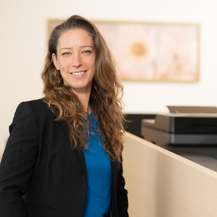
J. Ashlee Albies is a civil rights lawyer based out of Portland, OR. Ashlee represents community
groups and advocates in impact litigation, as well as workers and those injured by government conduct in individual litigation in the United States. Ashlee has presented at community education and continuing legal education seminars on the First Amendment, free speech, creative uses of the law, trial advocacy, and civil rights litigation, as well as helping to organize educational seminars in Oregon prisons. She is past co-chair of the Portland chapter of the National Lawyers Guild (NLG), past chair of the Oregon State Bar Civil Rights and Labor and Employment Sections, and currently serves on the board for the National Police Accountability Project.
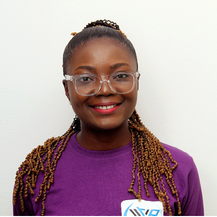
Grace Appolos is a lawyer and programs manager at We the People, Nigeria. With a passion for social and environmental justice, Grace uses her legal expertise to advocate for the rights of marginalized communities affected by climate change and train young activists at We the People’s Rights Academy to take up human and ecological rights activism. She researches, develops policy recommendations, and engages in strategic litigation to promote human rights and environmental justice. In addition to her legal and advocacy work, Grace is also a cartoonist and animator, using her craft as a storytelling model to promote environmental and climate justice. Through powerful visual narratives, she raises awareness, educates communities, and inspires action toward a more sustainable, inclusive, and just future.
Al Brooks (he/any) is an organizer with Unlock the Bar, the Black Youth Project 100, and the Malcolm X Grassroots Movement's Oakland Chapter. He is also a civil rights attorney, representing incarcerated people moving for justice in California and Alabama, as well as challenging the death penalty. Al is also a legal advisor for the Garifuna Nation in their work to protect their ecosystems and establish indigenous sovereignty and nationhood across borders. Al has worked or interned for the Lawyers’ Committee for Civil Rights, the Phillips Black Project, the Legal Defense Fund, the Bronx Defenders, the Capital Appeals Project/Promise of Justice Initiative, and the Legal Aid Society of New York. During law school, Al directed the NYU Law Prison Teaching Project. Al is an Adjunct Professor of Law Practice at Tuskegee University.
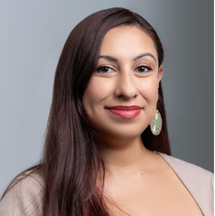
Claudia E. Muñoz Castellano is a formerly undocumented community organizer and strategist with 20 years of experience. She has organized and won collaborative community campaigns across multiple issue areas of the immigrant justice movement, particularly at the intersection with labor and the criminal legal system. She resides in Texas and believes that just as the South has been a cruel laboratory for oppression and harm, it can also be a place where people most impacted by oppressive systems can explore and reach liberation, joy, empowerment, and a life beyond survival. Claudia is a 2024 Soros Justice Fellow and serves on the Just Futures Law Board of Directors.
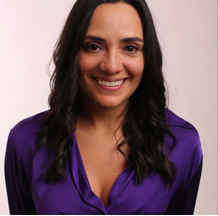
Tania Espinosa was born and raised in Mexico City. She studied law at Universidad Iberoamericana in Mexico City and has a Master’s Degree in International Legal Studies from The Fletcher School of Law and Diplomacy – Tufts University in Massachusetts, US, where she developed her thesis about the labour rights of informal workers within Mexico City’s waste management system. Since 2005 Tania has practiced international human rights law and since 2013 she has focused on labour rights in the waste pickers’ sector. Tania started working at WIEGO in 2015; she was appointed Focal Cities Coordinator for Mexico City in 2017, where she accompanied several informal workers’ movements, and in 2023 she was appointed Latin America Coordinator for the Law Program. As a human rights lawyer, she has also worked for Mexico’s Ministry of Interior Human Rights Office (2008 – 2011) and as a consultant for the Inter-American Commission on Human Rights in Washington, D.C. (2013). Since 2016 Tania has been a member of the board of the Human Rights Commission of Mexico City and in 2021 she was elected as a member of the board of the National Human Rights Commission in Mexico by the Senate.
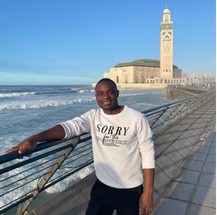
Tapiwa Gorejena. Firstly, I am a husband to one wife and a father of three beautiful children: Zoey, Tyler, and Tida. I am a lawyer based in Zimbabwe with a previous job as a labor lawyer representing workers and workers' unions for legal reform and arbitrations at one of the most renowned law firms in Zimbabwe, Matika and Gwisai. I also volunteered at an organization called Zimbabwe Women Lawyers Association, working with marginalized women who were victims of sexual violence, assisting them in seeking justice and legal empowerment. In May 2023, I joined WIEGO ( Women in Informal Employment Globalizing and Organising) as a law program officer whose primary role is to work on the Administrative Justice work and support organisations of street vendors in Southern and East Africa who are affiliates of StreetNet International in their struggle for legal recognition. The fight is also for collective bargaining and access to public space.For the past two years, I have worked with the IDWF (International Domestic Workers Federation) affiliate in Zimbabwe in the pilot program of legal empowerment of domestic workers (assisted by Bernstein Institute), who are always marginalised and less thought of when such programs are implemented.
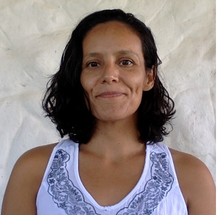
Soy Laura Guerrero, socióloga y formo parte del equipo técnico del Consejo Comunitario Cocomasur, una comunidad de familias afrocolombianas asentadas en un territorio colectivo de gran riqueza ambiental y cultural en la región Darién, Caribe colombiano. Desde este espacio, apoyo procesos de fortalecimiento de la gobernanza y la autonomía territorial, promoviendo el derecho de las comunidades a decidir sobre su territorio y sus formas de vida. También soy parte de la Red de Colectivos de Mujeres de Necoclí Voces en Movimiento, donde tejemos estrategias colectivas para el cuidado y autocuidado del agua, del territorio, de las mujeres y de la vida. Tanto en Cocomasur como en el colectivo de mujeres, impulsamos procesos de formación y fortalecimiento comunitario a través de la investigación y la creación colectiva, el encuentro de saberes y el uso de estrategias tecnológicas, artísticas, literarias y lúdicas.
I am Laura Guerrero, a sociologist and a member of the technical team of the Consejo Comunitario Cocomasur, a community of Afro-Colombian families settled in a collective territory of great environmental and cultural wealth in the Darién region of the Colombian Caribbean. From this space, I support processes to strengthen governance and territorial autonomy, promoting the right of communities to decide over their territory and ways of life. I am also part of the Voces en Movimiento Network of Women's Collectives in Necoclí, where we weave collective strategies for the care and self-care of water, the territory, women, and life. In both Cocomasur and the women's collective, we promote community training and strengthening processes through research and collective creation, the exchange of knowledge, and the use of technological, artistic, literary, and playful strategies.
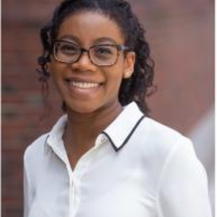
Tasleemah Tolulope Lawal ("Tolu") (she/her) is an organizer and attorney. She has worked at the NYU Law Center on Race, Inequality and the Law as an attorney since September 2022. Tolu is a co-founder and co-lead organizer of Unlock the Bar (UTB), a New York-based campaign and coalition of allied and systems-impacted law students and lawyers who are advocating for a just and equitable legal profession. She also is a leader in the People's Campaign for Parole Justice in New York. Prior to joining her current work at the NYU Center, she was a Racial Justice Legal Fellow with the New York City Commission on Human Rights, working on legislative and policy analysis, public education and community collaboration, legal research and restorative/transformative justice through a race-specific focus. While a student at NYU Law, Tolu served as the Co-Chair of the Black Allied Law Student Association (BALSA) and one of the lead organizers of the Racism Lives Here Too campaign. She worked at the Center as an intern in 2017, as well as an intern at the ACLU Racial Justice Project in 2018, and with NYU's Juvenile Defenders Clinic from 2018 to 2019. She received her J.D. from New York University Law School in 2019 and received her B.A. from Duke University in 2014.
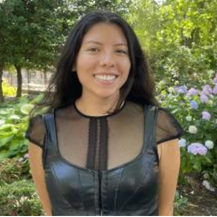
gabriela piñeros medina (she/they) is a Colombian anti-carceral and anti-imperialist organizer. They love spending time with family and friends, and enjoy learning from nature. gabriela’s love for humanity and Mother Earth guides her in her commitment to the liberation of all oppressed people. gabriela lives in New York and works at the Bernstein Institute for Human Rights at NYU School of Law as the Program Manager. gabriela has also worked with the Student/Farmworker Alliance, The Door, and the Jailhouse Lawyers Initiative. gabriela graduated Summa Cum Laude from the University of Florida where they earned a BA in Criminology and in Gender and Sexuality Studies.
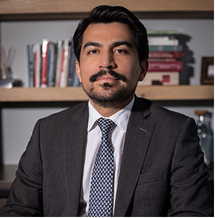
David Mejía. I am a human rights attorney specializing in criminal justice, with a focus on legal empowerment and the criminalization of marginalized communities. My work centers on supporting incarcerated individuals and their families, emphasizing disability rights, mental health, and torture prevention in the criminal justice system, providing legal and advocacy support through Documenta. I approach my work with a critical perspective, seeking to challenge systemic injustices and engaging in community-driven legal strategies and contributing to transformative justice efforts.
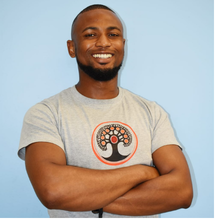
Awande Mshotana is a social justice activist dedicated to legal empowerment for underserved and previously disadvantaged communities in South Africa. Based in Cape Town, he has worked for the past three years with the People’s Legal Centre, a non-profit organisation committed to increasing access to justice through paralegal education for community leaders and activists. He currently serves as the organisation’s Head of Education. Awande holds a Bachelor of Laws (LLB) degree, awarded cum laude, from the University of South Africa. Notably, he completed his studies while incarcerated, demonstrating exceptional resilience and commitment to justice. Beyond his work in South Africa, Awande is a founding fellow of the Global Freedom Fellowship, hosted by the Incarceration Nations Network. In 2024, he had the honour of delivering a guest lecture at the University of Stellenbosch for LLB students, where he discussed Criminal Justice in Action module. The same year, he was a panelist at the Flashlights Conference in October, hosted at New York University School of Law by the Jailhouse Lawyers Initiative and the Robert and Helen Bernstein Institute for Human Rights. Through his work, Awande continues to champion access to justice, legal education, and social change, particularly for those most marginalized by the legal system.
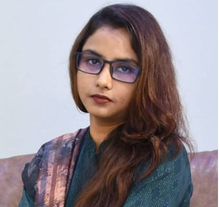
Umme Salma Poppy. I’m Poppy from a coastal region of Bangladesh. I am a development professional committed to promoting social justice by supporting marginalized communities in advancing their development priorities through a human rights and justice lens. My work contributes to just transition, community empowerment, the right to food and water, preventing gender-based violence, climate adaptation, and digital rights. With experience in advocacy, policy research, and community-driven initiatives, I am passionate about documenting indigenous knowledge, traditional practices, and community success stories to foster meaningful and transformative change.
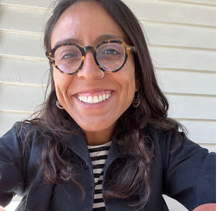
Rafaela Rodriguez has been supporting workers across low-wage industries to collectively shift power and protect their rights at work and beyond for the past 9 years. She is an experienced human rights advocate, merging her commitment to defending Indigenous and migrant rights through the implementation of solutions that focus on enforceability and centering the experiences of working people to build a just future. Rafaela is driven to work collectively through organizing among communities and raising awareness of issues at the intersection of environmental and social protections. She grew up in Mexico City and has spent significant time working and living in Latin America, East Africa, and the USA. When she is not working, she spends her time among mountains, rivers, & oceans.
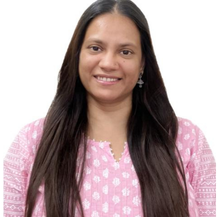
Anupradha Singh is a lawyer practicing before the Supreme Court of India, the Delhi High Court, and the District Courts of Delhi. With over seven years of experience, she has worked extensively on issues such as the Right to Housing, Environmental Justice and Climate Change, Criminal Justice, and Women’s Rights. Ms. Singh has been involved in several landmark cases, including Ajay Maken v. Union of India (Right to Housing), In re: Problems and Miseries of Migrant Labourers, and Bandhua Mukti Morcha v. Delhi Urban Shelter Improvement Board (seeking three meals a day for the homeless in Delhi’s shelter homes), among others. In 2022, she co-founded Nyay Neeti Foundation, along with her colleagues, to provide free and effective legal aid to marginalized and vulnerable communities through the existing legal framework.
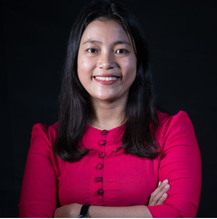
Yen Snaing (she/her) Yen Snaing is a Program Manager for the LEAD program at EarthRights International, where she brings over a decade of experience in supporting civil society organizations and communities affected by extractive industries and large-scale infrastructure projects across the Mekong region (Cambodia, Laos, Myanmar, Thailand, and Vietnam). With a strong passion for climate justice and community building, Yen is deeply committed to grassroots, community-led movements. Her work focuses on helping communities build resilience in the face of climate change and environmental challenges that impact their livelihoods. Yen’s expertise centers on defending vulnerable communities, particularly through media, communications, and empowering local people to assert their rights. She has worked tirelessly to help communities realize and mobilize their potential to protect their land, resources, and people, especially in opposition to multinational development projects that threaten their way of life.
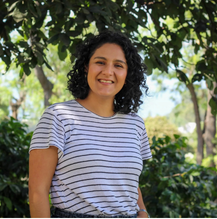
Andrea Tock. I am a grassroots justice defender and an intersectional feminist activist dedicated to the legal empowerment of Indigenous women and girls in Guatemala. I believe in building community power through participatory research and learning activities that center women and girls, validating them as subjects of rights who freely exercise their agency. As the Director of Impact and Learning at the Women’s Justice Initiative (WJI), my work challenges power and traditional patriarchal structures embedded in Guatemalan society. I am active in several feminist initiatives in Guatemala, including the Feminist Assembly, a space for reflection and political co-creation among feminist activists across the country. I also serve on the editorial board of La Cuerda, a feminist magazine. In the near future, I hope to create better ways to share the knowledge I have gained through my work and life experiences with other grassroots feminists and human rights defenders. My goal is to strengthen collective action so that everyone—especially women and girls—can live lives free from violence. I hold a BA in Political Science from Rafael Landívar University and an M.Sc. in Social Studies of Gender from Lund University. I also participated in the Human Rights Advocates Program at Columbia University. I’m an avid fiction reader who loves long walks with my dogs and experimenting with new vegetarian recipes.