

Profiles in Leadership
Welcome to Profiles in Leadership, a page featuring current fellows and alumnae of the BWLC Fellows Program at NYU Law.
Current Fellows
- Emille Taylor '28, BWLC Fellow and AnBryce Scholar, was featured on NYU Law's Student Spotlight on March 18, 2026.
- Maria Weston Kuhn '28, BWLC Fellow and Weinfeld Program Dean’s Scholarship recipient, was featured on NYU Law's Student Spotlight on January 29, 2026.
- Vanessa Attah '26, BLWC Fellow and AnBryce Scholar, was featured on NYU Law's Student Spotlight on September 19, 2025.
Alumnae
See what our Fellows from the Class of 2021 through 2026 are up to! Below, alumni of our Fellows Program share career insights, their path to leadership, and key takeaways from the BWLC.
Keiana James '23
Immigration Staff Attorney at The Bronx Defenders

I work on the New York Immigrant Family Unity Project (NYIFUP) team. NYIFUP is the city’s right to counsel program for detained low-income immigrants, and was also the first of its kind in the U.S. We intake clients from Varick Street Immigration Court and Elizabeth Immigration Court in NJ and represent them in their removal cases from trial level through appeal.
- Read Keiana's interview
How did you come to be in your current position? How has your path mirrored what you envisioned during your first year at NYU Law (or not)?
I came to my current position as a born and raised New Yorker from an immigrant family, so my interest in this work was very tied to my own experience. When I started at NYU, I knew I wanted to be a public defender, but I was interested in both criminal and immigration related positions. But after I did the Immigrant Rights Clinic my 2L year, I was pretty locked in on immigration. A big part of my choice was the natural intersections of criminal law in the immigration field – often our clients are in removal proceedings because of contacts with the criminal legal system, so my work involves a level of proficiency with criminal law and the related immigration consequences. I just finished my third year as a public defender, and I’d say that I didn’t envision how different the trust building process can be with each client. While I do share certain identities with my clients—as a Black woman who grew up in the city and watched a parent navigate these systems—that is often only an entry point and not a guarantee of how my relationship with any given client will go. Nonetheless, I’ve been deeply moved by the ways my clients invite me into their lives and give me a chance to connect with them and learn how to support them at the very consequential crossroads where I meet them.How does leadership — by others, for others, with others — present itself in your daily life?
I think my work has definitely informed how I look at leadership in my daily life, particularly because I am working with people who are having their agency stripped from them, often without recourse. In response, I often see people look to me as an attorney hope that I will lead by unilaterally making hard decisions or presenting a certain way in the court room; actions that we maybe ascribe to people in leadership positions, but that often skirt the substance of what I think is true leadership. In my life I look at leadership as the moments where we can look around a room and see how to pull the best of everyone to the surface and create a space where they feel they can access that piece of themselves and share it. I think this materializes in very different ways depending on the space, but often for me it involves supporting people—be it clients, friends, etc.—as they navigate the different barriers they’re facing to sharing themselves and confronting very vulnerable feelings. I’ve felt like the best leader when I’m not warping who I am or what I believe to present it in a more digestible or acceptable manner. I think that’s why, in turn, I tend to lead by trying to help others get to that point too—because when we’re all operating in that space I think we are in the best position to accomplish whatever we’ve set out to do, together.What lessons/takeaways/words of wisdom from the BWLC Fellows Program do you find yourself leaning on most now?
I had a really impactful conversation with K.M. [a Fellows Program facilitator] during the fellows program about the energy we all bring to a space and finding a sustainable balance that allows you to show up and make an impact without stretching yourself too thin or otherwise setting a course for eventual burnout. I lean on this a lot in all realms of life because there’s definitely a parallel between my work and personal life and my desire to support the people around me. But we all have our limits, even when we fight them. Over the years I’ve learned to embrace being vulnerable about my limits and capacity, which allows me to direct my energy in a very precise and more effective manner and also in turn allows my community to step in to support me when I need it. I think before the BWLC fellows program I really pushed myself to my limits in pursuit of goals and to make an impact. In recent years I’ve worked hard to humanize myself in all the spaces I am in which has allowed me a lot of grace and supported me greatly in achieving my goals and showing up for those around me, while knowing when I need to step back and take a breath. It has ultimately helped me to merge my professional and personal personas in a way that brings me a lot of peace because I can show up as myself no matter where I am, which has benefitted me immeasurably.
Shirley LaVarco '22
Civil Rights Associate, Kaufman Lieb Lebowitz & Frick LLP
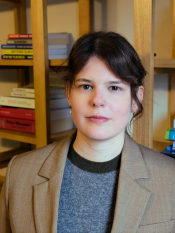
I work to hold police, corporations, and other powerful institutions accountable for civil rights violations through litigation and other forms of advocacy. My work spans police accountability, wrongful convictions, disability rights, employment discrimination, and other civil rights matters.
- Read Shirley's interview
How did you come to be in your current position? How has your path mirrored what you envisioned during your first year at NYU Law (or not)?
I went to law school because I wanted to be a public defender. I grew up poor, with a parent in prison, and I saw firsthand how the systems that are supposed to protect us—police, prosecutors, and prisons—often do a lot more harm than good. I wanted to help balance the scales, or at least to be a damned good advocate for those who needed one the most.During law school, I got to know some brilliant lawyers who are doing meaningful work in public defense, appellate advocacy, civil rights, and impact litigation. From them I learned there is no one right path, and that one of the best things about being a lawyer is getting to learn new things every day. I took those lessons with me to my first job at Civil Rights Corps, where I represented survivors of police violence in federal court and tried to make good law in the process.
More recently, I joined Kaufman Lieb Lebowitz & Frick LLP when I was ready to venture outside of the non-profit sector. At KLLF, I’ve had the opportunity to continue my work holding police accountable while also learning new practice areas. My docket now includes police misconduct, disability rights, employment discrimination, and other civil rights matters.
If I could tell my 1L self anything, it would be that you don’t need to plan quite so carefully. The right people will find you and vice versa, the work you are called to do is out there waiting for you, and every lesson you encounter along the way is well worth it.
How does leadership — by others, for others, with others — present itself in your daily life?
U.S. culture often conditions us to think about leadership in terms of who is the first, the best, the brightest, and so on. It’s a quite limiting view, and it can take a lifetime of unlearning, but there is a world of good to be done in the process.I’m learning new ways to conceive of and practice leadership every day. Lately, I’ve been most interested in leadership as problem solving in service of others. How can I use my talents and resources to help a client, a colleague, a friend, or loved one? How can I lean on and learn from the talents and resources of others to achieve an even greater outcome than I could on my own? Sometimes that means talking less in meetings and listening more. Sometimes it means being brave enough to share a creative new idea and inviting others to help sharpen it. Often, it means being curious about other people, how they think, and what I can learn from them. Always, it means being open to change, growth, and new ways of looking at and engaging with the world and people around you.
What lessons/takeaways/words of wisdom from the BWLC Fellows Program do you find yourself leaning on most now?
The BWLC Fellows Program was an incredible resource in so many ways. One of the most valuable things a program like this one can do is give us the opportunity to interrogate who we are, show up authentically, and connect with others on a deeper level.
For me, 1L often felt lonely. I was hyper-conscious of my family’s poverty and stuck mostly to myself for fear of being ostracized by my peers—or of simply not fitting in. BWLC helped me move past that by giving me the opportunity to tell my own story and, just as importantly, to hear the stories of those around me. I came to understand my classmates’ struggles, their fears, and their goals and dreams. I soon realized I was not so different after all, and that life is a lot less lonely—and a lot more fulfilling—when you let others in.
Tamara Matheson-Holmgren ’24
If/When/How Reproductive Justice Fellow, Elephant Circle
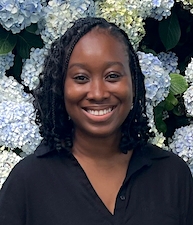
Elephant Circle is a birth justice organization based in Colorado but doing pockets of national work. As an If/When/How Fellow at Elephant Circle I do legal and policy work to advance birth justice. On the legal front, I draft complaints for people who have experienced discrimination during the perinatal period or in the family policing system, as well as provide technical assistance to organizations and individuals. Policy-wise, I assist throughout the Colorado legislative session by drafting testimony, tracking bills, and analyzing policy from Colorado and other states.
- Read Tamara’s interview
How did you come to be in your current position? How has your path mirrored what you envisioned during your first year at NYU Law (or not)?
In my current role, I am doing everything I hoped for when I applied to law school. The reason I knew about Elephant Circle at all is directly tied to the BWLC. When my BWLC alumna mentor Samantha Lee ’16 and I met to talk about job opportunities after law school, she zeroed right in on Elephant Circle, flagging its alignment with my interest in maternal health. A year later when I applied for an If/When/How Fellowship, and the interviewer mentioned Elephant Circle was one of the placement organizations, I knew then and there I wanted to work there.How does leadership — by others, for others, with others — present itself in your daily life?
In my current position, we take seriously that our clients are leaders — of their own narrative, of their experiences, and of what they want accountability to look like. It’s a model of lawyering that prioritizes a midwifery vision of care and leadership, facilitating and working in partnership rather than dictating from the top down what is possible. I truly enjoy working in an environment that actively facilitates collaborative leadership, putting people closest to the story in the driver’s seat.At the BWLC, we believe in “paying it forward, paying it back, paying it sideways.” How has this phrase and practice been personally meaningful to you, during and/or since law school?
Since graduation from NYU Law, I have made it a priority to model this phrase. During law school, especially while job hunting, I was struck by the generosity with which other lawyers shared their time and advice with me. I took up cold emailing and informational interviewing, encouraged by my mentor, my fellow Fellows — and supported by all we learned during our leadership development programs — and was met time and again with encouragement. Now that I am an alumna and in the field myself, I aim to do the same. I’m always happy to meet with current law students or applicants.
Zoe Ridolfi-Starr ’21
Assistant Attorney General, Civil Rights Bureau, Office of the New York State Attorney General
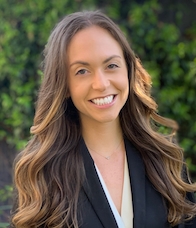
The Office of the New York State Attorney General is both the People’s Lawyer and the state’s chief legal officer. As an Assistant Attorney General, I work to protect and advance the civil rights of all New Yorkers and promote equal justice under the law. The Civil Rights Bureau enforces federal, state, and local laws that protect all New Yorkers from discrimination. My affirmative litigation portfolio includes reproductive rights; LGBTQ rights; employment discrimination; bullying, discrimination, and disciplinary issues in schools; discrimination in and access to healthcare; and police misconduct. I am proud to serve as chair of the office’s LGBTQ Working Group, which coordinates, strengthens, and expands our office’s work on issues impacting LGBTQ communities, with a particular focus on those most marginalized.
- Read Zoe’s interview
How did you come to be in your current position? How has your path mirrored what you envisioned during your first year at NYU Law (or not)?
Career paths often look so much clearer in retrospect. Sitting here at my desk, in a job I love, I can see clearly how the twists and turns of my personal and professional life led me here, and I’m so grateful they did. I know how much law students struggle with that uncertainty and anxiety, so I always remind my interns and mentees that their path forward may not feel clear right now, and that's okay. Your job as a law student is to be curious, learn everything you can, work hard, and be brave when confronting change or challenges. Success will follow.Though I always knew I wanted to do social justice work, I didn’t originally envision myself in this role. As the queer daughter of lesbian moms, my most important relationships and intimate choices have always been entangled with the law. As long as I can remember, my family and I have faced legal and political obstacles and uncertainty. These experiences have made me profoundly aware of the power the legal system can have in shaping the contours of our lives. I always knew I wanted to help address issues impacting my community and others who experienced marginalization, but didn't know what form that work would take.
During law school, I experimented with many opportunities and realized that litigators play a critical role in enforcing laws on the books and vindicating the rights of communities facing marginalization, and that litigation suited my skill set and personality. So I decided to become a litigator, worked with various impact litigation nonprofits, and eventually secured a clerkship to further develop my litigation skills. In that role, I realized that government attorneys play a critical role in enforcing the law and ensuring that civil rights become realities. As I once put it to a colleague, I went to law school to learn how to write legislation with teeth, and ultimately realized I wanted to be the teeth
How does leadership — by others, for others, with others — present itself in your daily life?
At a time when some in government are using their power to sow fear, cause harm to vulnerable communities, and pursue their own greed, I feel tremendously fortunate and proud to be part of an office that operates with integrity and is deeply committed to doing good. Every day, I get to roll up my sleeves and try to make the world a better place. That’s how leadership presents itself in my daily life: I look at the problems impacting New Yorkers and use the tools available to our office to advance bold, creative solutions. I think leadership boils down to two central questions: "How can I be useful? And how can I bring others with me?" If you ask yourself those questions, and answer them with action, you will always emerge as a leader and make meaningful contributions.At the BWLC, we believe in “paying it forward, paying it back, paying it sideways.” How has this phrase and practice been personally meaningful to you, during and/or since law school?
Work can be demanding, life can be unpredictable, and the path forward can sometimes feel uncertain. Nothing has been more important to my personal wellbeing and professional advancement than building and nurturing strong relationships with people I admire and trust. As an inaugural Fellow, I was very lucky to receive training, mentorship, and support throughout my law school career from brilliant and devoted women in the legal field. My fellow Fellows developed deep bonds and have advised, supported, and uplifted each other personally and professionally throughout our careers.I am honored to serve as a mentor to current Fellows and support the BWLC as it continues its critical work to support women in the legal profession. And I have taken these lessons with me into my career: I set aside time each week to mentor or advise junior attorneys, interns, and law students, to support and collaborate with peers and friends, and to build relationships with and seek out guidance from attorneys and other leaders I admire.
Mari Dugas ’22
Cyber/Data/Privacy Associate, Cooley LLP
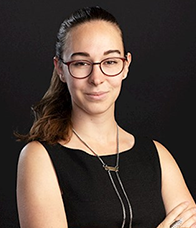
I work with clients from financial services institutions, Fortune 500 companies, and emerging tech start-ups on risk management, information security governance, and incident preparedness and response. My role is to advise them on all matters of cyber and privacy risk, as well as to provide counsel on national and international privacy and security compliance regimes and related legal issues and risks in complex commercial agreements and corporate transactions.
- Read Mari’s interview
How did you come to be in your current position? How has your path mirrored what you envisioned during your first year at NYU Law (or not)?
I began working in this field fortuitously. A mentor asked if I wanted a new challenge, trusted me to learn fast, and threw me into the world of cybersecurity and incident response. I've never looked back. As a 1L, I knew I wanted to work in cybersecurity, but didn't really know what that entailed. While at NYU Law, I got to see cybersecurity lawyering from so many angles, from summering with Cooley, where I now work, to working with experts at the Reiss Center, to interning with the legal office at US Cyber Command. I didn't expect to end up in the private sector, but I love it.
I work with clients who are pushing the boundaries of technology and innovation, all while navigating cybersecurity threats and risks and an increasingly complex legal and regulatory landscape. My work hinges on understanding what my clients do and are creating, the risks they face, and the laws that apply. I also do a lot of crisis response and management. To me, there’s nothing more fulfilling than helping a client navigate one of their worst days — a cyber incident — that is probably a new experience for them, but what I do all the time. I love helping a client make sense of what feels like a daunting situation to help them make it back to business as usual and navigate the legal challenges that come up from an incident. It’s an exercise in creativity and flexibility every day.
How does leadership — by others, for others, with others — present itself in your daily life?
Leadership happens 24/7. Sometimes it presents in obvious frameworks, like working with a partner or senior associate, but it is also in the little moments. In my incident response work for example, we often deal with high stress, fear, and uncertainty as companies navigate challenges. Leadership to me is “what tone do I set?” “How can I do small things to make someone’s life easier when everything else feels out of control?” “What can I do to innovate a process to help keep the partner and client on top of workstreams, so they don’t go to bed worrying something has been dropped?” These are leadership moments for anyone, no matter how senior or junior. They are leadership moments for others, but they’re also leadership moments with others. When working on large dynamic teams, it can be leadership to take stock of the whole team and where I am best placed to help, rather than just jumping in. I like quiet forms of leadership — taking a moment to assess the situation, the team, and everyone’s preferences and strengths, in order to be more efficient and impactful.
Leadership by others also sets the tone. I don’t forget the great leaders I have worked with. The ones who lift others up, create learning moments, and celebrate the wins. I’ve been so lucky to work with world-class leaders and I try to take notes whenever I can; there’s always more to learn!
What lessons/takeaways/words of wisdom from the BWLC Fellows Program do you find yourself leaning on most now?
There is nothing more important to me than being of service. There are communities on whose shoulders I stand. My grandmother immigrated to the United States when she was the age I was in law school. I take the experiences that she has lived and the lessons she imparted to us and use all of it in my immigration pro bono work.
I’ve also been grateful to be welcomed into the security researcher community, a.k.a. the “hacker” community. From Day One, people welcomed me into spaces to learn and grow. I feel responsible to help others have the same opportunities, especially those of us who aren’t often seeing ourselves reflected in these rooms.
It also is important to me to give back to the election and democracy communities, where I did work before and during law school. Democracy is the foundation of our country and finding avenues to use my law degree to help people access and exercise their right to vote, and understand what are often convoluted voting laws, is a common thread for me.
The BWLC fostered all of this. The Fellows program, and my cohort, encouraged us to find ways to serve that we feel personally connected to, to go out and make a difference.