

Current Global Fellows
2026-2027 Global Fellows
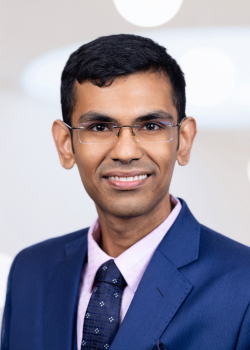
Debadatta Bose
Postdoctoral Global Fellow
db3982@nyu.edu
Debadatta Bose is Hauser Postdoctoral Global Fellow at NYU School of Law whose work is prominent in the global discourse on corporate human rights responsibility. His current research focuses on private law and business law while also engaging with international law. His widely cited research includes over 15 publications in major law reviews like Brooklyn Law Review, peer reviewed journals like ICSID Review and Business and Human Rights Journal, and his co-edited volume with Cambridge University Press, The Cambridge Handbook of Law and Responsible Business. The bulk of his scholarship investigates how law can be transformed from a tool of erasure of corporate human rights harms into one that empowers people as meaningful rightsholders. Reflecting its broader influence, his work is both taught in courses across the United States and Europe, and also was used by European governments in designing the EU corporate sustainability law.
At NYU, Debadatta will work on two projects. His first project, “Rights Over Remedies” contributes to tort and remedies literature by revisualizing private law rights of action as epistemic rights beyond purely compensatory uses of litigation. This project seeks to theorize why victims of corporate human rights abuses choose to sue corporations even when they know no compensation is forthcoming. This piece builds on his Brooklyn Law Review article, Postcolonial Private Law, that brings conversations on political and economic power into classical private law theory. Debadatta’s second project argues that Caremark doctrine, which articulates oversight duties of the board of directors, requires the board to assess and mitigate risks to third parties rather than merely to the corporation itself. This theory demonstrates the synergy between the Delaware corporate governance framework and EU corporate sustainability laws.
Prior to joining NYU, Debadatta was The Robbins Postdoctoral Scholar at the University of California at Berkeley School of Law. He earned his PhD in Law from the University of Amsterdam. He holds an LLM (cum laude) from Erasmus University Rotterdam, The Netherlands and completed his BA and first law degree from Damodaram Sanjivayya National Law University, India, graduating first in his class in both his LLM and first law degrees. He has taught private law, business law and international law courses across the United States and Europe. He has also been invited to talk about corporate governance and ESG law to business executives and civil society advocates, translating his research across a wide variety of audiences.
Center Affiliation: Center for Law and Philosophy
Research Project: Rights Over Remedies
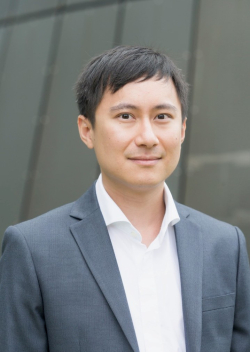
Ben Chen (Spring)
Global Research Fellow
Australia
bc4442@nyu.edu
Ben Chen is Associate Professor at the University of Sydney Law School. He is a law and economics scholar whose work spans equity, trusts, inheritance law, civil procedure, game theory, and behavioral economics. His current research centers on inheritance litigation and pensions as inheritance. This research draws on his information theoretic and contest theoretic modeling of ex-ante adjudication and litigation cost-shifting. It also draws on his empirical and doctrinal work on the inheritance implications of lifetime institutions and transactions.
Among Ben’s publications are original articles in the American Law and Economics Review, Cornell Law Review, Economic Theory, and Modern Law Review. The Australian Research Council has awarded him a Discovery Early Career Researcher Award and a Discovery Project grant. His works have been cited and awarded a prize by judges from Australia, Hong Kong, and the United Kingdom.
Ben received a JSD from Columbia Law School in 2019 and a PhD in economics from the Australian National University in 2018. He clerked in the Equity Division of the Supreme Court of New South Wales (a Commonwealth equivalent of the Delaware Court of Chancery).
Center Affiliation: Center for Law, Economics and Organization
Research Project: A belief-based measure of legal uncertainty: theory and evidence from inheritance litigation
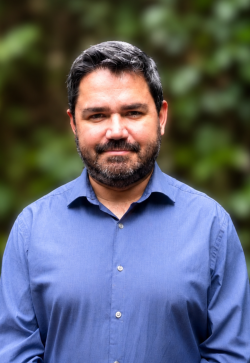
Matías Fernández
Postdoctoral Global Fellow
Chile
mjf9647@nyu.edu
Matías Fernández (PhD, UCLA) is an ethnographer and political sociologist who studies policing organizations. His research examines how these institutions shape the subjectivities of state agents in morally challenging environments and, in turn, how this determines the exercise of state power in practice. He has pursued this agenda through extensive fieldwork with the Chilean police during a massive social uprising and legitimacy crisis, and he is beginning a new project on the social and moral world of prison guards in a context of rising criminal control of prisons.
At NYU, he is developing the project “How Can They Do It? Organizational Armor and the Denial of Dirt in Policing,” which examines how police organizations may proactively shape the identity work of their members and the meanings they attach to the morally contested aspects of their work. Drawing on three years of fieldwork with Carabineros de Chile in the aftermath of the 2019 social uprising, he argues that organizations can provide their members with a cultural armor: a set of narratives, symbols, and embodied dispositions that helps prevent the internalization of taint—shaping not only how officers cope with recognized dirt, but whether they come to perceive their work as dirty in the first place.
Drawing on the same empirical materials, Fernández is also completing a book manuscript provisionally entitled Dirty Work, Clean Honor: The Identity Work of the Chilean Police in a Time of Crisis. His work has been published or is forthcoming in at the Annual Review of Sociology, the British Journal of Sociology, the Journal of Contemporary Ethnography, among other venues.
Research Project: How Can They Do It? Organizational Armor and the Denial of Dirt in Policing

Alice Fill (Spring)
Postdoctoral Global Fellow
Italy, France
af5771@nyu.edu
Beginning in January 2027, Alice Fill will join the Institute for International Law and Justice as a Postdoctoral Global Fellow.
Her research examines, through an infrastructural approach, how the digital identification turn is reshaping the relationship between citizenship and migration in West Africa. Focusing on the rollout of biometric identity systems, civil registry reforms, and interoperable databases, it asks how legal status becomes verifiable, actionable, and contestable through socio-technical infrastructures. Her work sits at the intersection of border studies, science and technology studies, and socio-legal scholarship, with a particular focus on the datafication of mobility and migration governance.
Alice is currently a doctoral researcher in International Relations and International Law at the École Normale Supérieurein Paris (ENS-PSL), where she is affiliated with the Chair in Geopolitics of Risk, and at the Department of Law at Roma Tre University. She holds a doctoral fellowship at the Institut Convergences Migrations (CNRS) and is a member of the POMAF collective on African migration policies. She is involved in the COST Action DATAMIG, co-coordinates the STS-MigTec Circle, and until 2025 served on the board of the IMISCOE PhD Network.
During her doctoral research, Alice held visiting positions at the MOBILE Centre of Excellence at the University of Copenhagen, the Maison Française d'Oxford, and the Centre for Criminology at the University of Oxford, where she was a Recognised Student. She has presented her work in international academic and policy settings, taught at master's level at Sciences Po Paris, ENS–PSL, and the Université Catholique de Lille, and contributed to legal clinics in international human rights law.
Alice holds master's degrees from the University of Florence and the Sant'Anna School of Advanced Studies in Pisa. Her research is grounded in extensive qualitative fieldwork across Senegal, Mauritania, Côte d'Ivoire, and Nigeria.
Center Affiliation: Institute for International Law and Justice
Research Project: Infrastructuring Citizenship and Migration in West Africa: the Digital Identification Turn
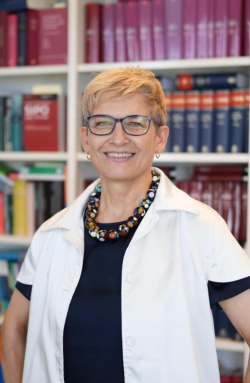
Sabine Gless (Spring)
Senior Global Research Fellow
Switzerland
sg5816@nyu.edu
Sabine Gless holds a chair in criminal law and criminal procedure at the University of Basel. As a Hauser Global Fellow at NYU School of Law, she is affiliated with the Information Law Institute (ILI). Her current research focuses on the impact of algorithmic systems on criminal justice, with particular attention to questions of evidence and the standard of proof. Previous work has addressed human rights in criminal trials, international criminal law, and liability questions arising from autonomous systems.
She heads a Max Planck Research Group on Algorithmic Profiling and Automated Decision-Making in Criminal Justice at the Freiburg Institute https://csl.mpg.de/en/max-planck-fellow-group/algorithmic-profiling-automated-decision-making-in-criminal-justice, and serves on the Scientific Advisory Boards of the Weizenbaum Institute and the Evaluation Committee of the Leibniz Association.
At NYU, Sabine Gless is conducting a research project on how algorithmic tools are reshaping the practice, perception, and justification of criminal justice. At its core is a fundamental challenge: the integrity of truth-seeking. Criminal trials have historically rested on human-centred principles of truth, responsibility, and judgment — and on procedures calibrated to human reasoning. That foundation is now under pressure. This project investigates the gradual and largely unnoticed process by which algorithmic systems are moving from the margins of criminal justice to its centre — not as instruments that human actors deploy and control, but as structuring forces that shape what evidence means, what truth looks like, and how justice is done.
Center Affiliation: Information Law Institute
Research Project: Algorithms and the Foundations of Criminal Justice: A Comparative and Theoretical Inquiry
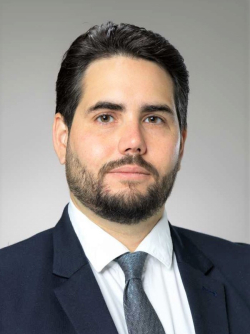
Christophe Gösken
Hauser/Remarque Global Fellow
cg4741@nyu.edu
Christophe Gösken is a Remarque–Hauser Global Fellow at New York University. His research examines how law and emerging technologies reshape trust, authenticity, and governance in digital markets, particularly in relation to luxury and cultural goods. His work combines legal analysis with empirical methods, drawing on survey data and global fieldwork across Europe, Asia, and the Americas.
At NYU, Christophe plans to examine how law, and intellectual property law in particular, shapes ideas of authenticity in cultural markets. Focusing on the art market, the project analyzes how authenticity is currently established and contested, how emerging technologies such as AI-generated art, online marketplaces, and blockchain-based provenance tools are transforming these practices, and whether legal and technological frameworks can better support trust, transparency, and cultural value in the circulation of artworks.
Christophe holds a doctorate from ETH Zurich, a bachelor’s and a master’s degree from the University of Fribourg (Freiburg i.Üe), and a Certificate in Transnational Legal Studies from CTLS/Georgetown Law. He has previously been a visiting scholar at the University of Hong Kong and NYU Stern. His work has received the 2025 4iP Council Research Award, the Best Conference Paper Award at the 2024 Asian Society for Innovation and Policy Conference, and the Best Conference Paper Award at the 2024 PhD Conference on Current Research in IP Law at University College London’s Institute of Brand and Innovation Law.
Center Affiliation: The Remarque Institute
Research Project: Forgery and the Laws of Authenticity: An Empirical Study of Contemporary Art Markets
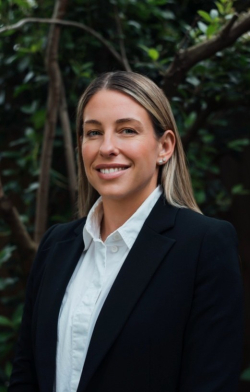
Monica Hope (Spring)
Postdoctoral Global Fellow
Australia
mgh3178@nyu.edu
Monica is a Postdoctoral Global Fellow at NYU School of Law, affiliated with the Graduate Tax Program. During her fellowship at NYU, Monica will develop a research project titled ‘Examining the Realization Requirement: Taxation of the Ultra-Wealthy and the Implications for Wealth Inequality’. Monica’s research will explore the meaning and operation of the realization requirement and its relationship with the taxation of economic gains, particularly for the ultra-wealthy.
Monica completed her PhD, ‘Wealth taxation: a reciprocity-based approach’, at the Melbourne Law School, the University of Melbourne. Her thesis advances a philosophical framework of reciprocity and applies it to legal and policy design relating to the taxation of wealth. Monica’s thesis was part of a larger Australian Research Council Discovery cross-disciplinary project, ‘Sharing the Wealth: Tax and Justice in The Slow Growth Era’. Monica previously completed a Master of Laws, focusing on the taxation of philanthropic private ancillary funds, at Deakin University. She completed a Bachelor of Laws/Bachelor of Arts (Politics) at La Trobe University. She has been teaching tax law for over 10 years.
Center Affiliation: Graduate Tax Program
Research Project: Examining the Realization Requirement: Taxation of the Ultra-Wealthy and the Implications for Wealth Inequality
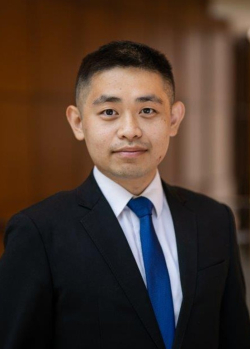
Yung-Cheng Lin
Postdoctoral Global Fellow
Taiwan
yl9579@nyu.edu
Yung-Cheng is a Hauser Postdoctoral Global Fellow and affiliated with the US-Asia Law Institute (USALI). His research focuses on insurance law and regulation, examining how insurance, as a social institution, is governed by and governing law, regulation, and broader institutional forces.
Yung-Cheng holds both an SJD (2026) and an LLM (2023) from the University of Pennsylvania Carey Law. His doctoral dissertation examines the power allocation questions that underlie regulatory format choices in the domain of insurance regulation. His scholarship has been accepted for publication in journals including the Insurance Law Review and the Arizona Journal of International and Comparative Law. Prior to entering academia, he practiced law in Taiwan with a focus on financial regulation and business law and once worked at Taiwan's insurance regulatory agency.
At NYU, Yung-Cheng pursues research on the Chinese health insurance system, examining how its governance frameworks — including bureaucratic oversight and market-based mechanisms — shape structural outcomes and healthcare delivery. His work draws on comparative insights from the U.S. system to illuminate the Chinese context, and through document-based analysis of policy materials, he traces the regulatory dynamics and institutional logic embedded in these systems.
Center Affiliation: US-Asia Law Institute
Research Project: State versus Market: Health Insurance Governance in China

Yuping Lin (Spring)
Postdoctoral Global Fellow
China
yl15825@nyu.edu
Yuping Lin is an Assistant Professor at the Faculty of Law, the Chinese University of Hong Kong. She received her JSD and LLM from Yale Law School and her LLB and LLM from Peking University Law School. She is a Fellow at the Yale Law School Information Society Project and was previously a Fellow at the Paul Tsai China Center. She also used to serve as an Articles Editor of the Yale Journal of International Law and Yale Journal of Law & Technology.
Her research lies at the intersection of technology law, administrative law, and political economy. She examines how governments and digital platforms—including companies such as Meta, Anthropic, Alibaba, and Tencent—mutually shape one another in the digital age. Her work argues that states increasingly rely on platforms to carry out public functions, while platforms simultaneously reshape state institutions and governance priorities. This reciprocal process blurs the traditional boundary between the public and private sectors and restructures the institutional foundations of contemporary political economy.
Drawing on a comparative analysis of the United States and China, her research further demonstrates that, despite their distinct capitalist and socialist institutional traditions, both systems are converging toward a structurally similar form of governance in which digital platforms serve as essential social infrastructure and states increasingly depend on them at the infrastructural level.
Center Affiliation: Guarini Global Law & Tech
Research Project: Platform-State Mutual Cooptation: Evidence from China and the United States
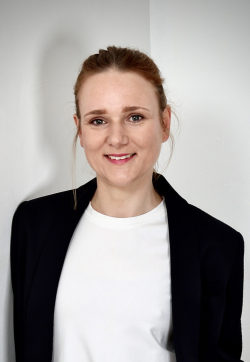
Laura Mai (Fall)
Postdoctoral Global Fellow
lm6160@nyu.edu
Laura Mai joins NYU Law as a Hauser Postdoctoral Fellow for the fall semester of 2026. Following her fellowship, Laura will take up the Bloom Foundation Professorship in Climate Law & Society at the University of Bern, Switzerland.
Laura’s expertise cuts across international and transnational climate law and governance. Applying a socio-legal perspective, she has investigated how national governments, global city networks, financial institutions, philanthropic foundations, and digital infrastructure providers have become enrolled in global efforts to address climate change. Laura is currently working on her new research project, Legal Geographies of Climate Change. The project examines how law – through its knowledge practices, materialities, and aesthetics – links climate change to particular places, in order to assess what this means for the allocation of responsibilities and for climate justice.
Laura holds a PhD from King’s College London, UK, and has previously worked at Tilburg University and the University of Amsterdam, the Netherlands. Outside academia, Laura has worked in private legal practice, served as a consultant for the UN Climate Change Secretariat, advised climate NGOs, and provided expert evidence to the British Parliament.
Center Affiliation: Institute for International Law and Justice
Research Project: Legal Geographies of Climate Change – Responsibility and Justice in Planetary Perspective

Matilde Masetti Placci
Hauser/Remarque Global Fellow
Italy
mm16277@nyu.edu
Matilde Masetti Placci recently completed her doctorate at the University of Edinburgh Law School under the supervision of Professor Nehal Bhuta and Professor Andrew Lang. Her research agenda pushes against monodisciplinary, State-centric approaches to international law by instead focusing on the international law as an interdisciplinary, interpersonal practice. Her doctoral thesis explored the widely held but underexamined belief amongst international lawyers that they share a common legal project. To this end, she drew upon the untranslated works of theorists Georg Jellinek (1851-1911), Maurice Hauriou (1856-1929), and Santi Romano (1875-1947) to recover unexplored ways of thinking about how lawyers construct the international legal order. Beyond her thesis, she explores these themes in the fields of global gender governance and international law and technology.
During the 2026-2027 academic year, she will be based at NYU as a Hauser/Remarque Global Fellow. During her stay, she will be working on her postdoctoral project, which draws upon the works of Maurice Hauriou to examine how purpose is continually (re)constructed within international organizations. In doing so, she seeks to make two distinct contributions to international legal scholarship: to advance international organizations theory by centering and problematizing the concept of institutional purpose in a new, interdisciplinary way, and to attend to this problem with new conceptual tools drawn from the works of an underexplored European legal theorist.
Center Affiliation: The Remarque Institute
Research Project: Towards a Sociolegal Theory of International Institutional Change
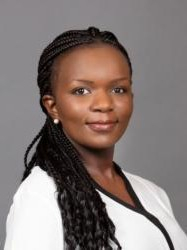
Jacquelene Mwangi
Postdoctoral Global Fellow
jwm10026@nyu.edu
Jacquelene Mwangi is a Hauser Postdoctoral Fellow at NYU School of Law, affiliated with Guarini Global Law & Tech and the Engelberg Center on Innovation Law & Policy. Her research sits at the intersection of law, technology, and global political economy. She examines how legal institutions shape the distribution of power in the global digital economy, with particular attention to the experiences of developing countries. Her work addresses issues including digital development, platform governance, artificial intelligence, foreign investment, geopolitics, regulation of multinational tech companies, and emerging digital regulatory strategies pursued by developing states and their institutions.
Her research at NYU will examine the infrastructures that underpin the global digital economy and shape development in the Global South. Focusing on data-driven firms in sectors such as fintech in Kenya, the project investigates how access to critical digital infrastructures such as cloud services, platforms, payment systems, data and compute resources is structured, and how these arrangements shape opportunities for innovation and economic participation by smaller firms. Through this work, she seeks to illuminate how infrastructural power is legally and technically constituted, identify points of intervention through which developing countries can better navigate and shape their participation in the digital economy, and contribute to debates on digital trade, development, and global digital governance.
Jacquelene holds a law degree from Kenya, a Masters in Law from Harvard Law School, and is completing her SJD at Harvard Law School. She has held fellowships with the Program on Law and Political Economy at Harvard Law School, the Berkman Klein Center for Internet & Society, and the Weatherhead Center for International Affairs at Harvard University. Some of her scholarship has appeared in Transnational Law & Contemporary Problems, the German Law Journal, and the NYU Journal of Intellectual Property & Entertainment Law. Prior to pursuing graduate studies in the United States, she worked in intellectual property research and practice in Kenya.
Center Affiliation: Engelberg Center on Innovation Law & Policy, Guarini Global Law & Tech
Research Project: Regulating Infrastructural Power: Law & Digital Development in the Global South
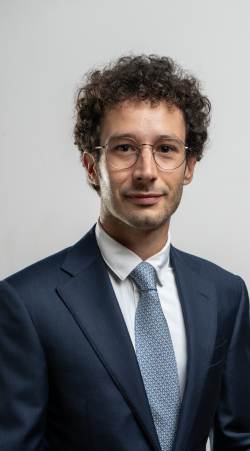
Aldo Pardi (Fall)
Postdoctoral Global Fellow
Italy
ap10878@nyu.edu
Aldo Pardi is a Postdoctoral Global Fellow affiliated with the Institute for Policy Integrity and a “Franco Bonelli” Scholar. His current research project critically examines how global regulation shapes EU and US regulatory approaches to energy storage systems, as well as the choice between public and private models for their management.
Aldo earned a PhD in Administrative Law and a five-year law degree (magna cum laude, with special mention) from Luiss University in Rome. He also received an LLM from Fordham University (magna cum laude, Hawk Prize). Aldo has held visiting research positions at several institutions, including King’s College London, Université Paris Nanterre, and the Iberian Energy Storage Research Center. He has received academic awards and legal research scholarships, including the European Central Bank Legal Research Scholarship. Alongside his academic work, he has gained professional experience at a law firm in New York and at the Italian Competition Authority. He is admitted to practice as an Avvocato in Italy and as an Attorney and Counselor-at-Law in New York.
His recent publications address energy storage and state aid, joint gas purchasing in the EU, subsidies for renewable energy, and government corporations. His broader research interests lie in administrative law and energy law, with a particular focus on the European Union.
Center Affiliation: Institute for Policy Integrity
Research Project: The Global Regulation of Energy Storage
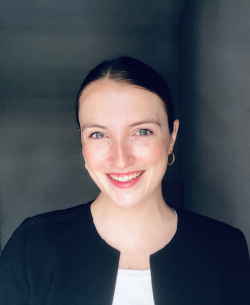
Megan Pfiffer (Fall)
Postdoctoral Global Fellow
Canada
mp7169@nyu.edu
Megan Pfiffer is a Postdoctoral Global Fellow affiliated with the Center for Law and Philosophy. Her research interests span the fields of public law, and moral, political, and legal theory. Megan obtained her SJD from the University of Toronto, Faculty of Law. Her thesis articulated a theory of the law of judicial review of administrative action built around the rights of persons subject to public administrative power. Megan received her JD from Queen's University where she was awarded the Silver Medal in Law for achieving the second highest academic standing in her graduating class, as well as the Dean's Key Award for best embodying the signature values of Queen's Law. She then articled at a leading Toronto litigation firm and clerked for Justice Rosalie Abella at the Supreme Court of Canada. After her clerkship, Megan completed the BCL at the University of Oxford with distinction, earning the Onora O'Neill Prize in Philosophy, Law and Politics
Center Affiliation: Center for Law and Philosophy
Research Project: The Modern Administrative State: A Moral Defence