

Federal Court Problem-Solving
Federal court litigation is increasingly complex — and is being completely upended by the demands of sprawling litigation.
Multi-district litigations are exploding, aggregate settlements are proliferating, arbitrations are expanding, and bankruptcies and class action proceedings are increasingly in tension.
As federal court cases evolve, what new challenges are confronting civil litigators, jurists, and the public in their efforts to effectively and fairly resolve large scale, complex, disputes?
Our Center examines cutting edge federal court issues, including class actions, multi-district litigation, antitrust law, arbitration, bankruptcy, and more. We regularly host public and private convenings, allowing key stakeholders like lawyers, judges, law firms, and more to tackle thorny issues on issues of civil justice.
How is Multi-District Litigation (MDL) evolving?
Multi-district litigation (MDL) emerged as a distinct procedural tool to handle mass civil issues in federal courts. Uniquely, MDLs congregate thousands of cases with similar claims while keeping individual lawsuits separated in order to address varying degrees of harm and provide appropriate, individualized compensation. MDLs have been essential in tackling the opioid crisis, youth vaping epidemic, toxic water contamination, among other important issues.
Sitting on our Center's Board of Advisors are the nation's most preeminent MDL lawyers representing both the plaintiffs and defense bar, along with federal court jurists who have been instrumental in shaping the course of MDL. Collectively, they have worked on National Prescription Opiate Litigation (MDL 2804), Johnson & Johnson Talcum Powder Product Liability (MDL 2738), Volkswagen "Clean Diesel" Marketing, Sales Practices & Products Liability Litigation (MDL 2672), and other monumental MDL cases.
The Center on Civil Justice is honored to be guided by our Board's expertise, organizing conferences and events dedicated to problem-solving for MDLs in federal courts.
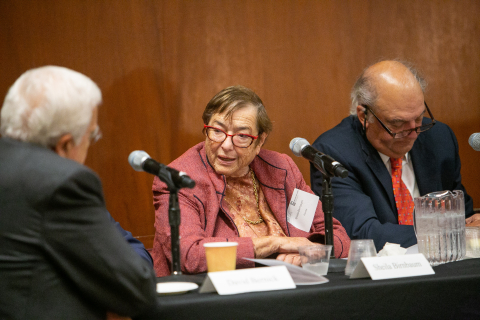
Events on Multi-District Litigation
Co-hosted with the American Law Institute, MDL in Motion 2026 brought together the practitioners and jurists who navigate this terrain daily. Over one intensive day, leading federal and state court judges, preeminent plaintiffs' and defense counsel, and top academics examined the doctrinal fault lines, practical workarounds, and coordination challenges that define modern mass litigation.
See more here.
Co-hosted with the American Law Institute, our MDL in Motion conference dug deep into judicial decision-making, the evolving role of special masters, and the growing momentum for reform. Sessions included in-depth analysis of major case studies—such as the opioid litigation—and offer practical strategies for managing complex, high-stakes proceedings.
See more here.
On January 31, 2025, the Center on Civil Justice hosted a full-day conference discussing the future of American mass actions in the wake of the United States Supreme Court's bankruptcy decision in Harrington v. Purdue. Panelists debated the extent of the impact of the Purdue case and the respective merits and disadvantages of the bankruptcy vs MDL system. They brought first-hand experiences as individuals personally involved in litigating the Purdue MDL and bankruptcy cases. They raised novel differences in how MDL and bankruptcy claims get valued, especially noting that large pools of low-value mass tort claimants have outsized influence in bankruptcies, where each claimant has a single vote, whether the claimant is an individual or a State. The event concluded with Professor Arthur Miller, present for the founding of American mass actions, reflecting on how they have evolved.
See more here.
Firearms litigation poses some of the most novel questions being litigated in our courts, spanning constitutional, statutory, and policy questions. This conference helped the legal community and policymakers think through some of these questions and create a framework to resolve them responsibly.
See more here.
Chris Seeger has been lead Plaintiff's counsel in many of the nation's most significant multidistrict litigations, including the NFL case, the Vioxx case, and others.
Elizabeth Burch is the Fuller E. Callaway Chair of Law at the University of Georgia School of Law and author of the 2019 book, "Mass Tort Deals: Backroom Bargaining in Multidistrict Litigation."
The event was moderated by Hon. John Koeltl.
See more here.
The United States is currently struggling with one of its worst-ever drug crises. Every week, over nine hundred people die from opioid-related overdoses. Moreover, millions of Americans suffer from opioid addictions. Besides the risks it poses to public health, the crisis constitutes a threat to national security and a drag on the economy. Substantial evidence suggests that opioid marketing largely contributed to the crisis.
We presented conference on "the Opioid Epidemic," co-hosted by the Classical Liberal Institute at NYU Law, the Center on Civil Justice at NYU Law, and the NYU Journal of Law & Business. This conference, featuring two panels and a keynote speech, focused on litigation surrounding the opioid epidemic as well as regulation and reform issues related to the crisis. Panelists discussed the lawsuits against pharmaceutical companies, different defense strategies and the most effective way to structure settlement agreements, the strengths and weaknesses of current regulation, and different reform options in order to effectively address this major health and social crisis. The keynote speech was delivered by the Honorable Diane Wood (Chief United States Circuit Judge of the United States Court of Appeals for the Seventh Circuit).
See more here.
At this conference we commemorated the 50th anniversary of the 1968 Multidistrict Litigation Statute. This conference was co-hosted by the Center on Civil Justice at NYU Law School and the Liman and Solomon Centers at Yale Law School.
See more here.
What is the future of Class Actions and Mass Actions? What is the interplay with Bankruptcy proceedings?
Class actions have been instrumental in facilitating justice for individuals sharing the same harms, at the same scale, by the same institutions — whether they be employers, governments, or private corporations. Federal court constraints on class action litigation has seen a decrease in class litigation supplanted by other vehicles for addressing widespread harm and promoting reforms. In light of the recent Supreme Court case Trump v. CASA, Inc., 606 U.S. 831 (2025), limiting the availability of “universal” or “nationwide” injunctions, will class actions be resurrected?
From publications to conferences, our Center has tackled key procedures, rules, and questions about the future of class actions.
Events on Class Actions
The Center on Civil Justice co-hosted the Global Class Actions and Mass Torts Conference alongside Perfect Law. Leaders from across the globe convened to explore the latest developments in collective redress, from AI in mass arbitration to global litigation funding.
See more here.
In The Conservative Case for Class Actions, Professor Fitzpatrick argues that all of us, conservatives and libertarians included, believe that markets need at least some policing to thrive, from laws that enforce contracts, to laws that prevent companies from committing fraud, to laws that prohibit price fixing. But he shows there are only two ways to do this policing: 1) private lawsuits filed by private citizens and their lawyers or 2) more government. He argues that, for the same reasons conservatives prefer other private sector solutions to problems, they should prefer private enforcement of the law as well.
At the Center, we hosted Professor Fitzpatrick to talk about his book.
Our Center co-hosted a conference with the University of Montreal in 2017 called “The Class Action Effect.”
See more here, or check out the publication Class Action Effect conference book.
In this conference, attendees reflected on Rule 23 — what it was meant to do; whether it has met its promise; if not, why not, and what can be done to remedy the situation; and what is in store for the rule going forward.
See more here.
Once consumer class actions were praised for increasing access to justice by compensating "small claims held by small people." They also served as a form of regulation. By overcoming the problematic economics of small-stakes individual litigation, they allowed for the private enforcement of the law. The Supreme Court once described these "negative value" suits as "the very core of the class action mechanism." Now, consumer class actions face serious criticism for failing to provide compensation to class members or to achieve effective market regulation. Perhaps as a result, it is harder to certify a consumer class action today than at any time since the adoption of modern Rule 23 in 1966.
Participants in our conference discussed a broad range of issues relating to recent developments in the law of consumer class actions. The conference also considered what the criticism of consumer class actions means for the future of class actions more generally. If "the very core" of class actions goes away, what will be left?
See more here.
How is Antitrust Law evolving and where should it land?
Antitrust law is essential in preventing businesses from gaining or abusing too much market power in ways that harm competition, consumers, or the economy. At the Center, we ask important questions about how to use federal courts to prevent monopolies and protect consumers and we look closely at the future of antitrust law.
Events on Antitrust Law
The conversation focused on Judge Cote’s extensive experience adjudicating antitrust litigation, including Federal Trade Commission v. Vyera Pharmaceuticals, LLC and United States v. Apple, Inc.
See more here.
New York University School of Law's Antitrust & Competition Law Society (ACLS) and the Center on Civil Justice hosted a panel discussion addressing the proposed July 2023 revisions to the federal merger guidelines, the June 2023 notice of proposed rulemaking regarding changes to the Hart-Scott-Rodino filing process, and the relationship between these two incredibly recent antitrust developments. This event drew together leading experts across the antitrust bar from government and firm practice to consider the state and direction of US merger law and enforcement.
See more here.
In this panel series, experts discussed how companies use market power to exert unprecedented control in the 21st century.
See more here.
What else is new in federal courts?
Check out our other events on federal court problem-solving!
Other Events
We co-hosted a book talk with BWLC on Steve Vladeck's The Shadow Docket: How the Supreme Court Uses Stealth Rulings to Amass Power and Undermine the Republic.
See more here.
Nationwide injunctions are playing an increasing role in the American legal landscape. From the beginnings of the U.S. judiciary until the 1960s, nationwide injunctions were not a feature of our legal system. Individual federal judges imposed no injunctions barring conduct across the entire nation during that time. But this has changed. 55 nationwide injunctions were imposed by courts during the presidency of Donald Trump, and the practice continues under the current administration.
Are nationwide injunctions a problem? Should they be restricted? If so, how? Should the federal courts tackle the problem of judge-shopping by reexamining the distribution of cases in a judicial district that includes a division populated by a single judge?
See more here.
CCJ Board of Advisers member Hon. Lee Rosenthal, Chief Judge of the Southern District of Texas conceived of this conference on the changing landscape in arbitration. The Center worked with George Bermann of the Center for International Commercial & Investment Arbitration at Columbia Law School and Franco Ferrari and Linda Silberman of the Center for Transnational Litigation, Arbitration, and Commercial Law at NYU School of Law to organize the event. The conference featured five panels discussing various pressing issues in arbitration, including the lead-off panel on gateway issues moderated by Judge Rosenthal; a panel discussing due process in arbitration; a panel discussing developments in international arbitration; panel on the cutting-edge aspects of consumer and employment mass arbitration, featuring a presentation by Maria Glover, author of the leading paper on the subject; and a panel on third-party arbitration funding.
See conference details here.
We also published a book which collects the articles that were the subject of the panels of that event.
The Center on Civil Justice hosted a two-panel event in commemoration of the life of Judge Jack Weinstein, a giant of the federal judiciary for over fifty years.
See more here.
Publications
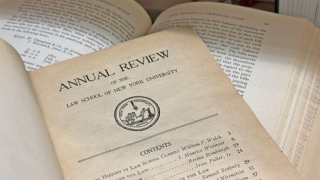
Law Review Volume 92, Number 4: Rule 23 @ 50 conference book
Publications from the 2016 Rule 23 conference were collected into a book at published by the NYU Law Review.
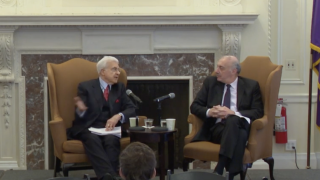
Oral History of Rule 23 Interview Transcript
The Center on Civil Justice has published a transcript of the Oral History of Rule 23 panel from the 2016 conference commemorating the 50th anniversary of Rule 23. The panel was an interview of Professor Arthur R. Miller by Professor Samuel Issacharoff. Professor Miller was present at the creation and drafting of Rule 23 in 1966. Professor Issacharoff conducted an interview illuminating this history and the ethical issues that were anticipated at the time of drafting. The interview has been transcribed and appears here with light editing.
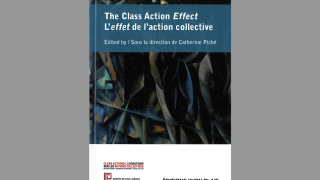
Class Action Effect conference book
In May, 2017, the Center on Civil Justice co-hosted a conference with the University of Montreal on the evolution of the class action vehicle in North America. Publications from that conference were collected into a book and published by Éditions Yvon Blais, the Quebecois affiliate of Thomson-Reuters.

Recent Developments in Arbitration conference book
Disputes traditionally resolved in our courts are increasingly being resolved in alternative ways. These alternative resolutions are now routinely accomplished through arbitration. The Center on Civil Justice has taken an interest in this development and the legal consequences that result. This book is composed of articles from the conference on Recent Developments on Arbitration.