Charting the Future of Litigation Finance
Friday, April 17, 2026
Litigation finance makes the world go round. The capital financiers provide is the lifeblood for plaintiffs’ firms and individual claimants attempting to run the litigation gauntlet in high-stakes battles with wealthy corporate entities. The quintessential nature and fundamental dynamics of conflict resolution have shifted dramatically in the last decade, revealing a brave new world of litigation. But understanding the legal, social, and business implications of this emerging paradigm—both the potential value and threat to individual litigants—has proven elusive.
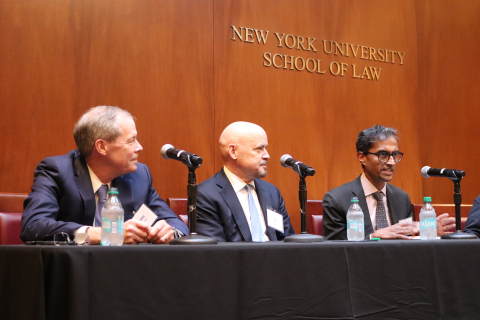
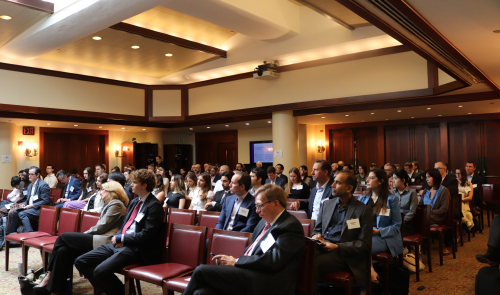
This symposium brought together diverse voices to address the legal innovations and implications of the most important new trend that is reshaping the field. It created a dialogue among scholars and practitioners of tort law, bankruptcy law, civil procedure, constitutional law, and federal courts. In doing so, this symposium was at the leading edge of the next phase of law and dispute resolution.
PANEL 1 – LITIGATION FINANCE’S THREE SPHERES AND CORE CIVIL JUSTICE QUESTIONS
Moderator: Maria Glover (Georgetown)
Panelists: Nora Freeman Engstrom (Stanford), Sam Issacharoff (NYU), Catherine Sharkey (NYU)
This panel examined litigation finance across its three principal spheres—commercial, consumer, and mass-tort funding—and explored how each interacts with foundational questions about the civil justice system. The discussion considered how third-party capital shapes party autonomy, attorney ethics, settlement incentives, and the allocation of risk between claimholders and funders. Panelists also addressed recurring concerns about transparency, control, and the public purposes of civil adjudication. Bringing together leading scholars, the session situated litigation finance within broader debates about access to justice, market discipline, and the future of civil litigation.
PANEL 2 – THE BUSINESS OF LITIGATION FINANCE
Moderator: Suneal Bedi (Kelley School of Business)
Panelists: Tom Baker (Penn), Dai Wai Chin Feman (Parabellum), Robert Kramer (Kramer LLP), Aviva Will (Burford)
This panel examined litigation finance as both an investable asset class and a competitive marketplace in which funders, law firms, and claimholders negotiate price, control, and risk allocation. Panelists explored how capital formation, underwriting, and portfolio strategy shape not only returns, but also competition among litigants and firms in the broader market for legal claims. The discussion considered how funding can influence business rivalry—by enabling smaller or capital-constrained entities to pursue meritorious claims, altering settlement leverage, and reallocating litigation risk. The session also engaged questions of business ethics, including transparency, conflicts, reputational risk, and the responsibilities of funders operating at the intersection of law and finance.
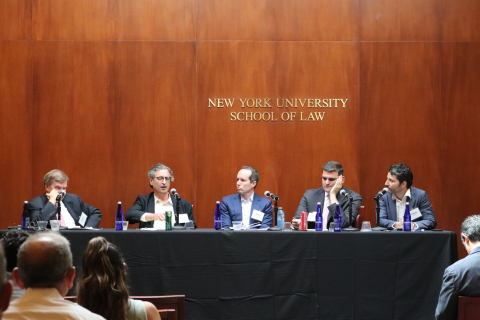
PANEL 3 – NONATTORNEYS ENTER THE ROOM: FINANCIER CONTROL AND LAW FIRM OWNERSHIP
Moderator: Will Marra (Certum Group)
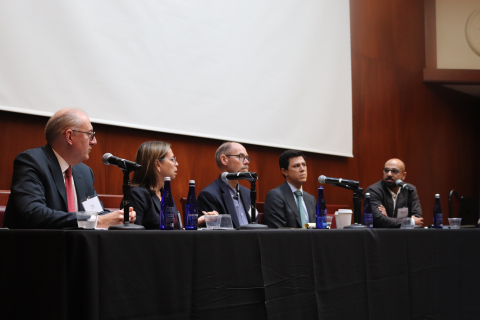
Panelists: John Beisner (Skadden), Greg Pesce (White & Case), Kevin Rubenstein (Crowell & Moring), Anthony Sebok (Cardozo)
This panel explored the growing role of nonattorneys in the legal services ecosystem, focusing on litigation funder influence, alternative law firm ownership structures, and the evolving boundaries of professional independence. The discussion examined Model Rule 5.4’s traditional limits alongside developments in Arizona, where reforms have opened the door to nonlawyer ownership and alternative business structures. Panelists also addressed the rise of MSOs (management services organizations), hybrid capital models, and the increasing integration of finance and legal operations. Particular attention was paid to mass tort practice, where outside capital, operational scale, and questions of control converge most visibly, raising both innovation opportunities and concerns about fiduciary duty, client autonomy, and systemic risk.
KEYNOTE CONVERSATION
Winston Weinberg (CEO of Harvey)
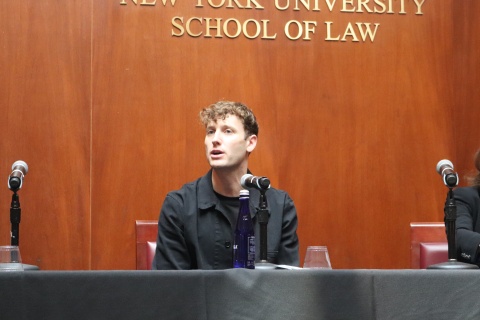
PANEL 4 – EXPLORING THE RAMIFICATIONS THROUGH A MASS-TORTS LENS
Moderator: Samir Parikh (Wake Forest)
Panelists: Jessica Lauria (JL Special Situations), Teddy Rave (Texas), Maya Steinitz (Boston University), Aviva Wein (J&J)
This panel examined litigation finance through the distinctive pressures of mass-tort litigation, where aggregation, scale, and asymmetric risk reshape traditional assumptions about party control and judicial oversight. Drawing on recent scholarship addressing opaque capital, claim aggregation, and funder intermeddling, the discussion explored how outside financing intersects with multidistrict litigation, bankruptcy alternatives, and global settlement design. Panelists considered whether funding enhances claimant recovery and coordination—or instead risks distorting autonomy, incentives, and transparency in high-stakes aggregate proceedings. By viewing litigation finance through the mass-torts lens, the session probed how capital structure, procedural architecture, and institutional design interact at the outer edges of the civil justice system.
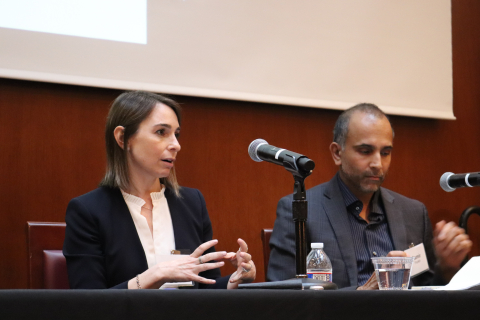
PANEL 5 – JUDICIAL PANEL
Moderator: Brian Fitzpatrick (Vanderbilt)
Panelists: Hon. Colm F. Connolly (D. Del.), Hon. J. Paul Oetken (SDNY), Hon. Arun Subramanian (SDNY)
This judges’ panel offered a view from the bench on how litigation finance intersects with courtroom practice and judicial administration. The discussion focused on disclosure, control, and the practical challenges judges face in managing funded cases. Panelists shared perspectives on transparency, conflicts, settlement dynamics, and the implications of third-party capital for case management and judicial oversight.