

United States

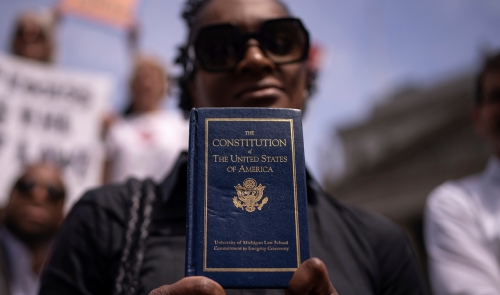
A person holding a copy of the Constitution of the United States of America.

Democracy and the rule of law are confronting serious challenges in the United States. 

According to several democracy watchdogs, the United States is experiencing a sharp decline in democracy. At the same time, growing partisan divisions have also weakened Americans’ confidence in the judiciary. The system of checks and balances—essential for upholding the rule of law—faces mounting strain.


The Lab's Work in the United States

Judicial Independence 

The United States Constitution establishes an independent federal judiciary as one of three co-equal branches of government. Judicial independence encompasses two dimensions— institutional and decisional. Institutional independence refers to the judiciary’s capacity to resist encroachment by the executive and legislative branches, thereby preserving the separation of powers. Decisional independence refers to the capacity of individual judges to decide cases without fear or favor. In recent years, both dimensions of judicial independence have come under increasing strain. 

Criticism of judicial decisions is essential in a democracy and is protected by the First Amendment. But threats of violence, intimidation, and disinformation directed at judges, and defiance of court orders go beyond healthy criticism and fundamentally threaten judicial independence. In recent years, these attacks have escalated significantly, while taking unprecedented form in some instances.

The Lab studies these trends. Drawing upon historical and contemporary examples, it traces how threats to the independence of the federal judiciary have evolved over time. It also assesses the impact these threats have had on the federal bench, and makes recommendations for preserving an independent judiciary.

All Work