Smart City: New ideas and research from NYU Law are building a better urban environment

In New York City, there’s no shortage of theories on why it’s so hard to build affordable housing. Among the often-cited obstacles are construction costs, NIMBYism, and zoning laws that restrict building in high-density areas across the city. But NYU Law’s Furman Center for Real Estate and Urban Policy zeroed in on a largely overlooked culprit―minimum parking rules.
In 2012, the center published “Searching for the Right Spot: Minimum Parking Requirements and Housing Affordability in New York City,” a policy brief that showed how the city’s zoning mandate for off-street parking spaces had discouraged builders from creating affordable housing. The paper, which followed an initial 2010 study, argued that parking requirements for new construction often led developers to build parking spaces in excess of market demand, thus driving up costs.
The data drew attention from housing advocates, policymakers, researchers, environmentalists, developers, and media such as the New York Times. The Furman Center issued a follow-up report in 2021, and the center’s then-executive director, Matthew Murphy, spotlighted the issue when he testified before New York’s City Council during negotiations over the sweeping rezoning plan known as the City of Yes for Housing Opportunity. When City of Yes was adopted in 2025, it included a new three-tiered system in which the minimum parking rules were either eliminated, curbed, or preserved within different zones.
“Our mission is to be policy relevant,” said Vicki Been ’83, Judge Edward Weinfeld Professor of Law and faculty co-director of the Furman Center, who co-authored the parking requirement studies. “It influenced our work in trying to figure out how available land could be used to build housing. The minimum parking mandate forced inefficient use of property space where affordable housing could instead exist.”
New York City’s parking overhaul is just the latest example of how NYU Law has helped cities rethink problems that are stubborn, long running, and increasingly pressing. After years of COVID-era flight, urban America is bouncing back: The US Census found that the population of metro areas, home to 86 percent of the US population, rose sharply in 2023 and 2024. At the same time, cities are facing myriad challenges, some new and some long standing, such as aging infrastructure, income inequality, the demand for affordable housing, climate change, and finding a balance among policing, stable neighborhoods, and the protection of civil liberties.
On subjects as varied as public safety, the environment, housing, and transportation, NYU Law faculty members and centers are at the forefront of the effort to reshape cities for the better. Been explores the intersection of land use, zoning, and housing development. Barry Friedman, founding director of the Policing Project, examines the impact of law enforcement and its increasing digital imprint. Katrina Wyman, faculty director of the Frank J. Guarini Center on Environmental, Energy, and Land Use Law, researches how local governments are leading the fight to address climate change, and Clayton Gillette is an expert on the fiscal viability of cities and local government law.
Beyond campus, a range of NYU Law alumni are also deeply engaged in the push to improve metro areas while serving in a variety of government posts. Among them is Metropolitan Transportation Authority (MTA) Chairman John “Janno” Lieber ’90, who led the MTA through the implementation of an innovative congestion pricing policy in midtown and lower Manhattan.
The focus on cities comes at a critical juncture. “You would think the federal government would be involved in activities that have wide geographic implications, such as the environment,” says Gillette. “But as we’ve seen, the federal government has been withdrawing from a variety of areas where it has typically been a key player.… What does it mean for cities? There are huge issues right now as cities try to expand the range of their jurisdiction.”
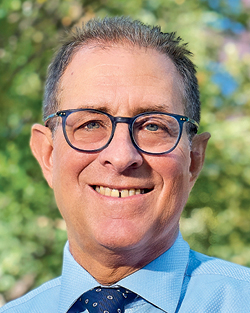
In 2015, Friedman, Jacob D. Fuchsberg Professor of Law, founded the Policing Project at NYU Law, seeking to promote transparency and accountability in policing. Partnering with stakeholders―law enforcement leadership, advocates and community activists, elected officials, and even some technology vendors―the project offers consultation and technical assistance to local governments, drafts model legislation, and audits policing systems to try to resolve problems before they arise. It also files litigation in some situations when these efforts do not work.
Increasingly, the Policing Project has focused on how police employ new technology. It has developed legislative resources for municipalities that include guidance on preventing the abuse of license plate readers, best practices for avoiding racial bias and privacy violations in the use of facial recognition technology, and guidance for secure and responsible police use of technology.
Friedman has written extensively about the collection and use of the personal data of city residents by police agencies. Federal regulation is needed, he believes. “Very few states have laws,” he says. “And most of the time, when there are laws, there are exceptions for law enforcement. In most of the country, data is being collected on everyone indiscriminately, with no rules in place.”
More broadly, reimagining how law enforcement functions in cities remains a top priority for the Policing Project. A 2024 report that provided an asset and gap analysis of the community safety ecosystem in Minneapolis has led to reforms such as expanded eligibility for youth diversion programs and shooting reviews to reduce gun violence. A primary initiative is to promote the use of unarmed non-police responders to many 911 calls.
“The thing you have to realize about cities is that public safety is foundational. If you don’t have public safety, you don’t have anything else,” Friedman says. “So you have to get public safety right. But we [as a society] don’t do a very good job of getting it right. In fact, paradoxically, even though [institutions] study all kinds of things and collect data and try to do better, we don’t do that with public safety. We just turn the work over to the police and hope for the best.”
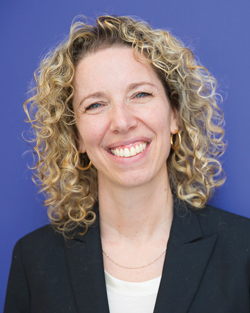
In July, Justine Olderman ’98, former executive director of the Bronx Defenders, became criminal justice coordinator in the administration of New York City Mayor Zohran Mamdani after serving as adjunct professor of clinical law and director of the Pretrial Freedom Lab at NYU Law. In an interview before taking up her new post, she said that a holistic review of the city’s criminal justice system could produce reforms that emphasize intervention rather than criminalization.
“How do we build an ecosystem that ensures individuals, families, and communities have what they need? That’s where a lot of the city’s work to assist the unhoused, deal with people struggling with substance use, combat hate crimes, and respond to gender-based violence comes into play,” Olderman said. “There’s no one piece of it that is the answer to all of it. But if we build and invest in this system in a much more robust way than we ever have, what ends up happening is that the need for policing, prosecution, detention, and incarceration just radically shrinks. And then it gives us the space to be able to see what true community safety looks like.”
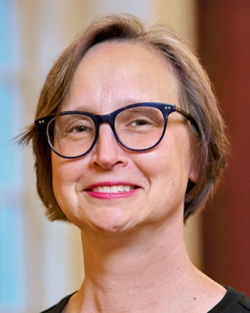
For generations, cities have focused on local environmental issues such as clean drinking water, garbage collection, or green spaces. Now they are tackling broader environmental questions, as Katrina Wyman, Wilf Family Professor of Property Law, and Danielle Spiegel-Feld ’10 write in their recent book Local Greens: Cities and Twenty-First Century Environmental Problems (Cambridge University Press, 2025).
“Between 2018 and 2024, nine US cities—and a few US states—legislated laws to reduce greenhouse gas emissions or increase energy efficiency in buildings, which, along with transportation, are the main sources of these emissions in cities,” Wyman says. Such local building performance standards, which include Local Law 97 in New York City, are just starting to take effect, Wyman notes. What’s already clear is that they represent “an innovative attempt to address a major global environmental problem very different from the typical concerns of local governments focused on improving life within local borders,” she says.
Local Law 97 was a landmark achievement, but it left gaps―and a project currently underway at the Guarini Center is working to fill them. Some buildings―including single-family homes, small multifamily dwellings, small commercial buildings, and affordable housing―are currently exempt from Local Law 97’s performance mandates to reduce greenhouse gas emissions.
How can the city help property owners reduce carbon emissions from a brownstone home with three apartments? Or from a small restaurant? To find out, the Guarini Center is leading a study for the New York City Mayor’s Office of Climate and Environmental Justice, with NYU Marron Institute, Cadmus, and Urban Green Council.
The goal is a particular challenge for many buildings, including older buildings and affordable housing, that already face significant deferred maintenance costs, says Christine Billy, executive director of the Guarini Center. Through fact-finding qualitative research and data analysis, the project team has determined the types of fossil fuel equipment in these buildings and their probable lifespan, and they have evaluated alternative environmentally friendly electric systems installed through state and local pilot and incentive programs.
Among their results: Residents warmed up quickly to window-based heat pumps, but were cool toward electric clothes dryers. The team is also modeling citywide costs and benefits from electrification, including health benefits from decreased local air pollution. The Guarini Center is looking at policies to promote these beneficial outcomes without worsening affordability burdens for New Yorkers. “I think that type of research is very exciting to be a part of, and I feel very thankful at this moment in time that we can do this research,” says Billy. “It’s very satisfying to see a government not just listen to but seek out.... and value expertise in its decision-making.”
How can cities build more housing, for more people, more quickly? In her professional career―in law and in government―Been has prioritized those age-old questions. For the City of New York, she was commissioner of Housing Preservation and Development from 2014 to 2017. Been then served in City Hall as deputy mayor for housing and economic development from 2019 to 2021. Those experiences inform her work as a thought leader on city housing and as faculty co-director of the Furman Center.
For the past three decades, the center has served as a critical resource for policymakers, housing advocates, and the real estate industry, generating interdisciplinary research on issues such as zoning and other land use laws, historic preservation, public housing, federally subsidized housing and rental assistance, and rent regulation. In 2018 the center co-launched the Local Housing Solutions Lab, a one-stop platform helping cities plan, launch, and evaluate local housing policies to increase access to opportunity and improve residents’ wellbeing.

Been’s scholarship has delved into issues such as inclusionary zoning, impact fees, rent regulation, distressed mortgages, and state land use reforms. In a 2018 report and a 2023 follow-up, Been and her co-authors noted the phenomenon of “supply skepticism”―the “questioning [of] the premise that increasing the supply of market-rate housing will result in housing that is more affordable.” They marshalled research that counters this argument, showing that new home construction can slow increases in rent regionally and open up more housing units for residents over a range of income levels.
Currently, Been sees early signs of progress in curbing skyrocketing housing costs in Massachusetts, New Jersey, and Texas, several states that have adopted recent land use reforms. She also cites Austin, Texas, where rents fell after citywide land reforms that focused on strategic housing construction. But her optimism is tempered by concerns over the economic fallout of artificial intelligence, if AI adoption leads to widespread job losses. “Housing affordability has two sides. One is, how much is the rent, or how much does it cost to buy a house? The other side is, how much income do people have?” Been says. “Because we’re facing real threats on both sides. I believe that we are on a collision course.”
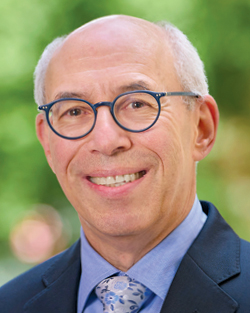
Clayton Gillette, Max E. Greenberg Professor of Contract Law, is also tracking the impact of AI on cities. Gillette has studied and written extensively on city finance, including municipal bankruptcies. Today, he notes, the fiscal health of cities depends on their ability to adjust to the disruptions that remote work and AI create in industries that support local economies.
“The uniqueness of cities,” Gillette says, “lies in their density and their support of ‘agglomeration economies’—the matching of jobs and labor, the sharing of resources, and the coincidental spillover of knowledge from one firm to another that occur when multiple enterprises co-exist and interact in a metropolitan area.” Both AI and remote work raise the possibility that the physical proximity that supports agglomeration will become less necessary.
But this is not a novel phenomenon, Gillette adds, pointing to the era when water transportation was the primary means of moving goods. “The development of canals, railroads, and airplanes allowed distant suppliers and customers to interact in ways that were previously impossible. That meant that some port cities declined, but some landlocked cities thrived,” he says.
Gillette says he remains optimistic about the future of cities generally. “Cities are organic entities. Properly organized, they can adapt to new circumstances. Within the past century, New York City has evolved from a manufacturing center to a service economy and focal point for social interaction and culture. The key to city success is to maintain the basic infrastructure, good governance, and fiscal responsibility that attract productive firms and workers and allow flexibility when new technologies alter the drivers of the economy.”
Curtis Stephen is a writer and Addison Dunlap is public affairs officer at NYU Law.
Driving The MTA
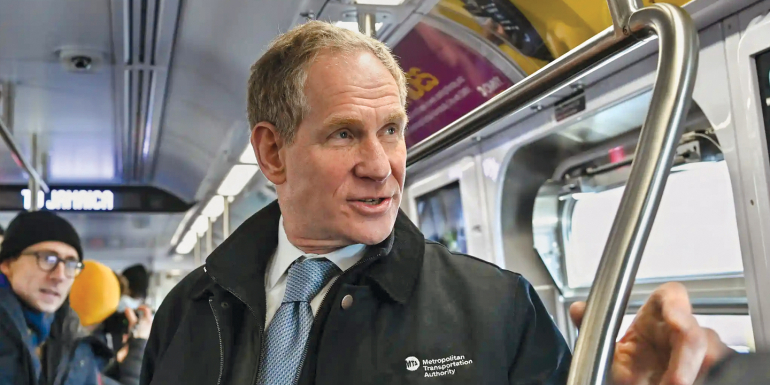
John “Janno” Lieber ’90 has successfully guided New York City’s Metropolitan Transportation Authority (MTA) through some significant challenges in the five years that he has served as its president and CEO. These include restoring subway, commuter rail, and bus ridership numbers after the COVID-19 pandemic; funding capital projects such as station accessibility and the Second Avenue subway line; and, most recently, implementing a $9 congestion fee for vehicular traffic entering midtown Manhattan.
It helps that he’s had a long career in transit and construction, having served in the administrations of New York City Mayor Ed Koch ’48 and US President Bill Clinton, in addition to helping rebuild the World Trade Center complex for Silverstein Properties after the September 11, 2001 attacks. Addison Dunlap spoke with Lieber about leading North America’s largest public transit system and how his legal education helped bring to life the first-ever congestion pricing system in the United States.
What did you focus on at NYU Law?
I was a highly mediocre NYU Law student. I had been working for the City of New York, mostly in the mayor’s office, for three-plus years before I went back to law school. And at least for the last two years of law school, I was working [at law firms during the academic year], so I wasn’t around that much. I got through OK, but I was not setting any records for academic and social engagement. But [I had a] great first-year experience, with great classmates and a lot of great intellectuals.
Why did you go to law school?
How did your legal education inform your work?
I had a lot of lawyers in my family; I have judges and political types and lawyers in the family on both sides. And [law school] was another way of staying close to public issues, as well as outfitting myself for what was the unknown next phase of a career that was sort of in and around public issues. But I didn’t have an exact clear sense of what I was going do with [my law degree]. But it’s always stood me in very, very good stead. And now I get to be an annoying client to lots of great lawyers.
Do you find that your legal education is helpful to your work at the MTA?
I mean, first of all, there are lots of pure legal issues, and so I can participate in them a little bit more. Among other things, we’re fighting big lawsuits on the congestion pricing front and on other fronts. We have a huge legal operation here, and we defend hundreds of millions of dollars of claims every year, and so much of what we do hinges on, whether it’s law or regulation, things that are real big-boy law. So [a legal education] makes a huge difference.
And as everybody always tells you, the analytic tools that hopefully you come out of law school with have always [been helpful]―the writing and the analytics―and it’s so close to so many issues of public policy that it’s always been useful.
Early in your career, when you worked at the New York City mayor’s office and in the Clinton administration, you did some transportation work and some land use work. How did you get interested in those topics?
I got out of college in 1984, and I mean, I was always a passionate New Yorker. I was a kid who grew up in the city in the 1970s, riding the system, riding a bus, riding trams, riding subways. And the effort to turn around the subway system was in its early bloom in the early 1980s. It was incredibly exciting because it felt like something where we were really changing New York.
Is there anything about the job you have now that would surprise younger you?
What is surprising is how passionate, in a positive way, New Yorkers are about transit. Because when I was a kid, it was always something that New Yorkers talked negatively about [and] didn’t have hope that it could be turned around. There wasn’t a lot of optimism in the New York of the 1970s. And now today, it is something that New Yorkers, especially young people, are really passionate about, and they really see the opportunity to make it better and to deliver all kinds of things―whether it’s economic goals, equity goals for affordability, fairness goals.
What drew you to the MTA, and what has it been like?
I worked for 14 years leading the World Trade Center project for the Silverstein Organization, and we had gotten almost all of it done. I was looking for a new challenge, and I felt like I wanted to do something again that was more engaged with all of the issues that New York was going to face in a Trump administration.
And then I got recruited to come back and run the construction and development side of the MTA, which was mostly about big projects―but we’ve now grown what the organization does. It does all of the capital projects, all the improvements, the upgrades, a lot of the stuff that’s just basic replacement and maintenance stuff. It’s a bigger operation than I started out with.
Congestion pricing has been in place for over a year now. What was it like to bring it to fruition, and how did your legal training come into play?
Well, I mean, first of all, [implementing congestion pricing] was a huge, ultra-legalized process, right? Because―and this is a legitimate critique that people historically had on the right, but now people of the left and center have embraced―[the process is] just too complicated. We’ve tied ourselves up in knots for good projects, as well as less good projects, by creating an environmental review process that is just overwhelming and kind of makes no sense at this point. It’s not protecting the environment as much as it’s stopping development, much of which is environment-friendly, like congestion pricing.
It was good to have some background in what the federal environmental review process was, from both my legal work and from my Clinton days. Understanding the consequences of not adhering to that was really important, and also understanding how that slightly overcomplicated process works. So that was a good thing, even though the process ought to be changed.
But listen―congestion pricing is what many of us hope government can do, which is to really study something, to plan effectively, and then to implement something that the public recognizes almost immediately has benefit. That’s one of the reasons I think that so many people look at congestion pricing as kind of a miraculous development, because not only is it delivering good things that New Yorkers want―less traffic, more safety for pedestrians and cyclists, better air quality, and economic benefits―but it’s also reaffirmed that we can be ambitious about policy initiatives and deliver them. That not only is good for the public and for New York and the region, but it’s good for people’s morale about what government can accomplish.
This interview has been condensed and edited.
Photo of Lieber by MTA/Marc A. Hermann.