

Force of Impact
Can impact investing save the world? The Grunin Center for Law and Social Entrepreneurship is betting yes—and is incubating the ideas and lawyers to make it happen.

What does it take to protect 30 percent of Belize’s ocean from overfishing while reducing the country’s national debt? To finance sustainable buildings in Minnesota and across the United States? To put microloans in the hands of women entrepreneurs in rural Indonesia? The answer, it turns out, is a good lawyer.
These deals—complex, often multinational, and built at the intersection of finance and social good—are among the winners of NYU Law’s Grunin Prize for Law and Social Entrepreneurship, which recognizes attorneys who develop innovative, scalable, and impactful solutions to some of the world’s most intractable challenges. They are also a window into one of the most dynamic and fastest-growing fields in law today.
Impact investing—putting capital to work in entities that aim to generate both financial returns and measurable social or environmental benefits—has exploded in scale and ambition. In 2018, the Global Impact Investing Network estimated the field held roughly $502 billion in assets under management. Five years later, that figure had more than tripled to $1.571 trillion. Fairfield Market Research projects that by 2030, $4.5 trillion will be in play. Behind many of those deals is creative and innovative legal work—and an opportunity for lawyers who want their careers to matter more.
Since 2017, NYU Law’s Grunin Center for Law and Social Entrepreneurship has positioned the Law School at the forefront of training and convening these lawyers and the legal scholars who study the field. Endowed by Jay Grunin ’67, the late Linda Kalmanowitz Grunin ’67, and the Grunin Foundation, the Grunin Center is the only law school-based entity dedicated to training and supporting the worldwide community of lawyers working in social entrepreneurship, impact investing, and sustainable development spaces. Its faculty director, Professor of Law Emerita Deborah Burand, is also the founder of the International Transactions Clinic (ITC), which she taught at NYU Law for a decade and which has benefited from the Grunin Center’s support.

The center’s annual conference, at which the Grunin Prize is awarded, connects lawyers and experts from all over the nation and the globe, notes Jay Grunin, who chairs the center’s advisory board. “A number of them have said, ‘This is a terrific convening place. We never knew that there were these groups all around the world and the United States—not only on the coasts, but in middle America as well—doing this kind of work quietly.’”
“Too often in the media,” Grunin adds, “lawyers have been depicted as problem creators. Here, clearly, the role of a lawyer is as a problem solver in making the world a better place for everyone.”
Dean Troy McKenzie ’00, a member of the center’s advisory board, says the center has a singular place in the impact investing, social entrepreneurship, and sustainable development landscape. “I know from talking to lawyers in the field that the Grunin Center and the Grunin Prize are both something that they care about…. It’s a name that people associate with this space,” he says. “That’s really unusual. And when you think about impact investing, social entrepreneurship, and sustainable development, one of the very first things you’re going to think about if you’re serious is NYU Law, and that’s because of the Grunin Center. So it has been able to connect the Law School to this broader professional community…. That’s a huge achievement in 10 years.”

“NYU Law was the international law school—the perfect spot for [the center],” says Grunin. “But no one had any idea at the very beginning that it would grow the way that it has.”
Now, leading up to its 10th anniversary in 2027, the Grunin Center is preparing to transition to an institute. “Being an institute will give us permanence and the ability to think longer term,” says executive director Zvia Schoenberg ’97. “We’ll deepen the scholarship and programs we’re already delivering, enabling us to bring more lawyers and scholars into this work.”
“These deals did not happen without a lawyer’s hand in it,” Deborah Burand says. “[Lawyers are] out there pushing the edges to get more space for more deals and more impact to be made.”
In anticipation of the Grunin Center’s new status, Jay Grunin, who joins NYU Law’s Board of Trustees this fall, has made an additional significant financial commitment to the Law School. “My fellow NYU Law alumni are some of the most accomplished lawyers and philanthropists in the legal field today,” says Grunin. “As the center enters into the next chapter, I would love to see their participation extend in tandem with the institute and its important mission.”
The roots of the Grunins and the Grunin Center are deeply embedded within the NYU Law milieu. The Grunins’ relationship began and blossomed between classes in Room 216 of Vanderbilt Hall when they were 2Ls. (The room was renamed in their honor in 2017 as a gift from the Law School.) They married after graduating, and then set up a general law practice in Toms River, New Jersey, while expanding into real estate and other investments. After closing their law firm in 1991, they devoted their full time and attention to their two greatest passions: their business interests and philanthropic pursuits. In 2013, their philanthropy was formalized with the establishment of the Grunin Foundation.
As it happened, Tara Cunningham, the Grunin Foundation’s executive director, had been a fellow at Ashoka, a pioneering nonprofit that connects and supports social entrepreneurs. What Jay Grunin learned from her about social entrepreneurship—the pursuit of commercial endeavors promoting the well-being of people and the environment—fascinated him. He met with Ashoka’s global legal director, Jonathan Ng, who mentioned a new NYU Law professor named Deborah Burand.

An expert on social entrepreneurship, Burand had been active in the impact investing field before it had a name. As an associate at Shearman & Sterling (now A&O Shearman), she worked on the world’s first debt-to-nature swap—canceling foreign debt in exchange for local currency that’s channeled into environmental conservation. Burand went on to work for Conservation International; the Federal Reserve Board; the Treasury Department; and FINCA International and the Grameen Foundation, both nonprofit global microfinance networks. In 2008, Burand joined the faculty of University of Michigan Law School, where she founded the first version of the ITC, which gave law students the opportunity to work on cross-border deals that aim to do good in emerging markets. During a leave from teaching, she worked as general counsel of what was then the Overseas Private Investment Corporation (OPIC), the US government’s development finance institution.
NYU Law’s Helen Scott had already pegged Burand as a potential faculty hire before Burand even started teaching at Michigan. In 2008, Scott, who had taught business law at the Law School since 1982, helped students co-found what is now the Social Enterprise and Startup Law Group and began building out a social entrepreneurship curriculum. When Burand joined the faculty in 2015 to launch a reimagined ITC, it was the arrival Scott had been anticipating. She calls Burand’s impact investing expertise “unmatched.”
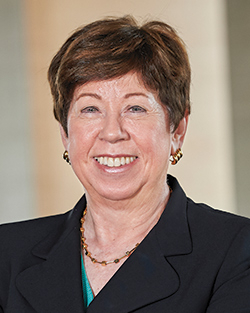
“[Deborah] also has a feel for the factors that should go into putting together the kind of team that can make these transactions go,” says Scott, now professor of law emerita. She adds: “[In her teaching] she doesn’t [oversimplify] the legal issues at all. A lot of them are transnational; a lot of them are technical and complex. She goes through them all, but always bearing in mind what the vision is and what outcome people are searching for.”
Intrigued by all he had heard, Grunin met in 2016 with Trevor Morrison, then dean of NYU Law. He came with a proposition: the creation of a center focused on the intersection of law and social entrepreneurship. Morrison saw how such a center could dovetail with growing student interest in that area.
“I think Jay liked the idea of our being first in that space, of our being entrepreneurial leaders in legal education in helping to define the space of law and social enterprise [and] do impactful work ourselves,” Morrison says. In April 2017, the Grunin Center was officially launched with Ashoka’s partnership and Burand and Scott as the center’s inaugural faculty co-directors.
Like Morrison, Burand also saw kismet. “This legal community of practice that I was trying to grow—both in my clinic with young professionals and outside the clinic with seasoned lawyers who wanted to move into this space—all of that could fit within a center,” along with NYU Law’s existing offerings, says Burand. While at OPIC, she had begun compiling a list of lawyers interested in impact investing. As a Michigan professor, Burand co-founded the Impact Investing Legal Working Group, whose gatherings evolved into the Grunin Center’s annual conference, launched in 2017.
Bringing together people with a common vision remains core to the Grunin Center’s mission. The conference convenes academics and practitioners in impact investing, social entrepreneurship, and sustainable development for a two-day exploration of cutting-edge issues in their fields. Now with over 300 attendees, the conference is among the largest recurring ones at NYU Law, Burand says.
While there exists a “cottage industry of books of impact investors…very rarely do they mention that a lawyer was even involved in their deals,” Burand says. “And I just got to the point where I was like, this cannot continue. These deals did not happen without a lawyer’s hand in it…. There’s a tendency among some to suggest that lawyers have only been throwing sand in the gears and that they are holding back the growth of the fields. And I think that does a real disservice to the lawyers practicing in these fields, because they’re out there pushing the edges to get more space for more deals and more impact to be made.”
Environmental finance expert Cynthia Williams ’89, a professor at Indiana University Maurer School of Law, describes the center’s annual conference as key to building “an international community of practice for lawyers and finance professionals and social entrepreneurs and innovators.” The “specialized and important information” the center propagates, Williams says, isn’t found elsewhere. Recent conferences have convened experts to tackle pressing questions arising from a changing political landscape, such as what happens to impact projects when government funding suddenly shifts and the trade-offs that Latin American countries navigate when accepting foreign investment.
The Grunin Center’s mission includes a leadership component, of which the annual conference is a part, along with webinars, symposia, and special convenings of leading legal scholars that facilitate pathbreaking conversations. The center also educates by disseminating research, publications, and analytic tools, and invests in the success of future practitioners through curricular offerings—in particular, the ITC.
Finally, the center celebrates important contributions to the field with the Grunin Prize for Law and Social Entrepreneurship and two other honors. The Grunin Prize for Sustained Commitment, first given in 2023, is a lifetime achievement award for lawyers whose careers have been dedicated to social entrepreneurship, impact investing, and sustainable development. In 2027, the center will inaugurate a prize for legal scholarship—an angle Burand says she particularly wants to bolster: “We need to spark the intellectual curiosity of more legal scholars and educators to study these fields and then bring their insights into the classroom.”
The Grunin Center, recognizing that boundary-pushing practitioners are made and not born, has supported growing the ITC’s capacity to hire teaching fellows through a White & Case grant. With this expanded reach, the clinic is introducing a new generation of lawyers to the world of impact investing. Many ITC alumni now do impact investing–related work in fields such as venture capital, energy storage development, and fund formation. The center also supports student research, extracurricular opportunities, scholarships, and externships.
“It is never cookie-cutter,” says Aaron Bourke ’09 of the impact investing deals he works on. “Every project has these really interesting complexities to it.”
Burand, who became a professor emerita last year after teaching the NYU Law clinic for a decade, says that she founded the original version of the clinic at Michigan while “starting to think about legacy, how to inspire the next generation.” She recalls that “no one had really tried to do something like this before: a purely international transactions clinic that only did cross-border deals…. I was trying very hard to make sure that we… did deals that were driven by mission and impact.
“So we represented both social entrepreneurs and impact investors, nonprofits, for-profits that were really mission-oriented. [It was complicated] just figuring out how to draw those lines.”
Burand, still faculty director of the Grunin Center, is now teaching a simulation seminar on launching and managing an impact investment fund in the NYU Law Abroad in Paris program. Adjunct Professor of Law Jesse Gero ’13, who worked in international project finance in private practice before moving to the US International Development Finance Corporation (formerly OPIC), began directing the ITC last year.

The ITC’s clients include the World Bank Group’s International Finance Corporation (IFC); Root Capital, an agricultural impact investor focused on poor rural areas of Africa, Latin America, and Southeast Asia; CrossBoundary Group, a mission-driven investment firm catering to underserved markets; and Habitat for Humanity International. The clinic students, Gero says, are “getting to grapple with real agreements and real deal terms, but they’re also grappling with these bigger-picture questions about what impact investing is.”
Gero lists some of those questions. There’s the role of pluralism: Who decides what counts as positive impact, and how? Then there’s the political equality problem: While investors obviously have a say in a project, what about impacted communities?
Fernando Martinez ’16, now deputy general counsel of Convergent Energy and Power, an energy storage developer, took the clinic in its first year at the Law School. His exposure to negotiations, credit agreements, and standardized term sheets for microfinance loans helped prepare him for his current role, he says.
“One of the coolest things about the clinic was that [Burand] was really generous with clients she had developed for many years,” says Martinez. “She did not hesitate to put 2L, 3L students in front of them and say, ‘These are your lawyers, and they’re going to do the work.’ She was trusting us.”

The clients are just as pleased. Amélie Baudot ’08, deputy chief executive officer at the International Fund for Public Interest Media, was one of the ITC’s first clients back when she was general counsel at the Global Innovation Fund, a $200 million London-based nonprofit fund focused on improving the lives of millions of the world’s poorest people. Through the years and Baudot’s different roles, ITC students working with her organizations have created template debt and equity agreements, drafted a grant template, and reviewed collective licensing agreements for media companies negotiating with tech companies. “It runs the gamut of anything an in-house legal team needs,” says Baudot.
Clark Wohlferd ’06, a partner in White & Case’s Energy, Infrastructure, Project Finance and Asset Finance practice group, oversees his firm’s collaboration with the ITC. Attorneys are eager to supervise fieldwork, Wohlferd says, because transactional lawyers appreciate pro bono opportunities aligned with their expertise. “It’s also great training for our young associates,” he says, “because they get a chance to work on documents, and so much of being a young lawyer is almost like learning a new language.”
The very term “impact investing” wasn’t coined until 2007. Aaron Bourke ’09, a JD student then, is now a partner at international law firm RPCK, leading its Investment Funds and Blended Finance Practice.

“It is never cookie-cutter,” says Bourke. “Every project has these really interesting complexities to it…. There might be a blended finance component where you need a mix of funds expertise and debt finance expertise…. You also find a really wide array of just playing in the space between for-profit and nonprofit, and trying to achieve double-bottom-line outcomes—financial return for your investors as well as impact outcomes.” According to Bourke, growth areas include environmental strategies as well as outcomes-based financing, in which investor returns are based on prespecified social or environmental results.
Baudot, involved in impact investing since 2011, says she has been thinking lately about the evolution of the space in the context of dramatic geopolitical and economic challenges. “It’s starting to get difficult to see how pure official development assistance is going to continue to fund public goods,” she says. “We’ve been talking about leveraging private finance for a long time in both [public and private] sectors. I think the impact investing world now is much larger.... The sector feels ready to bring some of its tools to more traditionally grant-financed sectors, in my view.”
When the line between nonprofit and for-profit blurs, complex issues can emerge, including many related to tax—which can make or break a social enterprise. Tomer Inbar ’96, LLM ’98, a Graduate Tax Program alumnus, partner at Morgan Lewis & Bockius, and ITC guest lecturer, focuses on tax-exempt organizations and the for-profits that deal with them. A crucial distinction for tax purposes is that between mission-related investments (MRIs) and program-related investments (PRIs), Inbar says.
An MRI is essentially a prudent impact investment and is not defined as a charitable activity by the Internal Revenue Service. PRIs, on the other hand, are mission-driven investments that are primarily charitable in nature and are similar to grants; the Internal Revenue Code defines them explicitly as furthering a tax-exempt purpose without the aim of producing significant income, lobbying, or electioneering. Some PRI examples given by the IRS include interest-free loans to underprivileged students and investments in businesses located in low-income neighborhoods.

“If I define impact as charitable impact, then I potentially have switched over to the program side of the house,” he says. “If I’ve defined impact as impact writ large—I want to do good in the world, but I’m not necessarily going to ring-fence that with charitability…then there is a continuum as to how much impact you have…. What do we think about impact? How do we define and measure it? But I am still focused on returns, and I have effectively remained on the investment side of the house, albeit in a mission-aligned way.”
Bringing innovations to clinical teaching is not the only aspiration of the Grunin Center, which has created a resource center to hold interactive teaching materials for use in law school classrooms as well as interdisciplinary classrooms—globally. Burand imagines a day when case studies created with the support of the Grunin Center will rival those of Harvard Business School.
A key aim is to position the new institute for the future of a rapidly changing field. A subcommittee of the center’s advisory board is developing a new strategic plan, to be issued next year. Potential enhancements include increased course offerings and professional seminars and a deeper focus on scholarship. Rachel Robbins ’76, an NYU Law trustee and former general counsel of the IFC, has been on the advisory board since the center’s founding. The center’s importance, she says, lies in its “convening power: building community and modeling what lawyers should be doing and can be doing.”
That kind of forward-thinking collaboration, says McKenzie, helps explain why the Grunin Center has thrived at NYU Law. “There aren’t many law schools where key faculty, working with a dean and an alum and donor, can launch something truly new and important without being sure exactly where it would go and how far it would soar,” he says. “But it’s in the NYU DNA to be smart while taking risks that can pay off. The Grunin story is the quintessential example.”
Atticus Gannaway is senior writer at NYU Law.
ITC in Action
Three case studies from the past several years show the broad diversity of the work done by the International Transactions Clinic (ITC). Root Capital is a nonprofit that provides loans and business services to developing agricultural enterprises in poor rural areas of Africa, Latin America, and Southeast Asia. Root Capital asked the ITC to draft a term sheet for a new type of financing designed to help small-scale farmers invest in more climateresilient practices. ITC students delivered a comprehensive, customizable template with annotations for loan officers to help guide negotiations. MCE Social Capital (MCE) is a nonprofit that funds sustainability-focused enterprises in emerging markets, with a focus on supporting women entrepreneurs. MCE funds small loans that partner organizations pass on to local entrepreneurs and also invests directly in small businesses. The ITC drafted an intercreditor agreement—a contract that governs how multiple lenders share rights and responsibilities when lending to the same borrower—that would let MCE team up with a consortium of other impact investors. The students also drafted a summary guide and term sheet. Jibu is a social enterprise that has developed local franchises to provide affordable, safe drinking water and other essentials to underserved urban emerging markets in more than half a dozen countries in Africa. Jibu sought the ITC’s help in developing the fundamental business agreement between itself and its franchisees that governs matters such as quality controls. The organization, which now oversees hundreds of franchises, has continued to seek counsel from the ITC as it expands. Photo credit: Accion |