

Democracy’s Defenders: New initiatives are examining democratic backsliding—and charting paths to reverse it.
Last September, NYU Law’s Democracy Project posted an essay on its website that went viral. Authored by Caleb Nelson, a University of Virginia School of Law professor and leading originalist scholar, the essay expressed skepticism about whether there are strong originalist grounds supporting the unitary executive branch theory. It was an issue central to the then-pending and much-watched case Trump v. Slaughter, as well as other cases on the reach of presidential authority.
William Baude of the University of Chicago Law School, another prominent originalist, called Nelson’s piece a “bombshell” on social media. On the day the New York Times wrote about it, the essay garnered 114,000 views. It was cited in briefs filed by both parties in Slaughter, as well as in nine amicus briefs on both sides. It was also mentioned during oral argument.
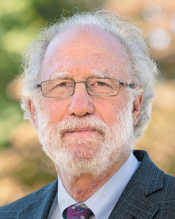
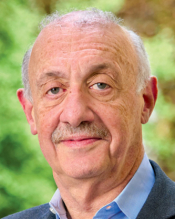
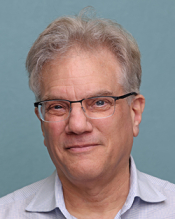
Nelson’s piece provided an early proof of concept for the Democracy Project, launched last September to pursue research and convene bipartisan conversations on democratic governance. Its founding faculty directors are Bob Bauer, professor of practice and distinguished scholar in residence; Samuel Issacharoff, Bonnie and Richard Reiss Professor of Constitutional Law; and Richard Pildes, Sudler Family Professor of Constitutional Law. Two other democracy-related initiatives debuted at the Law School last fall: the Center for Law and Public Trust, headed by Distinguished Scholar in Residence Vanita Gupta ’01 following her service as associate attorney general of the United States from 2021 to 2024, and the Rule of Law Lab, directed by Professor of Practice Amrit Singh. While each of these initiatives has a different focus, they originated from a common concern: Around the world, through much of this century, democracy and the rule of law have been taking a drubbing.
The annual Economist Intelligence Unit Democracy Index, which grades 167 countries on the state of their democracies, ticked up slightly this year. But the average country’s score on the previous year’s edition fell to its lowest level since the index began in 2006. (The rating is based on an assessment of a nation’s electoral processes, governance, political participation, political culture, and civil liberties.) Nonprofit Freedom House reports that its metrics for global freedom have fallen for the 20th consecutive year. Statistics published in 2026 by another nonprofit, World Justice Project, show that “rule of law has declined globally for the 8th year in a row.”
A big source of downward pressure on democracy health assessments: the United States. The US dropped on the latest Democracy Index, which categorizes the country as a “flawed democracy.” While still considered “free” by Freedom House, the US has lost more points on the Freedom House index since 2005 than all other countries measured except for Nauru and Bulgaria. “We live in an era of deep democratic dissatisfaction,” says Pildes. “Over the last 10 to 15 years, large numbers of citizens in nearly all Western countries have been expressing discontent, distrust, alienation, anger, and worse, no matter which parties or coalitions are in power.” American democracy, he adds, “is facing challenges unlike any it’s faced since possibly the 1890s,” a previous period of extreme polarization.
“Democracy and the rule of law form the bedrock for almost everything that’s taught and studied in law schools—and for how we function as an orderly and equitable society,” notes Dean and Cecelia Goetz Professor of Law Troy McKenzie ’00. “The cracks forming in those foundations deserve urgent attention, and these initiatives are part of the way NYU Law is stepping up to meet the moment.”
Democracy’s Roundtable
Certain aspects of democracy have long been a focus at law schools—separation of powers, federalism, and voting rights, for example. But democracy itself was not a dedicated field of teaching and scholarship until 1998, when Issacharoff, Pildes, and Pamela Karlan (now at Stanford Law School) published the first edition of their casebook, The Law of Democracy: Legal Structure of the Political Process.
While the first edition pointed to forces creating “pressure” on democracy in the US, such as racial redistricting and the role of money in politics, the overall tone was optimistic. Internationally, more new democracies have been formed in the last decade than at any previous time,” the authors wrote. The tone of the most recent edition of the casebook, published in 2022, shifted markedly, with the publisher’s web page noting “the embattled state of democracy in the US and abroad.”
Across borders, observes Issacharoff in an interview, democracies are being undercut by similar factors, including weakened political parties and paralyzed legislative branches. “When it happens everywhere, it can’t just be a bug of American society,” he says. “It has to be something more systemic.” And that, he says, led to the decision to create the Democracy Project and its core objective: “to step back and think more systemically [about these common challenges] and to invite others to do that with us.”
On its website, the Democracy Project bills itself as “democracy’s roundtable,” and during its first year it has published more than 140 essays featuring a broad range of perspectives on the state of democracy in the US and abroad, as well as potential reforms. Examples include pieces on congressional control over federal spending by Shalanda Young, director of the US Office of Management and Budget under President Joe Biden and now a distinguished scholar in residence and adjunct professor at NYU Law; on technology and democracy by entrepreneur Mark Cuban; and on the importance of “solidarity” in commitment to the rule of law by Adam Bodnar, a senator and former minister of justice in Poland.
From its inception, the Democracy Project has shaped public debate, as demonstrated by Caleb Nelson’s essay. (The Supreme Court did not adopt Nelson’s view, ruling in June in Slaughter to expand presidential authority over independent agencies.) Another essay, published last October by Jonathan Mitchell, questioned the idea that the Supreme Court alone can interpret the Constitution and that the legislative and executive branches are not free to reach their own determinations of constitutional meaning when performing their official functions. Mitchell is a conservative former solicitor general of Texas and architect of Texas’s pre-viability abortion ban. But the day after his piece was published, Samuel Moyn, a liberal professor at Yale Law School, posted his one-word assessment on X: “Good.”
“There are very few forums these days—academic forums in particular—that bring together people of significantly different views,” notes Pildes. “That’s one of the important things we wanted to do, and I think we’ve actually succeeded in doing, maybe even more so than we hoped.”
Rebuilding Trust
The primary concern that Gupta’s Center for Law and Public Trust aims to address is encapsulated in its name. “Trust in American institutions—government, courts, and even civil society—has steadily eroded and now stands at historic lows,” Gupta explains in an interview. “Americans across the political spectrum view institutions in this country as fundamentally corrupt and rife with abuse—that they don’t deliver for the American people.” With ambitious plans to operate on multiple fronts, Gupta devoted the last academic year to laying the foundations for the center’s operations. She says she is intent on the center’s being “very practically oriented” to produce blueprints for “reimagining institutions.”
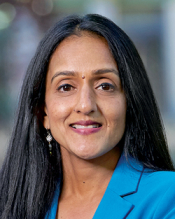
Among the center’s projects is one on rebuilding the US Department of Justice. “Today, the Department of Justice (DOJ) has been weaponized against the very communities it was founded to protect,” Gupta says. “Career civil servants have been purged, and decades of expertise that we rely on to protect our national security, defend civil rights, combat public corruption, and prosecute white collar crime have been lost.” Working with senior officials from Republican and Democratic administrations, the center is examining “how to restore and strengthen the career workforce and its expertise, the national security infrastructure, and the Civil Rights Division; how to reestablish DOJ’s independence from political interference in criminal enforcement; and what policies, norms, and operational changes might be necessary to build a department that is more effective, more resilient against abuse and corruption, and more trusted by the American people,” as Gupta told Politico in March.
Other center initiatives focus on restoring and bolstering accountability by strengthening state and local levers for combating federal and corporate corruption, restoring trust and fairness to the pardon process, equipping the next generation of government lawyers to provide sound counsel to their agencies, and convening experts to develop a framework for a truth and reconciliation–style commission as a means to repair the core tenets of US democracy.
Starting in the 2026–27 academic year, the center also plans to offer leadership training for NYU Law students, as well as junior and mid-career lawyers. “Institutions,” Gupta notes, “are trusted only insofar as we trust the people who lead them.”
As demonstrated by the project to rebuild DOJ, the center “is unmoored by any partisan assumptions,” she says. On its advisory board is Peter Keisler, who served as acting attorney general and assistant attorney general for the DOJ’s Civil Division in the George W. Bush administration, and as associate counsel to the president in the Reagan administration. “We’re seeing today a widespread loss of trust in American institutions,” says Keisler. “Vanita’s center is focusing on the important work of developing and implementing plans to reform our institutions and regain that trust, and I’m proud to be part of that effort.”
In January, Gupta moderated an NYU Law Forum, sponsored by Latham & Watkins, with Noel Francisco, who was solicitor general during President Donald Trump’s first term, and Elizabeth Prelogar, solicitor general under President Joe Biden. “[This is] one way we are exposing students to varying points of view and modeling civil discourse across difference,” Gupta says. “Distrust in our public institutions and leaders is shared across the political spectrum,” she adds. “The ideas that we examine are going to need to come from everywhere and from anyone who believes in the rule of law.”
‘Transnational Tyranny’
Singh’s work on democracy and its vulnerabilities plays out in multiple venues. You’ll find her teaching in the classroom, conducting research, litigating cases, and—through opinion writing and documentary film—reaching a broad audience. Her Rule of Law Lab’s mission is to study and deploy legal tools to defend democracy and the rule of law around the world.
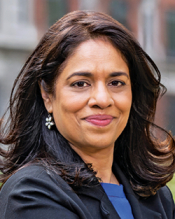
In pursuing research, litigation, and advocacy, the lab and its students have teamed up with local partners in countries ranging from Guatemala to Poland. This global orientation stems from Singh’s earlier work as a human rights and civil liberties lawyer, when she became familiar, she says, with “transnational abuses” of rights and the legal strategies that could be pursued in different jurisdictions to oppose them. While at the American the law, or its outward appearance, to dismantle democratic checks and balances.” And his approach has been embraced by populist leaders across the globe—a phenomenon Singh calls “transnational tyranny.”
Speaking to the BBC this year, Singh described how Orbán’s party came to directly or indirectly control nearly 80 percent of Hungary’s media, not through overt censorship but through a sustained campaign of legal, economic, and regulatory pressure. Her assessment drew on a report issued by the lab and Hungarian watchdog Mérték Media Monitor, which documented those tactics in detail and also made recommendations for future governments and the European Union on how to counter them.
The Rule of Law Lab has also tracked how leaders elsewhere have emulated Orbán’s tactics. Following 2024 elections in Georgia, for example, the lab worked with the Gnomon Wise Research Institute at the University of Georgia in Tbilisi to produce a report in September 2025 documenting key elements of the ruling party’s “multi-pronged authoritarian strategy.” According to the report, these include politicizing prosecutions, banning opposition parties and imprisoning their leaders, violently suppressing protests, and replacing independent media with “propaganda media,” to name just a few.
Tracking the authoritarian playbook around the world led the Rule of Law Lab to Mexico. A May 2024 report issued by the lab and the Mexican Bar Association warned that proposed constitutional reforms instituting the election of all judges by popular vote “presented a direct threat to judicial independence.” Since those changes were enacted in late 2024, the lab has documented the fallout. In conjunction with Mexican nonprofit Juicio Justo and Germany’s Konrad Adenauer Foundation, it produced a short documentary film titled Losing Judgment: Mexico’s Judicial Reform, which was screened at the Law School in April.
Then there’s the US. In a Democracy Project essay, Singh points to Trump’s “follow[ing] Orbán’s model of mass civil servant firings and weaponizing the national budget to neutralize resisting institutions dependent on state funding.” In a piece for The Guardian in April, she argued that Trump is employing the Orbán model of media repression. “I founded the lab with a mandate that included the US,” she says. “Democracy was already in decline here, and the same patterns we were seeing abroad were taking root at home.”
In April, Hungarians overwhelmingly voted Orbán and his party out of power. While it remains to be seen how far Orbán’s successor will go in restoring rule of law and democratic governance, the election results added to some glimmers of hope about democracy’s prospects [see “Not All Doom and Gloom,” below]. To the extent Singh and her lab continue their focus on Hungary, it may be not as a case study of how countries slide into authoritarianism, but of how they reverse course and come out of it.
Michael Orey is public affairs director at NYU Law.
Not All Doom and Gloom
Even as the Economist Intelligence Unit’s global democracy index remains near a historic low, its sister organization The Economist magazine pointed to a slight uptick in the 2026 index to proclaim in early April, “Global democracy is in better shape than you think.” And while the founders of the new democracy initiatives at the Law School remain deeply concerned about a global slide toward authoritarianism—or at least “illiberal democracy”—they too are not without hope.
We asked them what gives them reasons for optimism.
Vanita Gupta ’01
“Protesters showing up on frozen Minneapolis mornings demanding an end to ICE brutality. Election administrators and volunteers safeguarding our system, and judges applying the law, in the face of threats and intimidation. Law firms refusing to capitulate to blatantly unconstitutional executive orders despite risk to profit and client lists. Lawyers rushing to court to challenge unlawful orders when they know putting their name on a brief puts them on an enemies list. DOJ lawyers resigning or losing their jobs rather than comply with illegal or unethical orders. These people remind us that moral courage is a daily insistence.”
Bob Bauer
“As I think we have seen on a number of occasions, in the response of the courts and the response of the citizenry—for example, during the surge of ICE agents in Minnesota—the American public is fundamentally committed to democracy. We have seen initiatives to recommit to the democratic project at the state and local—not only the national—level. And there is increasingly detectible more of a widely shared understanding than many suppose of what a democratic culture requires.”
Samuel Issacharoff
“Populists respond to ferment from people facing economic insecurity, sensing that they don’t feel at home in their own countries, and have channeled that discontent into electoral success. The problem is that their solutions tend not to work. Populism undermines institutions of accountability, so it concentrates power, and it’s prone to cronyism, nepotism, and corruption. This is not a mechanism for getting the best people in place and leads to erosion of political support. If you look at countries that have gone to the brink of democracy fading and pulled back, you see certain signs of what can be done.
Richard Pildes
“One feature that makes me optimistic about the United States is the pluralistic and decentralized nature of our political culture and institutions. We don’t have a single dominant national university, for example, which would be easier for an authoritarian regime to capture. We don’t have a single state media outlet that dominates communication. Federalism also means that political power is not entirely concentrated in a single national government. In addition, America has an exceptionally robust civil society, with numerous organizations devoted to democratic values. This pluralistic and decentralized structure enables great capacity for democratic resilience.”
Amrit Singh
“History offers repeated examples of citizens unseating autocrats who entrench themselves through repression and corruption. It may take time, and the conditions have to be right— a united opposition, a credible leader, and a citizenry that has finally had enough. But it can happen. Look at Hungary in April. Viktor Orbán had 16 years and a supermajority in parliament. He rewrote the constitution, packed the courts, gerrymandered electoral districts, and dominated the media. And he still lost—by a landslide. That gives me reason for optimism.”