Christopher Jon Sprigman explains what copyright can learn from its antitrust cousin
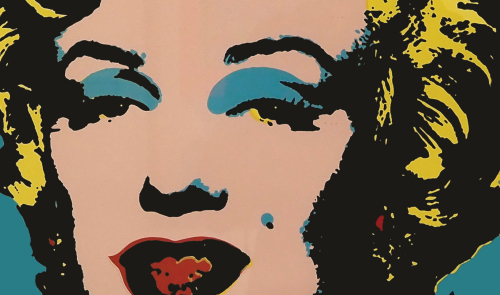
When the Supreme Court ruled in Andy Warhol Foundation for the Visual Arts, Inc. v. Goldsmith (2023) that the legendary artist’s transformation of a photographer’s shot of the musician Prince didn’t constitute fair use, the decision rocked the art world. Many contemporary artists appropriate existing works by design, a practice that began to proliferate in the earlier decades of the last century. Think Marcel Duchamp’s mustachioed Mona Lisa or Warhol’s—well, almost anything by Warhol.
Delve into the details of the Court’s opinion, however, and the portrait grows more complex. Section 107 of the Copyright Act provides a statutory framework of four factors to evaluate a given use of a copyrighted material is fair use. Warhol’s reasoning hinged on the first factor—the purpose and character of the use, and especially whether it is sufficiently transformative of the original work from which the new work is derived.

Christopher Jon Sprigman, Murray and Kathleen Bring Professor of Law, sees Warhol as an opportunity to bring a new, potentially clarifying lens to the ambiguities of fair use doctrine. In “Copyright, Meet Antitrust: The Supreme Court’s Warhol Decision and the Rise of Competition Analysis in Fair Use,” which appeared in the Yale Law Journal Forum in January 2025, Sprigman argues that the Court’s unexpected reasoning in Warhol paves the way for the application of antitrust competition analysis to questions of copyright, bridging a silo between two related but distinct areas of law. He discussed his paper in an interview.
What led you to apply antitrust competition analysis tools to questions of fair use in copyright?
Well, the Supreme Court opened up the discussion by doing something that I think was unexpected and interesting. Section 107 of the Copyright Act sets out guidelines or factors relative to fair use. But Congress was pretty clear that they didn’t mean to preempt courts’ development of the doctrine. Basically, they were just providing some guidance and a platform for courts to reason about fair use. In fair use, there was always an element of the analysis that asked questions about competition. The fourth factor asks about the effect on the market for the plaintiff’s work, and that always implicated questions about competition. Although often courts didn’t call it by name, that’s the kind of thinking they were doing.
But then in Warhol, the Court said something that really, I think, moved competition to the front of the analysis and made it even more important. It said [that] in determining under the first statutory factor whether the defendant’s use of a work is transformative in a way that would tend to bend the analysis toward fair use, courts should think about whether the defendant’s use has the same or a different purpose. And the principal way the Court talked about that is that a work with the same purpose would tend to compete with the plaintiff’s work, and a work with a different purpose would tend not to compete with the plaintiff’s work. That really, I think, promoted competition analysis.
As an antitrust lawyer, I thought, well, if we were to really take this seriously, how would we do it? Let’s talk a bit about how to do that in a disciplined way.
Incidentally, the American Law Institute’s first-ever Restatement of the Law, Copyright, for which I served as Reporter and for which the final version is coming out soon, talks a lot in the fair use section about Warhol and its implications for competition. I’m hoping that it will provide guidance to lawyers that will help them to make good use of what the Supreme Court has basically given us.
At the time of the Warhol decision, some legal analysts opined that it would muddy the waters for artists, given that contemporary art often closely imitates existing works. Do you think the decision makes fair use analysis more straightforward, more complicated, or a mixture of both?
It’s not clear yet what it does. The effect is likely to be pretty complex and to become clearer as lawyers adapt. I tried in the article to describe to copyright lawyers how we would think about this new question of competition in the first factor. How would an antitrust lawyer think about competition, if that is in fact what the Court wants us to think about? My hope is that when you do the competitive analysis, you actually learn some things about what kinds of uses harm the plaintiff’s market and what kinds of uses don’t.
I think in some ways the first and fourth factors have merged, and in some ways they haven’t. More to the point, competition has become more important in first-factor analysis. The transformativeness question is still, I think, absolutely essential to the outcome, but now competition is really running that question.
It’s also worth pointing out that, while Warhol is a very important decision—like all Supreme Court decisions are—it’s not, by any means, the last word. But I do think it’s very helpful and makes some sensible interventions.
It’s become almost cliché to ask this question, but what new wrinkles has AI introduced in this area?
I would say that AI has definitely reinvigorated these fair use issues. The question after Warhol is whether the defendant’s use competes with the plaintiff’s work. When it comes to training AI, it’s kind of like a wholesale competition, right? It’s not with any one work, typically, but with all work. What courts are trying to figure out right now is whether that kind of competition—the wholesale kind—counts in the fair use analysis.
One court, at least, has said, “Well, this general competition is competition.” My view is that that analysis would be a real innovation. I don’t actually think it’s right. The right question is whether the defendant’s use competes with the plaintiff’s work in particular. As far as I can see, in most cases involving AI training, there is no specific competition with the plaintiff’s work—at least for a general-purpose large language model. AI-produced works may compete with human-produced work in general. But you’ve got to ask whether copyright law is really intended to limit competition in that way. I think it’s not intended to do that. That’s not the model that the Copyright Act has in mind. Whether it should or not is a separate question.
Was there any particular work of yours that served as a springboard for this article?
I used some examples from a casebook that I co-wrote with Daniel Francis [JSD ’20], so there was some cross-fertilization. Working on that book allowed me to move back into thinking about antitrust after doing mostly IP for a while. From the casebook, I had a really nice ready-made observation about the nature of competition, which was Daniel’s contribution originally, that I used in the article. It was this great example about how to define a market and figure out what the products were in the market—specifically the market for coffee. That competition analysis is very helpful in thinking about the fair use analysis. It involves careful thinking about things that are technically similar products, but they may nonetheless not be competing in the way that an antitrust lawyer would think of that concept—that is, if consumers do not treat the two products as substitutes, one product may not constrain the price charged for the other.
That kind of careful thinking about substitutability and the economic relationship between products is how antitrust lawyers analyze the prospect of competition. It is a much more nuanced way of approaching the question compared with what copyright lawyers traditionally have done. The point of the article for me was to let copyright lawyers know that they have cousins in this related field who have been thinking about competition for a long time. Antitrust lawyers have developed some really good methodologies for assessing whether products compete. The article gives copyright lawyers a basic primer on how those methodologies work and how they could be ported over for use in copyright cases.
That was fun for me because antitrust is where I started. To this day, the antitrust lens affects how I view intellectual property issues. The focus on competition and on social welfare always underlies my thinking wherever I go in the law.
This interview has been condensed and edited.