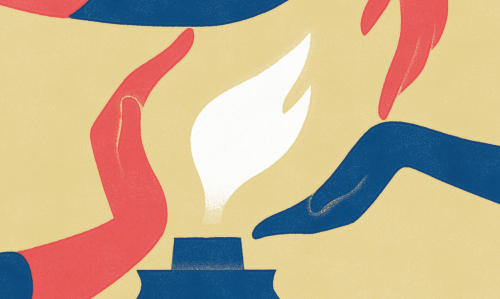
NYU Law Forum previews midterm election—and what’s next
With voting already underway in a contentious midterm election in the United States, three faculty experts examined stresses on the US electoral system and outlined potential reforms in an NYU Law Forum on October 16, “Briefing on the 2026 Elections.” The panel featured Vanita Gupta ’01, executive director of the Center for Law and Public Trust at NYU Law, and Samuel Issacharoff and Richard Pildes, two of the faculty co-directors of the Democracy Project at NYU Law.
Watch the full discussion:
Pildes, who is Sudler Family Professor of Constitutional Law, opened the discussion by noting that the federal government’s recent efforts to change electoral processes in the US have largely failed. At the US Supreme Court, in Congress, and in actions by federal agencies—ranging from the Department of Justice to the Federal Emergency Management Agency—the Trump administration has sought, with little success, to curb voting by mail and to crack down on what it claims to be widespread voting by noncitizens.
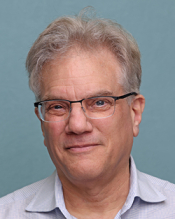
“No state has been forced to change its voting policies by anything the federal government has done for the fall elections,” Pildes said.
Gupta, a distinguished scholar in residence and former US associate attorney general, emphasized that it has taken significant work by a range of organizations, attorneys, and states to turn back challenges to voting processes. She outlined potential and current risks to the electoral system, including the possible seizure of ballots by federal law enforcement, threats of violence at polling places, and investigations aimed at nonpartisan voter registration groups.
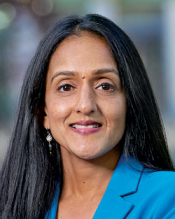
The overarching danger, Gupta said, is that voters doubt the fairness of the election result. “We need voters to have confidence in our elections,” she said.
Issacharoff, Bonnie and Richard Reiss Professor of Constitutional Law, agreed that preserving voter confidence is paramount. He provided an international perspective, noting that countries around the world are seeing problems with citizen confidence in elections and with political support for the democratic process. Issacharoff linked these changes to the decline of traditional political parties.

“You see a breakdown in the established political order,” Issacharoff said, “which means that you’re going to have much more pressure on the electoral system.”
Both Pildes and Issacharoff argued that current American party primary process distorts politics, producing more extreme candidates on both sides. As an alternative, Pildes suggested Alaska’s primary system as a model: All candidates run in a single primary, and the four candidates who receive the most votes proceed to the general election, where the winner is chosen through ranked-choice voting.
Gupta brought up a question that she said she has heard from many students: What difference will it make if Democrats win control of Congress? What can be accomplished in a divided government? “The biggest difference is oversight,” she said, noting that recent polling shows that Americans list corruption as one of their top concerns.
Issacharoff, however, argued that Democrats will face a difficult choice if they take one or both houses of Congress. A focus on investigations and indictments, he suggested, would preempt efforts to promulgate policy: “Do they want to show what their governance looks like…or do they want to start holding hearings?”
“I think Americans are so overwhelmingly concerned about issues like affordability, housing, these kinds of day-to-day sorts of issues… the Democrats [need to] present a model of what they will do on those issues if you give them power in the next election,” Pildes said. “I think they absolutely have to be doing that, along with whatever else they might do about these accountability or corruption kinds of issues.”
Gupta responded that Americans’ concerns about corruption and affordability are linked. “It’s the theory that the rich are getting richer through office or allyship with office, access to office, self-dealing, while people can’t afford healthcare, gas, and groceries,” she said. “And that tie is why [accountability] has become such a resonant issue right now.”