

Five Years Out: Brian Umana ’20
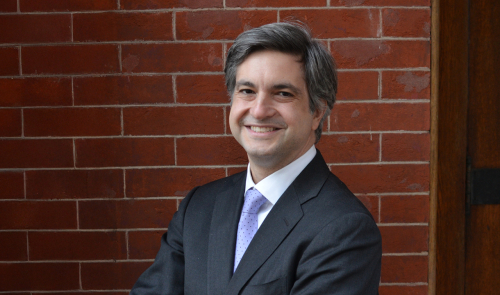
Assistant District Attorney, Brooklyn District Attorney’s Office
Describe your current position. What are the challenges? What do you like most about it?
I’m an assistant district attorney (ADA) in Brooklyn. I’ve worked for two units in the District Attorney’s Office, first the virtual currency unit and now the appeals bureau. In broad terms, a challenge of the job, and one that I happen to also like, is to feel like a constant student. As an investigative attorney, that can mean studying and improving the way one asks questions of investigators, witnesses and victims. It can also mean refining one’s knowledge of exactly what types of data possessed by tech companies can advance a cybercrime investigation.
As an appellate lawyer, by contrast, it means continuing to study the statutes and the case law, thinking about various ways of applying the law to the facts, and various concepts of justice and fairness that might matter to judges. What I also enjoy is simply watching the ways that ADAs with decades of experience argue, write, and speak about the criminal law.
What led to you becoming an ADA?
Before law school, for almost a decade, I worked as a writer in various capacities—filmmaking, ads, ghostwriting political speeches, and handling strategy for a couple of start-ups in media and software. I liked all of that work, but I decided to go to law school because I wanted to do work that was both academic and mission-oriented.
After law school, I clerked for a terrific judge on the high court of Maryland, Irma Raker, who is an expert in criminal law. I then did litigation at a firm in midtown Manhattan. The Brooklyn DA’s Office was appealing because of its people and its focus on progressive and ethical prosecution—not just talking the talk, but walking the walk. I am proud of many aspects of the office, including that it seeks alternatives to incarceration whenever appropriate and that it has a Conviction Review Unit.
How did NYU Law prepare you for your career path?
For the first session of [former US Attorney for the Southern District of New York] Preet Bharara’s seminar on Elements of Criminal Justice, we read Judge Learned Hand’s “The Spirit of Liberty” speech, [Attorney General and later Supreme Court Justice] Robert Jackson’s 1940 speech called “The Federal Prosecutor,” and a Clarence Darrow closing argument for the defense in People v. Henry Sweet. I still think about those texts each month. A prosecutor who just wants to notch wins will not serve justice. As Hand said, “The spirit of liberty is the spirit which is not too sure that it is right…The spirit of liberty remembers that not even a sparrow falls to the earth unheeded.”
NYU Law allowed me to believe I could be a lawyer and a humanities scholar at the same time.
What was your favorite class or activity at the Law School?
Probably Art Law, taught by Amy Adler [Emily Kempin Professor of Law]. I liked the theme of thinking through conflicts between the perspectives of artists and lawyers. I then kept doing art law activities through the rest of my time in law school.
Another key experience was the Southern District of New York externship with the Securities and Commodities Fraud Task Force at the US Attorney’s Office. I remember weeks in the fall of 3L when I was always running around between the US Attorney’s Office, the Law School, and the Metropolitan Museum, where I was doing research in the archives. That same fall, I also took a class at the Institute of Fine Arts, NYU, a postgraduate advanced research institute on the Upper East Side.
Looking back, I feel lucky that while learning doctrine of evidence and criminal procedure, I was also performing research on illicit antiquities trafficking, problems of buyers’ due diligence, or even, outside the law, the history of 16th and 17th century art collections that were proto-museums and that still in some ways influence questions of curation and operations for museums in the 21st century.
Did any law professors impact your academic and/or personal development?
Amy Adler and Helen Hershkoff [Herbert M. and Svetlana Wachtell Professor of Constitutional Law and Civil Liberties] both helped me develop my view that who you are outside of legal scholarship can strengthen your legal practice and scholarship. Jennifer Arlen [Norman Z. Paige Professor of Law], Judge Ellen Biben, Judge Jed Rakoff, Steve Peikin, and Judge Raymond Lohier all taught me many aspects of criminal law, including securities and commodities fraud, leading me to consider working as a prosecutor, which was not a goal I had when I entered law school.
If you could go back in time, what advice would you give yourself?
First, don’t make life or work decisions based principally on money. Second, even though it can feel safe to be guarded and careful, great opportunities can come from showing people who you really are. And third, any time you’re guided by an ethics of caring, or a sense of wonder, then you’re doing something worthwhile.
When you are not working, what do you enjoy doing in your leisure time?
I love tennis; it helps me stay mentally present. I also enjoy working in my garden. And to be with family and friends, particularly outdoors. I like hiking upstate and in the New England coast, mountains, and woods. As Shakespeare noted in As You Like It, the woods are more free from peril than the envious court. I also look at paintings. I read poetry. To me, the best legal writer is Wallace Stevens.
This interview has been condensed and edited.