

Q&A with Patrice Sulton
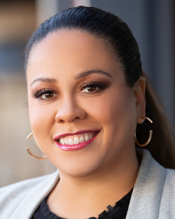
Executive Director, Center on Race, Inequality, and the Law
Tell us the story of how you came to work at NYU Law.
I joined the center in September 2025 after about 20 years of teaching, policy advocacy, and practicing law in Washington, DC. Immediately before this position, I started a nonprofit organization with my law students focused on transforming the criminal legal system, which led to a record number of policy changes in DC, including simplifying and expanding criminal record sealing and expungement as well as decriminalizing street vending. Coming into this role has felt like a natural next step, bringing together scholars and practitioners, visionaries and organizers, to grow a center that is deeply committed to racial justice and liberation in all its dimensions.
What’s a typical day for you like?
A typical day for me is about balancing mission and machinery.
I spend part of my time on the substantive work of confronting and upending laws and policies with deep roots in our nation’s history of racism. I work with staff and partners on strategy, research, litigation, and campaigns.
The rest of the day is focused on running the business of the organization. That includes operations, fundraising, and communications. My goal is to make sure we have the resources, structure, and visibility to sustain this work over the long term.
What’s the most challenging thing about what you do? And what’s the most rewarding?
The most challenging part of what I do is staying patient while working towards the change I want to see in the world. Systems are stubborn, and progress often feels invisible until much later.
The most rewarding part is seeing students, community members, and colleagues step into their power and realize they can be part of shifting those systems. It’s also deeply rewarding when our work helps change a policy, a narrative, or someone’s sense of what’s possible.
What do you wish you’d known about the Law School on your first day of working here?
I wish I’d known how deeply connected the Law School is to movements and communities beyond the campus. On my first day, I saw it mostly as an institution, but now I understand it as a node in a much larger ecosystem of organizing, advocacy, and resistance.
I also wish I’d known how many people here are quietly doing justice‑oriented work outside their official titles. That hidden network of commitment makes the school a much more fertile ground for change than I realized at the start.
What is your favorite spot on campus, and why?
Whenever I have visitors, I tell them I have a Picasso sculpture and take them to see the Bust of Sylvette, in the park near the Silver Towers buildings, just off Bleecker Street. It’s one of those pieces that feels both monumental and a little hidden. Students and staff walk right by it every day, but when you actually stop and look, it’s impressive.
This interview has been edited and condensed.