

NYU Law symposium provides a venue for debate during UN negotiations on international tax
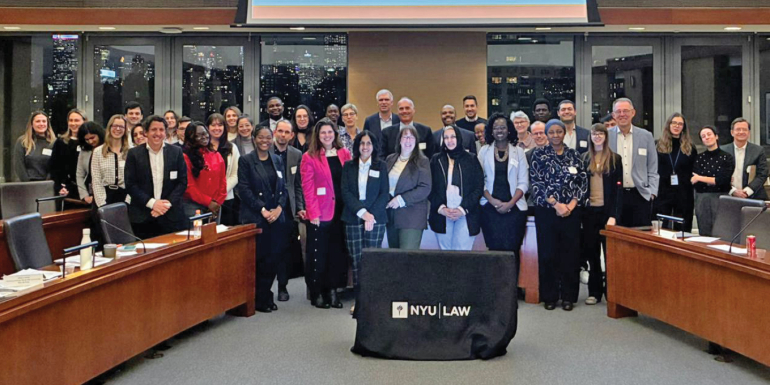
In early February, with delegates from around the world gathered in New York to negotiate a groundbreaking tax agreement—the United Nations Framework Convention on International Tax Cooperation—a concurrent NYU Law symposium offered a forum for exploration and discussion of key issues involved. Among the 80 attendees at the NYU Law symposium were government delegates from some 30 countries, United Nations officials, tax scholars and professionals, business representatives, and members of nongovernment organizations.
It was a real-time opportunity outside the official negotiating process for delegates to air concerns, dig into complex questions, and build relationships. As one panel noted during the symposium, trust is not created only through formal drafting. Among the issues considered during the confidential discussions were the taxation of cross-border services, including digital services; mechanisms of dispute resolution; and how the Framework Convention will interact with existing tax treaties.
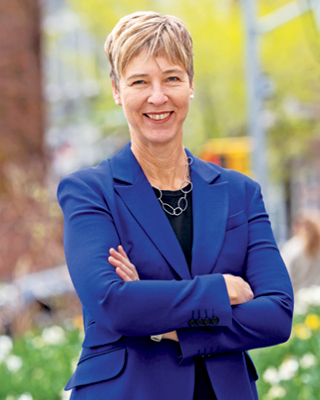
The UN negotiations of the Framework Convention will continue through 2027, through several additional sessions. In this Q&A, Miranda Stewart LLM ’98, director of NYU Law’s International Tax Program and visiting professor of law, explains what makes the Framework Convention significant and how the NYU Law symposium has helped support the UN process.
February marked the fourth session of negotiations around the first-ever UN Framework Convention on International Tax Cooperation. Tell us about your goals in organizing the symposium at NYU Law during this most recent session.
This is a historic moment, as it is the first time a multilateral tax convention has been negotiated under the auspices of the UN General Assembly. NYU Law professors and students have an illustrious history of engaging with the UN, and NYU Law also leads in international tax expertise—so it seemed the perfect opportunity to combine this knowledge to support states in negotiating the UN Tax Framework Convention. We also connected with the NYU Center on International Cooperation, which manages university-wide engagement with the UN. NYU is an accredited nongovernment organization with the UN Economic and Social Council (ECOSOC), and so is able to contribute to the process.
The goal was to bring together leading academics, government delegates, and nongovernment organizations together to discuss the issues and text of the Convention in a neutral environment, to encourage mutual understanding, and to tease out critical areas of dispute or areas that need attention.
What makes the Framework Convention significant? What are the issues that it aims to address?
The UN Tax Framework Convention aims to bind states to a commitment for a fair allocation of taxing rights and mutual assistance in tax cooperation. The goal is to support sustainable development of all countries while genuinely respecting the sovereignty of tax states.
There are no other UN-based international tax agreements, although there is an important multilateral convention on tax administrative assistance led by the OECD/European Union and today including more than 140 countries. But most international tax agreements are bilateral—there are more than 3,000 bilateral tax treaties around the world. Many developing countries feel that the existing treaties do not ensure a fair allocation of taxing rights to them, especially in the context of our global digital economy, and that the system undermines attempts to achieve the sustainable development goals.
What was the focus of the Framework Convention’s February session?
The UN Tax Framework Convention Intergovernmental Negotiating Committee includes all states that wish to join in developing the text of the Tax Framework Convention for consideration by the General Assembly in late 2027, together with the text of two early Protocols on taxation of cross-border services and dispute resolution.
The fourth session of the Committee was the first meeting to consider draft text for the Convention, which is likely to set high-level commitments of states to principles, rather than being a self-executing treaty. It will be important for the Convention to address its interaction with bilateral tax treaties.
For example, if states sign the Convention, they may commit to renegotiating older bilateral tax treaties to align with their new commitments to a fairer system in the Convention. The Convention should also reinforce the importance of the multilateral tax administrative convention, and seek to improve its operation in practice. And it could reference potential interactions with other treaties, such as bilateral investment treaties—for example, in respect to dispute resolution involving tax matters.
Last year the United States withdrew from the negotiations. What will the impact of nonparticipation be for the US?
The United States has not withdrawn from the Convention as such, but it is not currently participating in the Committee that is working on the text of the Convention. That is its sovereign right—the international treaty system is consent-based, and a state can choose not to participate. However, other countries can continue to negotiate multilaterally, and the United States will remain bound by its existing bilateral tax treaties.
The United States has a history of observing and developing its own unilateral tax measures, that may often be consistent with multilateral developments. The US Treasury, I am sure, is observing the process and is free to decide to join the text discussions, or to sign the Convention if it is approved by the General Assembly in future.
Can you tell us generally who participated in the NYU Law symposium?
The symposium was addressed by government officials involved in leading the Committee discussions in three workstreams about the Convention and the Protocols, including delegates from Africa, Europe, Latin America, Asia and the Middle East. We had representation from leading NGOs that focus on resource mobilization to support the Sustainable Development Goals, from international ambassadors and UN representatives with expertise on multilateral treaties, and scholars from Africa, Europe, the United States and Canada. And, it has also been great to have a team of NYU students in international tax and international law working together to contribute pro bono to support the project and carry out relevant research.
We held the symposium on the middle weekend of the fourth session—this enabled us to invite representatives of the UN missions or the ministries of finance from many governments engaged in the Committee meetings. I think the timing was helpful, as participants were actively considering key issues relating to the text. We plan to hold future events, and to make additional contributions between negotiating sessions in order to support governments in preparing for the fifth session, which takes place in New York City just before the start of the Fall 2026 semester.
This interview has been condensed and edited.