Lauren Tabaksblat ’08 describes co-founding litigation boutique firm Brithem
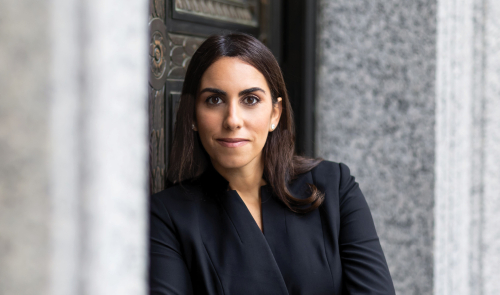
In September 2025, Lauren Tabaksblat ’08 and her colleague Michael Bowe—who together had co-headed Brown Rudnick’s litigation group—launched a new, Manhattan-based litigation boutique, Brithem LLP. The start-up takes its name from the Old Irish term for a legal expert. Its mission, Tabaksblat says, is to tackle significant commercial disputes in matters including securities, contracts, real estate, and malpractice.
Tabaksblat, who started her legal career at the firm that is now Kasowitz LLP and moved to Brown Rudnick with Bowe in 2020, is no stranger to big, hard-fought cases. As a young lawyer, she was part of the legal team, led by Bowe, that represented Fairfax Financial Holdings in a decade-long racketeering case against multiple hedge funds. Since 2021, she and Bowe have represented plaintiffs in an ongoing, high-profile human trafficking suit concerning the monetization of child abuse materials posted on Pornhub.com.
In this Q&A, Tabaksblat reflects on how NYU Law strengthened her goal of pursuing a career in litigation, talks about the rewards and challenges of being an entrepreneur in law, and explains why she believes a litigation boutique like Brithem offers a better model for training the next generation of trial lawyers.
Tell us about your new firm.
It’s definitely been a busy few months. But a busy law practice is a good thing. When we launched, we had nine attorneys. Since then, we hired three attorneys. That total headcount is in addition to our in-house investigative team and support staff.
Our focus at Brithem is on the art of courtroom lawyering. We don’t specialize in a particular area; our expertise is in positioning cases for trial and the resolutions that come with being trial ready from the get-go. Over time, Michael and I have developed a specialty in handling strategic litigations that also have important societal impacts. We litigate a full range of cases, from fraud, real estate matters, partnership disputes to breach of fiduciary duty claims, and everything in between.
One important matter that we’re currently working on is on behalf of Blueprint Capital Advisors, the largest Black-owned asset management firm in New Jersey. The case involves federal civil RICO [Racketeer Influenced and Corrupt Organizations Act] discrimination, retaliation, and misappropriation claims against several members of the New Jersey Division of Investment, as well as BlackRock Inc., Owl Rock Capital, and several other financial institutions.
Why did you enroll at NYU Law?
I grew up in Teaneck [New Jersey] and I went to Barnard College, where I majored in political science and minored in history. Law was always something that I contemplated. By focusing on political science and history, I was tracing the disciplines that lead to law.
New York is where I always wanted to settle. NYU has an amazing law school program with strong ties to New York firms. It also has a reputation for being an incredible collegiate environment where you receive a lot of support from professors and your fellow classmates. You hear that law school can be very stressful and very competitive, but NYU Law had a reputation for being incredibly collaborative.
What was the most memorable experience for you in attending NYU Law?
In my 3L year, I had the opportunity to do a litigation clinic, which validated my strong view that I wanted to pursue commercial litigation as a career path. The clinic was taught by Laura Sager. In addition to working on a public interest case, Professor Sager showed us the various phases of litigation through a simulation of a past clinic housing discrimination case. We conducted a client interview, drafted a complaint, worked on discovery, and took a deposition. I remember that she hired actors from the Tisch School to act as the client and witnesses. That was another perk about being at NYU Law—we had the ability to tap into the resources of all the other colleges and programs under the NYU umbrella.
Working on that simulated case helped me to understand how all of the pieces in a case fit together and how the decisions you make in the beginning of a case impact the trajectory. When I moved into leadership roles at different firms, I have advocated for using a similar method as a training tool for associates because there’s only a certain amount you can learn through watching. At the end of the day, you learn the most from doing.
What happened after you graduated?
I started as an associate at Kasowitz LLP, where I had spent two summers during law school. I worked there until 2020—by that time, I had become a partner.
I had amazing experiences as a junior lawyer. Kasowitz was a relatively new firm, and the teams were incredibly lean. There was a culture of giving as much responsibility to juniors as they wanted and could handle. It was the entrepreneurial nature of the firm that resulted in hands-on opportunities.
I had substantial opportunities to write full briefs on major cases and to work directly with the most senior partners at the firm, which is how I started working with Michael. When I started, there were many associates on the Fairfax case, but over the course of my early years, I was able to take on a tremendous amount of responsibility. That translated into me taking ownership of significant briefs, handling major depositions, and arguing motions. It was a lot of fun and incredibly challenging. It was rewarding. But at the same time, it was completely terrifying. And so I had a range of emotions at any given time. I realized that I was working a really high-profile case against some of the best firms in the country, and that came with a tremendous amount of responsibility, without all of the layers of attorneys that you generally would think of when it comes to practicing in Big Law. That early experience had a domino effect of opening the door for additional opportunities as my career progressed.
How did you decide to launch Brithem?
[Our decision] wasn’t really about starting our own firm as much as it was a realization that the way [Michael Bowe] and I wanted to practice and the types of cases we wanted to work on were not aligned with how Big Law looks at the economics of practicing. There has been a major trend in Big Law—because of the business model of charging billable hours per person—to throw a lot of people on cases. And Michael and I didn’t think that model created the most value for the client or resulted in the best outcome for the case. At Brithem, our teams are right-sized to focus on the handful of key issues that drive the case. This model allows us to move cases quickly, deliver value to our clients, and train the next generation of lawyers by giving them hands-on experience on lean teams, like I had.
We have a tremendous amount of experience handling strategic litigation on behalf of billion-dollar companies. And we see [Brithem] as providing a unique platform to provide our services to clients that seek alternative fee arrangements. Our focused litigation model and lean team approach allow us to align our interests with our clients and do cases of value for our clients and the firm.
One absolute condition that Michael and I agreed to was that we wouldn’t name the firm after ourselves because neither one of us had aspirations of ever starting our own firms. Our decision to do so was motivated only by our commitment to practice at the highest levels, on cases with societal importance, and do really good work first and foremost.
What challenges have you faced in taking on this venture?
You never start a new firm and it’s perfect. That would be disingenuous to say. Since we launched, I have been pulled in different directions in addition to litigating and practicing law, and have taken on many new responsibilities that I haven’t previously had to deal with. When I walked into the office for the first time, there were no notepads. All of these things that I had never before thought about, that had been taken care of for me the last 20 years at the big firms I worked at, no longer go without being noticed. Coordinating the logistics of construction for our office space, for example, is never a hat that I thought I would be wearing. But it’s a fun challenge when you’re doing it for a firm and team that you feel really invested in.
What makes for an effective trial attorney?
The two most important ingredients are a strong desire to win and a strong love of what you’re doing. Both of those ingredients, coupled together with hard work, make the formula for a successful litigator. At the end of the day, you can be the smartest person in the room, but if you don’t wake up in the morning thinking about your clients’ problems and trying to figure out how to solve them, then you won’t be very effective. This is a very, very demanding career, and the lawyers who see this as more than a job are the ones, in my experience, who have been the most successful.
This interview has been condensed and edited.
Photo by Maggie Yurachek Photography