

AI-enabled decoding of whale communication could bolster animal rights, César Rodríguez-Garavito argues
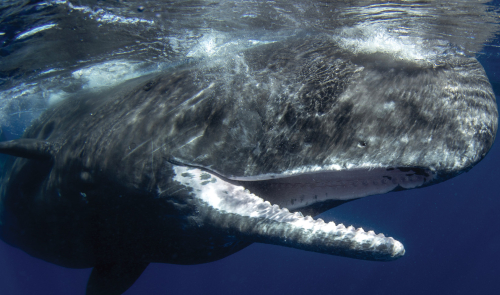
It’s not science fiction: scientists are using machine learning algorithms to decipher how animals communicate and what they’re saying. A new collaboration between Project CETI (Cetacean Translation Initiative), and NYU Law’s MOTH (More Than Human Life) Program combines Project CETI’s expertise in decoding sperm whale communication with MOTH’s legal advocacy on behalf of animals and nature. Their most recent project is an article—“What if We Understood What Animals Are Saying?: The Legal Impact of AI-Assisted Studies of Animal Communication”—that assesses how new scientific data could affect the evolving legal landscape of animal rights.

Project CETI, an interdisciplinary research team, uses a combination of artificial intelligence, linguistics, and biology to understand and translate communication among cetaceans, such as sperm whales. Its efforts have yielded remarkable results: evidence of a possible phonetic alphabet, including sounds similar to vowels in human language, and video and audio recordings of a sperm whale pod’s involvement in the birth of a new calf. MOTH founder César Rodríguez-Garavito and his co-authors—biologist and CETI president David Gruber; Ashley Otilia Nemeth, adjunct professor of clinical law in NYU Law’s TERRA clinic; and CETI lead linguist Gasper Begus—draw on this research for their paper, which appeared in Ecology Law Quarterly in October 2025.
They suggest that a better understanding of the content of cetacean communication might drive changes in the law. In particular, Rodríguez-Garavito and his co-authors focus on how recognizing more expansive rights for cetaceans—such as the right to be free from cruelty or the right to participate in culture—could undergird stronger regulation of undersea noise pollution, which can have devastating effects on the echolocution that many marine mammals use to navigate and find food. The paper also discusses the possibility of legal personhood for cetaceans. “Understanding nonhuman animal communication in general could dramatically bolster the case to recognize nonhuman animals as persons, as opposed to mere chattels, before the law,” they write.
“The work of legal scholars like us is to keep up with science and to anticipate developments that would impact legal frameworks and norms and rules in the future,” says Rodríguez-Garavito. “So one of the most exciting things about this collaboration is that it forces you to think 10, 20, 30 years out.” In this interview, he answers questions about his paper and the changing field of nonhuman rights.
Tell us how and why this paper was created.
I met David Gruber, the head of Project CETI, at a conference in Los Angeles where he gave a presentation about CETI, and I gave a presentation about MOTH—and we realized that our efforts complemented each other. Both are highly interdisciplinary, both are working at the edges of their fields to expand what’s possible in scholarship and practice: in law and the social sciences and philosophy in our case, and in his case, marine biology, AI studies, robotics and linguistics. The two [groups] engage in a more interdisciplinary conversation about what it means to understand animals more fully.
So there is a descriptive scientific component to our collaboration, but we are also very much looking for ways for science to help animals flourish and to help humans to reconnect with the more-than-human world.
What are the legal precedents for legal rights for animals and nonhuman entities? In this paper, you mention that in instances where a person is given a protective order, pets are often included in the order, which may be considered something like a legal right for a pet as a member of a family.
The precedents vary widely across jurisdictions. The US doesn’t have a case where an animal has been recognized as a legal person as a subject of rights. That contrasts with the situation in many other jurisdictions. I’m currently conducting fieldwork with my colleagues and students in Ecuador, the first country to recognize rights of nature in its constitution, in 2008. So here, there are all kinds of precedents protecting primates, entire forests, rivers and marine ecosystems as subjects of rights. In jurisdictions that are not as protective in terms of the letter of the law, there have been precedents [in South America] where primates, but also other animals like bears, have been recognized as rights holders. There’s a famous case in Argentina that we mentioned in the article, where Cecilia the chimp was the beneficiary of a case on habeas corpus, basically, to release her from a zoo.
In other jurisdictions—for instance, in Europe—the most progress that’s been made in terms of the protection of animals is [protection from] cruelty to animals. And what’s interesting in Europe is that the circle of moral and legal concern has been expanded to include, for example, highly intelligent animals like octopi.
What we say in the paper is we’re trying to patch together fragments of existing case law that, if bolstered, if supported with new evidence, could point in the direction that we would like the law to go, which is to weaken the categorical distinction between humans and nonhumans in light of this growing evidence about the intelligence, the complexity of the language, and the sentience and consciousness of many animal species.
Why explore rights for marine mammals and whales specifically?
[There are] two reasons. One, cetaceans–I’ve learned this in working with Project CETI– are among the most intelligent [animals] and have the most complex patterns of communication. They also communicate—especially in this case, we’re looking at sperm whales—through patterns that can be analyzed with tools developed by linguists and AI researchers.
Sperm whales and other cetaceans are outstanding in terms of the combination of their complex languages, their intelligence and their highly sophisticated social roles and cultures. One fantastic piece of evidence that CETI was able to produce was the recording of a birth event of sperm whales that showed that those events are highly synchronized within a whale pod, involving complex coordination between at least a dozen female whales as well as other species that hold the space.
The second reason is that whales have had an outsized role in environmental advocacy throughout the years. The contemporary environmental movement was born at a time when Songs of the Humpback Whale, an album made by Roger and Katie Payne in the 1970s, was hugely influential, to the point that some of the first actions of Greenpeace were against whaling. So both from a scientific and symbolic point of view, whales occupy a very special place in this type of work.
What your goals and hopes, and what do you see being possible for nonhuman legal personhood?
This terrain is shifting very quickly. As we speak, many jurisdictions, courts, and many legislatures are discussing [cases and legislation about] the rights of nature. It’s no longer just Ecuador or New Zealand or Bangladesh or Colombia. Just last year, Spain passed legislation to protect the lake ecosystem as a subject of rights, and the Constitutional Court of Spain upheld that piece of legislation. If you look at the Eco Justice Monitor, which is the website that tracks these types of efforts, there are more than 500 initiatives of this type. Of course, not all of them are successful, but it’s a very vibrant field of practice.
So my hope and expectation is that the boundaries between human rights and what I call “more-than-human rights,” between human rights and rights of nature, between the protection of humans and the legal protection of nonhumans, will be redrawn incrementally, in the direction of acknowledging the moral and legal worth of nonhuman animals, and potentially other nonhuman beings.
And I would think that in a matter of a decade or so—specifically in this realm, if CETI or other scientific collectives does manage to understand the content of the communication of sperm whales and other animals—I think that would be a qualitative leap, because this would allow for everything from seeking the animals’ consent to [conduct] research to, potentially, finding ways to bring their voices and their views into human debates and decision-making processes that concern them. This may sound like science fiction, but it’s science now. And there are many collectives in different parts of the world who are seriously trying to tackle these questions.
If we’re better able to understand the voices of animals, how can we include those voices in decision-making processes? How can we then accommodate those needs and those calls for help or support? Those questions would be potentially more tractable if these languages were at least partially understood.
One thing that I should say, because it’s important for us at MOTH, is that these technologies also have risks associated with them. And of course, just like any technology, it can be used to deepen the exploitation and the manipulation of animals. We released a separate report proposing a legal protocol, which is a set of guardrails that we think all scientific collectives pursuing these types of AI-assisted studies should follow or adapt to anticipate, mitigate, and potentially redress the harms that can be produced through this research. For example, if we understood what elephants are doing and saying to each other in the wild, then poachers could use that information and those techniques to go after them. Whale poaching operations could lure whales to their boats endlessly.
What’s a key takeaway that you would want somebody to get from your paper?
Western science has never had a more granular understanding of the language and the world views and the perceptual worlds of animals as it does today. The knowledge that we have about other nonhuman animal perception and lives continues to improve by the day. That offers an immense opportunity: better knowledge could lead to more empathy, and more empathy could lead to action for the protection of nonhuman animals and the undoing of harmful practices that we as humans have engaged in. At the same time, we could also deploy those technologies to further manipulate and exploit animals and monetize data and bring them under our total control.
We’re hoping, and we’re betting, on these technologies being used for good. We are, in this paper and in our broader work, extracting and making visible to a general audience what could be done if we use these new technologies and new data for good.
This interview has been condensed and edited.