

Five Years Out: Danny Fein ’21
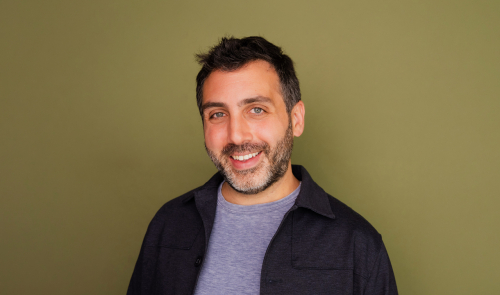
Founder and attorney, Infinite Will
Tell us about Infinite Will, the company you founded in 2023.
Infinite Will is an estate planning law firm that is 100 percent virtual. I meet with clients over Zoom, and I work with mobile notaries who travel to them. Infinite Will focuses on foundational estate planning for regular people, primarily with a focus on younger families—but not exclusively so.
I enjoy two things very much. One is working with clients. That’s something that I didn’t necessarily expect or know that I would love. I enjoy hearing what their goals are, what their worries are, and providing counseling. And that makes me feel that no matter what happens, I’m in the right career as an attorney directly serving individual clients.
On the other side, I’m a builder. Since Codex and Claude Code [AI-powered coding software] came out and really started getting powerful, that half of the business is where I’ve been able to build software to serve those clients. It’s been a complete joy and serves both sides of my brain.
Right now, my biggest challenge is getting in front of a younger demographic. The majority of people thinking about estate planning today tend to be older. But I want to make sure that I keep my focus on young families because I think they’re an overlooked and underserved community when it comes to estate planning. Their needs are different, but just as important.
What led to your creation of Infinite Will?
After graduating from NYU, I spent a few years doing contract work for a number of estate planning attorneys—including an attorney in Utah, who took me under his wing and introduced me to serving clients, producing documents, and the nuts and bolts on the technical operational side, which is where my background was before law school. Doing this work opened my eyes to the way that estate planning law firms operate. I really started working on building Infinite Will in 2023.
What memory from your law school days stands out the most?
I’m originally from Westchester County. When I applied to NYU, I knew that I wanted to return to the New York area, and I was fortunate to receive a Jacobson [Leadership Program in Law and Business] scholarship. By that time, I was 30 years old and had founded my e-commerce company Lithographs [which converts literary text into art]. I had a very clear sense of what I wanted out of law school, which was to start a business. I just knew that I was not going to be going through the more traditional route.
I was really lucky when I arrived at NYU Law. It was right at the start of what was then called the NYU Law Venture Fund [now the Entrepreneurship & Venture Capital Program]. In my 1L and 2L years, I received summer grants that funded an idea that was focused on digital heirlooms. During the first summer, I worked closely with my grandma, and we worked on identifying the types of material that could be passed down through this mechanism. I spent a lot of time interviewing her, organizing bits and pieces of her biography, taking photos of objects that were important to her, and trying to see how it all fit together. In the second summer, I spent more time thinking about legacy and estate planning. It was the spark for the type of work that I am doing now.
In what ways did your law professors impact your academic and professional development?
In my 1L year, Richard Brooks [Emilie M. Bullowa Professor of Law] was my professor for Contracts. I just loved the way that he taught that course. Property Theory with Professor Jeremy Waldron helped me to think deeply about the world and the way that the law shapes our behavior and economics. On the estate planning side, I was really lucky to take a course with a visiting professor, Ray Madoff, in 2022. She teaches at Boston College, but she is an NYU alumna. The estate planning simulation course that I had with her was the thing that most directly set me on my current path. It kind of takes you through the process from start to finish. What does creating an estate plan entail? How do you spot issues? What are the different types of estate plans that different people need? Professor Madoff introduced me to some practicing attorneys who became really generous and important mentors for me. It was definitely a turning point.
With Infinite Will, you’re seeking to expand the concept of estate planning to a younger generation. Can you talk about those efforts?
I am a new parent myself, and I spend a lot of time around other parents of young children. It’s one of those things where once you have kids, you realize, “Oh, I should probably get life insurance.” Historically, people have not treated estate planning in the same manner. But, culturally, I think there has been a shift in the last decade. There’s a phrase, “death positivity” in which a number of writers, influencers, and business people have been working to make dying and the work involved in planning for that eventuality less taboo, less scary, less morbid. There are even places called “Death Cafes,” where people get together just to kind of talk about their fears and their thoughts on the subject. I don't know how much that’s influenced my business so far, but it’s definitely a world that I want to be a part of. When I think about what I am building towards, it’s really the overarching idea of fostering intergenerational bonds that drives me.
What advice do you have for law students interested in being entrepreneurs?
Sometimes at a top law school, it can feel as if there are one or two paths that are kind of the defaults. And those paths offer amazing opportunities. But there’s a lot else that’s out there. And I think especially today, in 2026—even compared to 2021—there’s never been a better time to be an entrepreneur. Being a legal entrepreneur now is being in the right place at the right time, given what AI can make possible while still requiring a human touch. Anyone who is interested in entrepreneurship, or any kind of creative career that uses a law degree—sometimes not in the traditional way—should take advantage of the unique resources that NYU Law has, which many other law schools don’t have.
This interview has been condensed and edited.
Photo by Bre Welch.