

Five Years Out: Andria So ’21
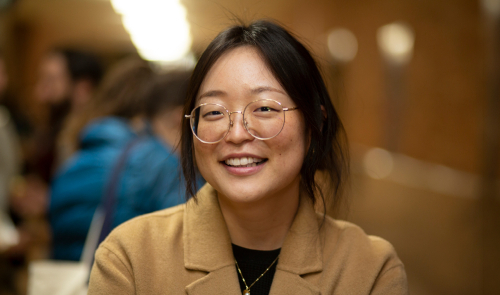
Associate Attorney at Earthjustice
Los Angeles, California
Could you describe your current position? What are your main challenges? And what do you like most about it?
I’m currently an associate attorney at Earthjustice in the California Regional Office. I’m involved in two main buckets of work: one on biodiversity and public lands, which means doing things to protect the natural environment and species preservation, and two on trying to decrease California’s dependence on oil and gas infrastructure on the supply side. Most of my work currently is litigation-focused—suing bad actors and suing governments that are [not] following state and federal laws that regulate for the protection and safety of people and the environment.
I think one of the challenges is that litigation is perhaps not as strong a vehicle for effectuating change as it once was. Even in California, there are attacks on some important California state environmental laws that we really rely on, things like the California Environmental Quality Act (CEQA), and then at the federal level, things like the National Environmental Policy Act (NEPA) and the Endangered Species Act (ESA). That makes it hard when a lot of the time you’re litigating based on these laws that have been standard environmental protections for decades.
I do think it’s very empowering to still be in a position where I can work against the things that I feel need to be challenged. The work itself is always so meaningful. A lot of the time we’re working with community groups, other NGOs, and environmental organizations, and there’s a very uplifting sense in that, despite all these attacks that I just described, there is still a community of people who believe that things should be different and are fighting for that. That is something that I enjoy.
Did you know early in law school that you wanted to do environmental work?
I went into law school wanting to do public interest work, but not knowing what specific area of law that I would want to do. During my 1L year, I just threw myself into a lot of different experiences. I joined the bail fund club. I was on the public interest journal, Review of Law & Social Change. There was a student organization that helped people with their name changes, and an organization that helped people with questions about housing. My very first summer, I interned at a place that did public benefits, housing, and immigration direct service work for folks living with HIV/AIDS.
Eventually, I did a clinic with the Natural Resources Defense Council (NRDC), the Environmental Law Clinic. And I just fell in love with the work. I fell in love with the people that I was working with. I fell in love with what I was describing earlier, which was a real sense of a shared mission, and working with people who believed in that shared mission.
I also took Professor Ricky Revesz’s Environmental Law class, and that was really interesting to me. It was at a time when things in the environmental law space were starting to change a lot because of the [first Trump] administration. [AnBryce Professor of Law] Revesz did a great job of breaking down the way things used to be, and how things were just on the cusp of changing.
Were there other experiences, other classes, that prepared you for your career path besides the Environmental Law Clinic?
I really, really enjoyed my 1L Civil Procedure class with Professor [Troy] McKenzie, now Dean McKenzie [and Cecelia Goetz Professor of Law]. I feel like that opened up my interest in litigation generally. I was just really fascinated by how the whole federal court system worked and how civil cases move forward. I feel like it did prepare me a lot in terms of things like subject matter jurisdiction.
I would say another one of my favorite experiences, not a class so much, was working on the journal, Review of Law & Social Change. I learned a lot about the wider world of social change and what people were arguing or talking about, broadly. I did want to become an environmental law attorney, but I didn’t want to be siloed into just one thing. I wanted to have a broader understanding of what’s going on in the world of advocacy and justice generally, and I feel like that journal really helped me learn a lot.
I also did an externship with the US Court of Appeals for the Second Circuit, with Judge Denny Chin. That was very valuable in determining whether I wanted to clerk. I felt like I learned a lot in terms of how chambers are run and the kind of work clerks do.
Did you end up doing a clerkship?
Yes! I clerked for Judge Pierre Leval on the US Court of Appeals for the Second Circuit. A circuit clerkship is very different from a district court clerkship, and I got the opportunity to really delve into a lot of different kinds of cases and different kinds of law. It was a good way to understand how cases look from a judge’s perspective. And Judge Leval was just an invaluable person to learn from, with his absolute treasure trove of experience.
Now that I’m in my current job as an advocate, when I’m drafting briefs and stuff, I can look at it with the perspective of someone who was on the chambers’ side: Will this be taken seriously? Will this be persuasive? Will this rub a judge the wrong way? Or maybe, how do I frame it in a way that a person who is not steeped in environmental law, but is steeped in law generally, so they might better understand? I’m very thankful to Professor Revesz and Professor McKenzie for writing my recommendations, and to [Assistant Dean for Judicial Clerkships] Michele Cherande ’97 for guiding me through that whole application process.
Were there ways in which you felt supported at NYU Law?
I would say I felt very supported by NYU Law as someone who wanted to work in the public interest. Lisa [Hoyes, assistant dean for public service] and Naomi [Sunshine, director of the Public Interest Law Center], and all the professors—there was so much support in terms of me being able to get a public interest job right out of law school.
I’m still being helped through the Loan Repayment Assistance Program (LRAP). The whole Public Service Loan Forgiveness system is stressful, but I do feel very grateful to always have a line to the folks at LRAP when I have questions like, “Hey, so what’s going on? What should I be doing?” I do think that structure has helped a bunch, and it is not quite the same at other law schools.
What advice would you give current NYU Law students?
One thing that I would drill down on is that it’s really important to build relationships with the professors in law school. I am an introvert. I hate talking to strangers. I do not enjoy networking. But the professors at NYU, at least in my experience, really wanted to help me, and they wanted me to succeed, and the only way they can do that is if you actually get to know them. So I would say: Talk to them about the career that you want, the things that you’re thinking about, the experiences you want to have. I could not have clerked without the advice, and even the prompting, of Professors McKenzie and Revesz and others. And they can’t write those letters of recommendation or serve as a reference if they don’t know who you are!
What do you most like to do outside of work?
Going to the beach and reading a book—or just lying there on the sand. I always go to Will Rogers [State Beach], near Santa Monica. This is the reason I could not last in New York: it took an hour on the subway to get to the nearest beach at the Rockaways, and that just was not enough access for me.
I have also started fostering dogs this year. It’s very rewarding seeing a dog go from being so scared of you that he won’t leave the crate to lying on his back next to you so you can scratch his tummy.
This interview has been condensed and edited.