Deans past and present celebrate Class of 2026 at Convocation
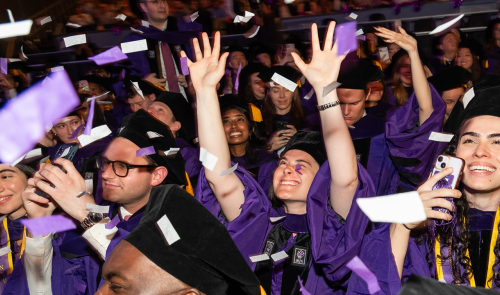
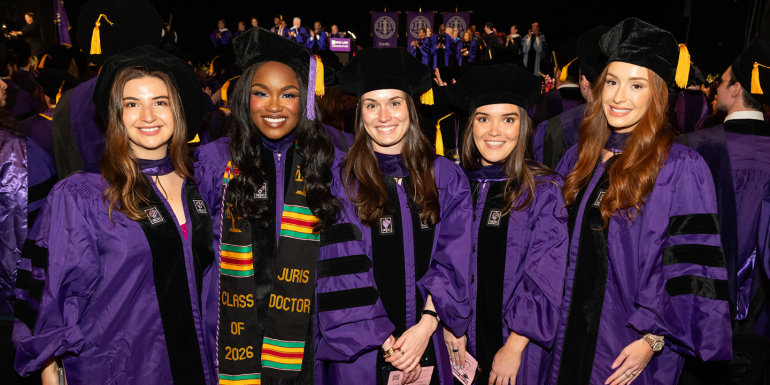
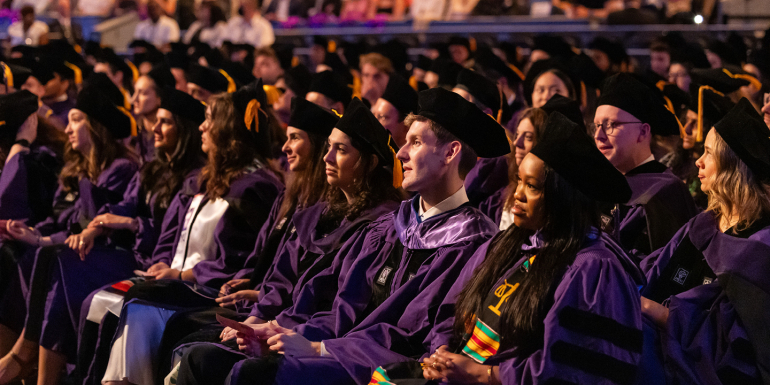
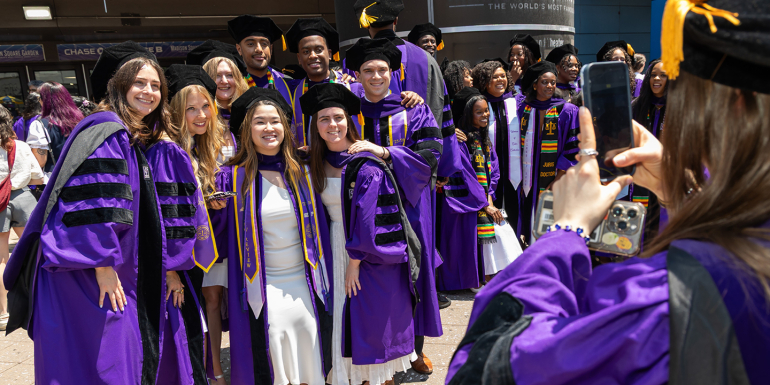
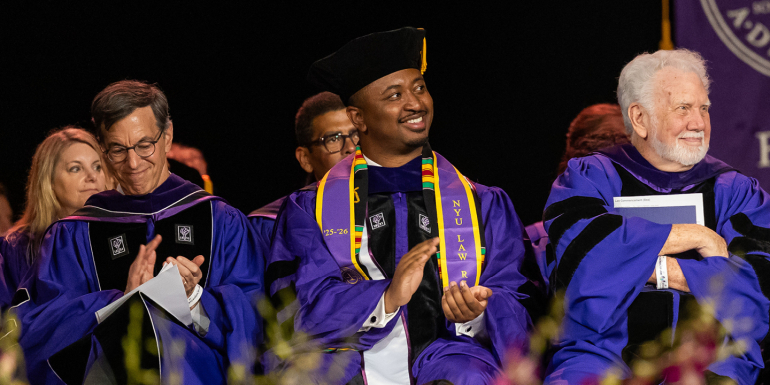
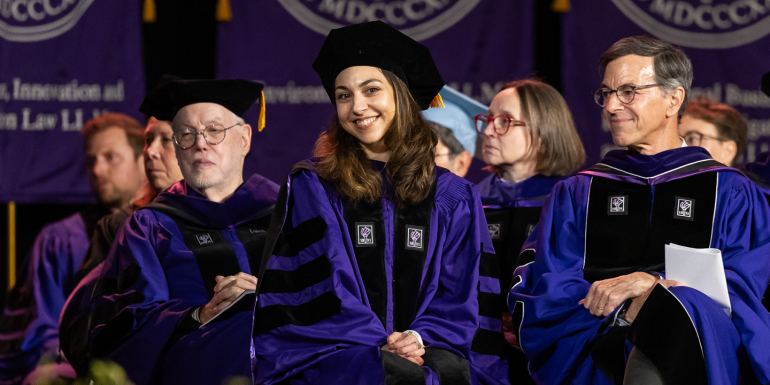
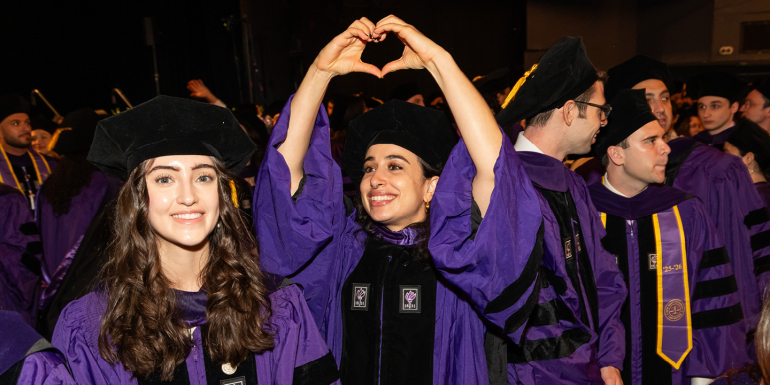
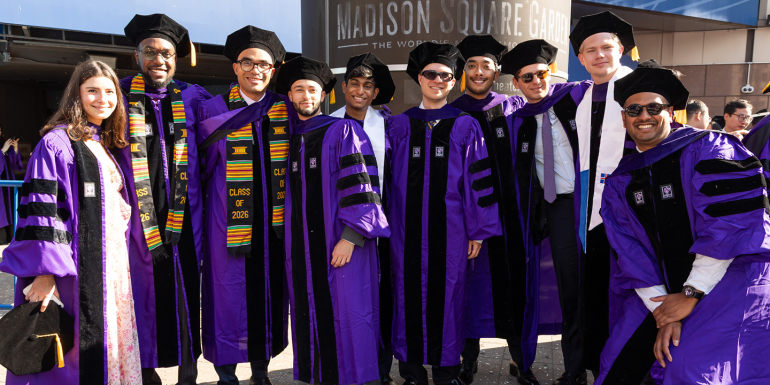
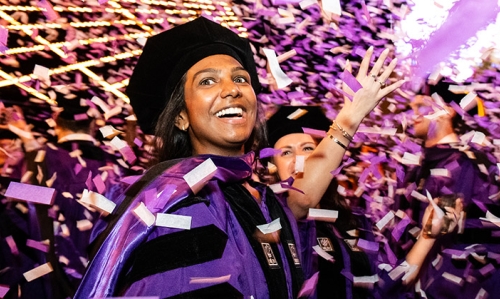
On May 19, NYU Law fêted more than 900 JD, LLM, JSD, MS, and MSL graduates at its 2026 Convocation in the Infosys Theater at Madison Square Garden, with an audience of family and friends cheering and waving purple pom-poms.
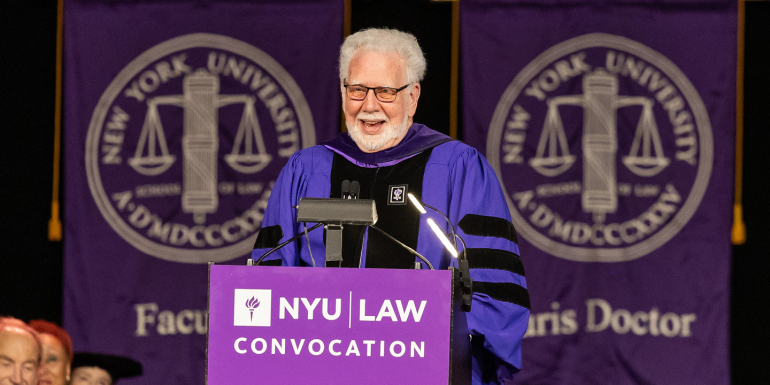
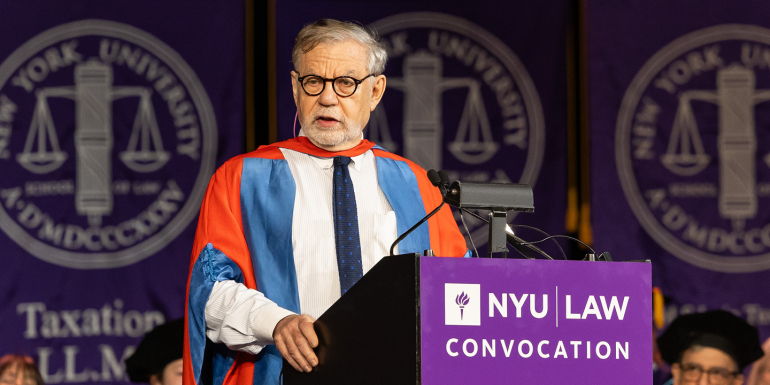
The keynote speakers were both popular NYU Law faculty members. Dean Emeritus John Sexton, Benjamin F. Butler Professor of Law, who served as NYU’s president following his deanship, spoke at the JD ceremony. University Professor Joseph H.H. Weiler, Joseph Straus Professor of Law, addressed the audience at the ceremony for LLM and graduate degree recipients.
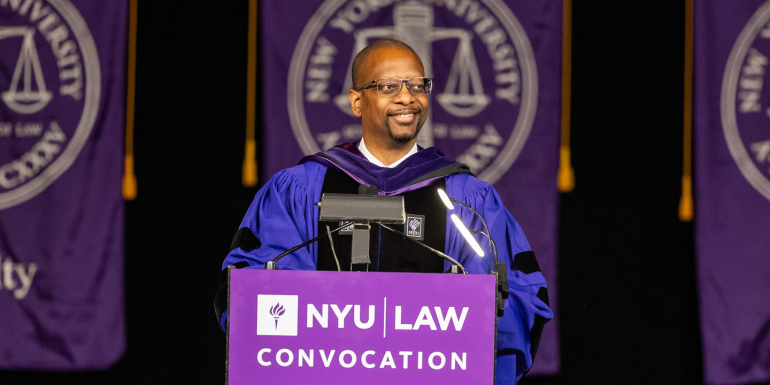
Dean Troy McKenzie ’00 spoke about the strength of the NYU Law community and his feeling, as a 1L, of being “taken under its wing.” He recalled the advice he received from professors, the study guidance from other students that helped him through his first year, and how a fellow graduate offered him a place to stay on the night of September 11, 2001, when Lower Manhattan was evacuated and full of toxic smoke. “Life threw challenges my way, and the NYU Law community helped me rise to those challenges,” said McKenzie.
McKenzie urged the graduates to do their best to hold on to the bonds that they have formed with classmates, faculty, and other friends that they have made at the Law School. “Keep coming back, keep nurturing and cultivating your ties to the people who have connected with you here…. Know that you are never alone,” he added. “NYU Law will always be here for you, cheering you on.”
In his remarks, David Tanner ’84, chair of the NYU Law Board of Trustees, considered the nature of leadership. More than titles or prominent platforms, he said, leadership “shows up in quiet choices about what you do, what you say, and what you stand behind.” An NYU Law education will allow graduates “to understand consequences, to think through a problem from multiple angles, to articulate a position, and to genuinely listen to someone else’s. Those are not just lawyer skills; they are the foundation of leadership, and NYU Law quietly hands them to every graduate who walks across this stage,” he said.
Tanner stressed the value of integrity. “You will be in rooms where decisions carry real consequences for people who aren’t there, where speaking up is harder than staying quiet, and where one more question could change an outcome,” he said. “In those moments, leadership is not abstract, it is immediate. It is whether you hold a line that others are prepared to move, whether you say the thing that needs saying, and whether you stay in the moment when it would be easier to step back.”
JD student speaker Kahaari Kenyatta ’26, who served as president of the Student Bar Association, invoked the ideals of community and service in his address. Acknowledging the sacrifices his mother, grandmother, and home village in Jamaica made on his behalf, he reminded his fellow graduates: “We’ve shown up for each other—in class, through crisis, and in times of celebration.” Kenyatta mentioned all that he and classmates owe to the faculty’s “genius and care,” and then added: “NYU isn’t NYU without the 470 of you graduating today: being leaders, striving for more, for better, in every space you occupy. But then we have to ask ourselves, how do we want to occupy those spaces?”
“I implore you,” Kenyatta continued, “to find a way, wherever you may find yourself, to…leave the world, the country, the law, just a bit better than you found it. Because we can, because we’re ready, because we have the training to do it, and if we are working together, I believe so, so much is within our reach.”
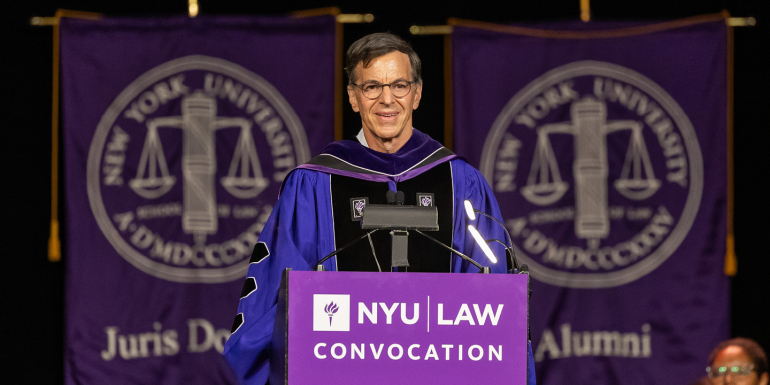
In his keynote speech at the JD ceremony, Sexton, who has taught at NYU Law for 45 years and was dean when McKenzie was a student, noted the “liturgical” nature of the day, with its public remarks and special regalia. He urged the graduates to recognize their own good fortune in receiving their education and invoked what he called “the parable of the comma.” Some people need no identifier, he said—Barbra Streisand, for example. Others, like himself, have a literal or figurative comma after their names, followed by a description or title: John Sexton, dean emeritus of NYU Law.
The human being to the left of the comma, Sexton said, is more important than any position or accolade on the opposite side: “Those medals that you’ve been getting so far to validate yourself are on the righthand side of the comma…. You have been armed with this extraordinary, powerful instrument…the instrument of the law…. If you understand the sacrality of law, you will understand having been given the blessing you’ve been given, and why I would call upon you not to seek badges but to focus on the lefthand side of the comma, and use the sacrality of law to fulfill whatever is meaningful to you as a person.”
Aila Ansheles LLM ’26, the student speaker at the ceremony for LLM and graduate degree recipients, recalled being raised in Cyprus by her grandmother while her mother, who had fled from the First Nagorno-Karabakh War, lived and worked in Russia. Ansheles focused on education to transcend her circumstances. “Today, standing together, I want to remind you that there lives a fighter within each one of us,” she said. “And to unlock that power, all it takes is tuning your mindset to the strength of your own will.”
In a time when AI technology is creating seismic shifts in legal practice and elsewhere, Ansheles said, “Our profession demands something deeply human…. Justice is rarely clear-cut, and social problems cannot be broken down into legal formulas…. The justice system, like the society it serves, contains both progress and imperfection. One could even argue that the law is living. So I urge you to aim for steady growth as a society where there is room for respectful conversation, dissent, and assent.”
Echoing the ideas of respectful conversation and dissent, keynote speaker Weiler focused in his speech on two related and timely phenomena: cancel culture and political protest. “I think the greatest threat to our civic life, to democracy, is apathy and indifference,” he said. “So when people feel strongly about things, when people feel strongly about other people, they should protest…. But the question is how and in what places…. Public places require different types of decorum and rules of conduct.”
Dubbing a university a “temple of reason,” Weiler suggested that merely inviting speakers to campus legitimized their voices by “saying there’s something to discuss,” and thus invitations should not be indiscriminate. At the same time, he added, “We don't have serious discussion in our public places…. So our children grow up in an environment where they just don’t learn the skill of listening carefully, of weighing arguments, of talking to people with whom you really disagree and reaching some kind of conclusion.” Agitating to cancel an invited speaker, Weiler said, meant that “in a way you’re also canceling your colleagues and students. You’re saying that they have no place in our university.”
On protests, Weiler argued that having a strong moral position in good faith did not necessarily merit disruption at a university. “Stand outside the gate with your megaphone and protest loudly. Everybody coming in and out will hear your protest, will feel your anger, will listen. But when you enter the temple of reason, you put your megaphone down. If you want a slogan: when you enter the temple of the university, don’t sharpen your sword. Sharpen your arguments.”
Weiler ended his remarks on a decidedly less sharp note: “Don’t forget your parents.”
Photos from Convocation 2026: