Workshop on Fiduciary Duties and AI
Fiduciary Duties and AI: Legal Frameworks, Technical Implementation, and Governance
June 4-5, 2026
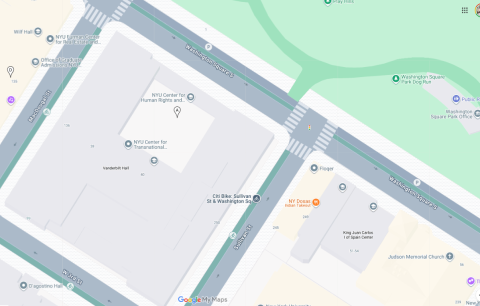
Location: Vanderbilt Hall, New York University School of Law, 40 Washington Square S, New York, NY 10012
Co-organized by: The Information Law Institute at NYU LAW and the GliaNet Alliance
Sponsored by: The Future of Life Foundation (FLF)
This two-day workshop explores the emerging intersection of fiduciary duties and artificial intelligence systems. As AI agents increasingly act on behalf of individuals and organizations in high stakes domains—managing health information, making financial decisions, curating educational content, and mediating consumer relationships—questions of loyalty, care, and accountability become paramount.
This conference aims to bootstrap an interdisciplinary community of practice that will shape the development, regulation, and standardization of fiduciary AI systems. We seek to bring together legal scholars, computer scientists, entrepreneurs, civil society organizations, and government representatives to examine how traditional fiduciary principles can be adapted, implemented, and enforced in the age of AI agents.
The workshop takes up a set of open questions: whether AI systems today are capable of performing a fiduciary role, and how we will know when they are ready; how they can be designed to comply with existing fiduciary duties across law, healthcare, finance, and the guardianship of children; what new responsibilities should apply to AI providers, and which actors in complex AI supply chains bear them; and what business models will sustain a thriving ecosystem of fiduciary AI services. Throughout, it asks which institutions will enforce these duties — and how.
We will meet using Chatham House rules to enable attendees to speak with more candor.
Agenda
An up-to-date agenda for the workshop can be found here.
Logistics
Venue and Building Access
We will host our workshop at Vanderbilt Hall at NYU School of Law (40 Washington Square S, New York, NY 10012). We will be at ‘Greenberg Lounge,’ just down the hall from the building entrance on the 1st floor. The security guard will know of our event at Greenberg Lounge. Participants should have a photo ID on them in case security asks for one.
Networking Reception
Join us for an evening of food, drinks, and conversation — open bar, on us, with the space reserved exclusively for our group. Thursday, June 4, 5:30–8:30 PM, hosted by GliaNet Alliance at Bowery Bar NYC (310 Bowery, New York, NY 10012).
Paper drafts & Presentations
Discussion drafts of papers being presented at the workshop are available in this shared Drive folder. If you would like to add or change your draft, please write to Sebastian Benthall (NYU) spb413@nyu.edu. You are encouraged to read the drafts before arrival. If you will be presenting slides and wish to share your work with the workshop community please add those to this shared Drive folder.
Contact
For questions about the program: Sebastian Benthall (NYU) spb413@nyu.edu. For logistics and the GliaNet-hosted reception: Estefanie J. Govea, estefanie@glia.net.

GLIA Foundation, doing business as GliaNet Alliance, is a small nonprofit coalition building fiduciary governance infrastructure as inputs into commercial, digital public infrastructure (DPI), and governmental AI agent systems. This embedded accountability layer is designed to keep those systems loyally serving the best interests of individuals and communities. We work with partners seeking effective, fully operationalized fiduciary governance for existing or planned pilots of AI agent systems across the healthcare, education, workplace, civic, marketplace, and smart-city domains.
Founded and led by former longtime Google director Richard Whitt, the GliaNet Alliance currently has some two dozen member organizations, including Consumer Reports, and has received initial philanthropic backing from Omidyar Network.