

People
Faculty Director

Katherine Strandburg
katherine.strandburg@nyu.edu
Katherine Strandburg specializes in innovation policy and information privacy law, focusing on the interplay between social behavior and technological change. She has authored amicus briefs to the Supreme Court and federal appellate courts on these issues. Recent publications include a First Amendment critique of “metadata" surveillance and the co-edited book, Governing Knowledge Commons. Professor Strandburg graduated with high honors from the University of Chicago Law School and served as a law clerk to the Honorable Richard D. Cudahy of the U.S. Court of Appeals for the Seventh Circuit. Prior to her legal career, she was a physicist at Argonne National Laboratory, having received her Ph.D. from Cornell University and conducted postdoctoral research at Carnegie Mellon
Research Director

Sebastian Benthall
spb413@nyu.edu
Dr. Sebastian Benthall is a Senior Research Fellow at the Information Law Institute, as well as a Research Scientist at the Information Law Institute. His work has been funded by the NSF, DARPA, Sloan Foundation, Future of Life Foundation, and the Microsoft Corporation. His research involves applications of computational economics and multi-agent systems techniques to problems of data protection and AI governance.
Student Leadership
Tobit Glenhaber (Website Coordinator) Tobit Glenhaber is a JD Candidate at NYU Law. He has a BS in Mathematics and History from MIT. While there, he developed an interest in privacy and data ownership, open source software, and antitrust in the tech sector. In his 1L summer he interned at the Office of the Rhode Island Attorney General in the Economic and Consumer Justice Unit. |
2026-27 Participating Researchers
Faculty and Senior Research Fellows

Omar Vasquez Duque Omar Vasquez Duque is an Assistant Professor at Rutgers Law School in Camden. His research applies behavioral insights and empirical methods to competition policy, privacy, business law, and the regulation of the digital economy. He has formal training in law, behavioral science, and econometrics (LL.M. Harvard, J.S.D. and M.A. (Econ) Stanford). Omar’s research has appeared in the Journal of Competition Law and Economics, the UC SF Law Review (formerly Hastings Law Journal), the Maryland Law Review, among others. It has been cited by the U.S. Department of Commerce, the OECD, and the Australian Competition and Consumer Commission. Before moving back to the East Coast as a Law and Economics fellow at NYU, Omar was a Lecturer and an Academic Fellow at Stanford University. |

Moritz Schramm Moritz Schramm is a Research Scholar at the Institute for International Law & Justice, a Fellow at the Institute for International Law and Justice, and an Adjunct Professor of Law at New York University School of Law. At NYU, he convenes the Guarini Colloquium on Legal Controls of Digital Corporations and teaches European Union law. His research explores global private and regulatory governance and infrastructures, with a particular focus on socio-legal perspectives. Moritz is the author of the forthcoming monograph Governance by Emulation: The Oversight Board, the Digital Services Act, and the Struggle for Platform Accountability (CUP) and has published articles and book chapters across law and social sciences. He has received multiple international awards for his work and serves as an editor for the European Journal of Legal Studies and in the Advisory Board of Verfassungsblog. |

Ira Rubinstein Ira Rubinstein is a Senior Fellow at the Information Law Institute (ILI), NYU School of Law, and teaches courses in privacy law. His research interests include Internet privacy, surveillance, big data, and Internet security. Rubinstein lectures and publishes widely on issues of privacy and security and has testified before Congress on these topics five times. He previously spent 17 years in Microsoft's law department, most recently as Associate General Counsel, running the Regulatory Affairs and Public Policy group. In 2010, he joined the Board of Directors of the Center for Democracy and Technology. Rubinstein graduated from Yale Law School in 1985. |

Michal Shur-Ofry Michal Shur-Ofry is an Associate Professor at the Hebrew University of Jerusalem Law Faculty, where she researches and teaches in the areas of Intellectual Property, Law and Technology, and Law and Complexity Theory. She received her LL.B. (Magna cum Laude) and Ph.D. from the Hebrew University and her LL.M. from University College London, as a Chevening–Sainer Scholar. Her recent scholarship focuses on the application of insights from complexity and network theory to the design of legal rules and policies. In addition, she explores regulatory responses to the systemic effects of AI, and is also interested in the intersection between law and collective memory. She has authored numerous publications in these areas, and is currently working on a book on “Law and Complexity” (forthcoming with Cambridge University Press). |
| Angelina Fisher |
| Katja Langenbucher |
Research Fellows
ILI Fellows

As a Research Fellow at the Information Law Institute at NYU, Xu’s ongoing work on Privacy of the Mind examines how AI-mediated cognition poses a novel systemic risk, and how emerging technical capabilities could modernize privacy protection law and inform the development of new legal doctrines. Xu earned her PhD in Computer Science from the NYU Courant Institute in 2025. Her dissertation advanced scalable secure computation techniques for dataset valuation, model evaluation, and encrypted auditing of models. Prior to her doctorate, she applied machine learning to the engineering of large-scale production systems. Her industrial experience includes using machine learning to replace labor-intensive areas of production system management at Google, research engineering at Baidu Silicon Valley AI Labs, research and development at UnifyID, and doctoral research internships at Meta AI Research and ByteDance Applied Machine Learning. She is also an interdisciplinary field-builder, having co-organized and grown Machine Learning for Systems — a longstanding NeurIPS workshop — for seven years, and is particularly interested in in-person coordination across technical, legal, and policy domains. |
Affiliated Fellows

Alon Jasper Alon Jasper is a Lecturer at Tel Aviv University, Faculty of Law, where he teaches Administrative Law, Legal History, and Governance of Digital Infrastructures. He studies the relationships between law and technology through the concept of infrastructures, employing historical, quantitative, and doctrinal methods. Alon was previously a Hauser Global Postdoctoral Fellow at NYU and holds a PhD in law from Tel Aviv University. |

Michael J. S. Beauvais is a Max Weber Fellow in the European University Institute’s Department of Law. Michael is currently researching how we regulate young people’s access to digital media and the Internet. His research interests – privacy, the regulation of technologies, and youth – lead him to explore issues in tort law, health law, data protection law, and related areas. His work bridges law with childhood studies, media studies, bioethics, and relational feminism. Michael earned his Doctor of Juridical Science from the University of Toronto. In his dissertation, he defended a conception of adolescents’ informational privacy against their parents, which earned him a Governor General’s Gold Medal. The Social Sciences and Humanities Research Council of Canada has supported his postdoctoral and doctoral research. Michael is an affiliate of the Schwartz Reisman Institute for Technology and Society at the University of Toronto. |

Sevinj Novruzova Mrs. Sevinj Novruzova is a Visiting Fulbright Postdoctoral Scholar at NYU Law School Information Law Institute. Her current project relates to Comparative analysis of Azerbaijan, Turkey and Russia data protection legal provisions and practices with reference to US Federal Data Protection Act from perspective of sustainable businesses. She has more than 14 years’ experience in the legal and compliance contexts. She is currently an Adjunct Professor of Khazar University. She has several publications in UK, Turkey, and Azerbaijan. Her recent book has been published in Ankara, Turkey under the name of Duty of Care of Banks in Electronic Banking. She is also contributor on corporate compliance issues to AMCHAM, Turkish Ethics and Integrity Society, Azerbaijan Ethics and Compliance Network, Corruption & Transparency Working Group of the Commission on Business Environment & International Ratings. Mrs. Novruzova holds a PhD degree in Commercial Law from Selcuk University, Turkey and a master’s degree in international Private Law from Ankara State University, Turkey. |
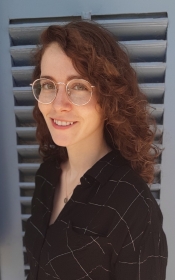
Stav Zeitouni Stav Zeitouni works at the Center for Innovation (C4i) at UC Law San Francisco and is an affiliated fellow at ILI. She studies information privacy, intellectual property, and AI, with a particular focus on the intersection between privacy and property. Stav was previously a postdoc at the Center for Private Law Theory at UC Berkeley, and holds a J.S.D. and an LL.M. in Legal Theory from NYU and an undergraduate degree in law and psychology from the Hebrew University of Jerusalem. |

Tomer Kenneth Dr. Tomer Kenneth is a visiting assistant professor at USC Gould School of Law, and an affiliated fellow at the Information Law Institute at NYU School of Law. He studies decision-making about facts in law and politics, and his primary research areas include evidence, legal theory, political theory, and law and technology. Kenneth graduated from NYU Law with a JSD and a LLM (legal theory). His scholarship was published in the Yale Journal of Law and the Humanities, Harvard Journal on Legislation, and Duke Law Journal Online, among others. At the ILI, Kenneth focuses on the intersection of evidence law and innovative technologies. |

Federica Fedorczyk Federica Fedorczyk is an Early Career Postdoctoral Researcher at the University of Oxford (Institute for Ethics in AI). She obtained her Ph.D. in Criminal Law, summa cum laude, from the Sant’Anna School of Advanced Studies, with a dissertation examining how the use of AI is transforming the criminal justice system. Prior to joining Oxford, she was an Emile Noël Fellow at NYU and a Postdoctoral Research Fellow at EURA. |

Kirin Chang Cheng-chi (Kirin) Chang is a Research Fellow at the U.S.-Asia Law Institute at NYU School of Law. He is also an Affiliate Research Fellow of the AI and the Future of Work Program at Emory University School of Law, where he previously served as Associate Director and Academic Fellow, and was previously a research associate at Tsinghua University's Institute for Studies on AI and Law in Beijing. His research focuses on technology law and international law. His scholarship has appeared or is forthcoming, in print and online, in journals and books including the Stanford Law Review, the New York University Law Review, the UCLA Law Review, the Georgetown Law Journal, the Minnesota Law Review, the University of Illinois Law Review, the Wisconsin Law Review, the Harvard Journal of Law & Technology, the Stanford Technology Law Review, and the University of Pennsylvania Journal of International Law. He holds a J.D. from the University of Florida Levin College of Law and an LL.B. from National Chung Hsing University School of Law in Taiwan. He is admitted to the New York and Texas Bars. |

Marco Germanò Marco Germanò is an S.J.D. candidate at the University of Toronto. His current research examines how legal and technological systems can be designed to advance the public interest during periods of institutional change, including recent work on the governance of open-source AI, digital infrastructures, and sovereign AI initiatives. His scholarship has appeared in The Lancet, the NYU Journal of International Law and Politics, and the Asian Journal of Comparative Law, among other venues. He has held positions at the United Nations, the University of Oxford, Peking University, and the University of São Paulo. He is a 2026–2027 Graduate Fellow at the Schwartz Reisman Institute for Technology and Society (SRI), and his research is supported by the Social Sciences and Humanities Research Council of Canada (SSHRC). An LL.M. alumnus of NYU School of Law, he received the Jerome Lipper Award for distinction in the International Legal Studies program. |

Ignacio Cofone Ignacio is the Professor of Law & Regulation of AI at the University of Oxford (Faculty of Law and Institute for Ethics in AI). His work centers on regulatory design and remedies for immaterial data and AI harms, such as privacy and discrimination. His book, The Privacy Fallacy: Harm and Power in the Information Economy (2024), for example, argues that AI requires restructuring privacy and data protection law based on duties of nonexploitation because basing these bodies of law on individual control has become ineffective. He is visiting NYU during Spring 2025. |

Neli Frost is an Assistant Professor of Law at the London School of Economics. She researches at the intersection of public (and international) law, technology, and democratic jurisprudence, with a particular interest in the ways in which digital and artificial intelligence technologies disrupt democratic principles, structures, and institutions. She received her Ph.D. in Law from the University of Cambridge. Prior to joining the University of Oxford, she was a Hauser Global Fellow at NYU School of Law. |
Graduate Student Fellows

Ming is a JSD candidate from China. Her research focuses on the Governing Knowledge Commons framework and applying it to power sensitive issues. In general, she is interested in law and technology, law and society and commons theory. She holds an LL.M. from NYU Law and an LL.B. from the University of Hong Kong. |

Yijiao Wang Yijiao Wang is a JSD candidate at NYU. She holds an LL.M. in Legal Theory from NYU Law and an LL.B. from the University of Hong Kong. Her research interests include intellectual property theories, computational creativity, philosophy of mind, and authorship in AI-assisted work. During her LL.B she worked at Law, Innovation, Technology, and Entrepreneurship (LITE) Lab on a collaborative project with FedEx Express on law and automation and together with LITE Lab won the 2022 International Industry Award for Legal Innovation from Corporate Legal Operations Consortium. |

Murat Aybars Tunca is a Fulbright Scholar at NYU Law and a Visiting Fellow at the Yale Law School Information Society Project (ISP). He is also a Ph.D. candidate and researcher at Bilkent University. His research focuses on the intersection of artificial intelligence and employment law, examining how to safeguard employee rights in AI-integrated workplaces without stifling innovation. Previously, he analyzed global AI regulations as a legal researcher for Holistic AI. His studies have been supported by TÜBİTAK and the Sabanci Foundation. Murat Aybars holds an LL.M. from Bilkent University, an LL.B. from Hacettepe University, and is a member of the Ankara Bar Association. |
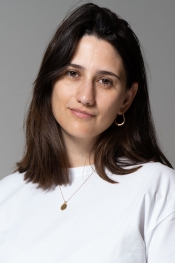
Nofar is a Fulbright Scholar and an LL.M. graduate in Legal Theory from NYU School of Law. Nofar’s primary research interest focuses on conceptualizing and theorizing the developing field of digital sexual offenses, especially in relation to image-based harm. Nofar completed her thesis under the supervision of Professors Katherine Strandburg and Michal Shur-Ofry on the mechanisms behind the non-consensual intimate images trade on Telegram, analyzing it through the lens of complex systems theory and proposing a new perspective on this phenomenon as “image trafficking” – the abuse of another's image. Nofar received her LL.B. in Law, magna cum laude, from Tel Aviv University. During her studies, she served as an editor of the Journal of Law & Social Change, and as a research assistant in the law faculty and at the Israel Internet Association. She completed her legal internship at the High Court of Justice Department in the State Attorney's Office. After her internship, she joined the Haruv Institute, where she researched the offense of child psychological abuse. Her article on the criminalization of non-consensual sexual digital photographs earned her an academic prize and was published in the Tel Aviv University Law Review. |
Affiliated Faculty

Helen Nissenbaum (Faculty Partner, PRG Founder, Cornell Tech) Helen Nissenbaum is Professor of Information Science at Cornell Tech. Her research takes an ethical perspectives on policy, law, science, and engineering relating to information technology, computing, digital media and data science. Topics have included privacy, trust, accountability, security, and values in technology design. Her books include Obfuscation: A User's Guide for Privacy and Protest, with Finn Brunton (MIT Press, 2015) and Privacy in Context: Technology, Policy, and the Integrity of Social Life (Stanford, 2010). Grants from the NSF, AFOSR, and the U.S. DHHS-ONC have supported her work. Recipient of the 2014 Barwise Prize of the American Philosophical Association, Nissenbaum has contributed to privacy-enhancing software, including TrackMeNot and AdNauseam. Nissenbaum holds a Ph.D. in philosophy from Stanford University and a B.A. (Hons) in philosophy and mathematics from the University of the Witwatersrand, South Africa. Helen is the former director of the Information Law Institute at NYU School of Law and the founder of the Privacy Research Group. |

Florencia Marotta-Wurgler (NYU) Florencia Marotta-Wurgler teaches and does research on Internet and consumer standard form contracts, and privacy. Her published research has addressed online standard form contracting with delayed disclosure, contracting in the presence of seller market power, and dispute resolution clauses in consumer standard form contracts. Her current research focuses on a large empirical project on online privacy policies, disclosure, and the effectiveness of the Federal Trade Commission's enforcement actions against firms for privacy violations. She has participated in FTC hearings, testified before the US Senate, and presented her scholarship at more than 125 conferences and universities around the world. |

Jason Schultz (NYU) Jason M. Schultz is a Professor of Clinical Law, Director of NYU's Technology Law & Policy Clinic, and Co-Director of the Engelberg Center on Innovation Law & Policy. His clinical projects, research, and writing primarily focus on practical frameworks and policy options to help traditional areas of law such as intellectual property, privacy, consumer protection, and civil rights adapt in light of new technologies and the challenges they pose. His most recent work focuses on the social and legal implications of machine learning, artificial intelligence, and the Internet of Things. |

Sunoo Park (NYU) Sunoo Park is an Assistant Professor of Computer Science at NYU's Courant Institute of Mathematical Sciences and Affiliated Interdisciplinary Faculty at the NYU School of Law. Her research is in technology law and policy, with particular interest in the security, privacy, and transparency of digital technologies. In computer science, she does research in cryptography and computer security. She received her J.D. at Harvard Law School, her Ph.D. in computer science at the Massachusetts Institute of Technology (MIT), and her B.A. in computer science at the University of Cambridge. |

Thomas Streinz (EUI) Thomas Streinz is Joint Chair in Law with interests in regulatory theory and regulatory institutions at the European University Institute’s Law Department and the Robert Schuman Centre for Advanced Studies in Florence. His current research interests focus on digital governance and global law and technology, in particular the regulation of the global data economy and the governance of digital infrastructures. He leverages insights from the social sciences – in particular science and technology studies, infrastructure studies, media and communication studies, and (critical) data studies – for socio-techno-legal research. As an Adjunct Professor of Law at New York University’s School of Law, Professor Streinz convened colloquia on the regulation of global digital corporations, taught courses on Global Data Law, and conducted interdisciplinary seminars on selected topics in Global Tech Law. Professor Streinz was the inaugural Executive Director of the Guarini Global Law and Tech initiative at NYU Law, where he remains a Senior Fellow. |
Practitioner-in-Residence

Albert Fox Cahn is the Surveillance Technology Oversight Project's (S.T.O.P.'s) founder and former executive director, a fellow at Yale Law School's Information Society Project and Ashoka, and a visiting scholar practitioner at the University of Cambridge's Centre of Governance and Human Rights. Albert is a frequent commentator on civil rights, privacy, and technology matters. He is a contributor to the New York Times, Boston Globe, Guardian, WIRED, Slate, NBC Think, Newsweek, and dozens of other publications. Albert previously served as an associate at Weil, Gotshal & Manges LLP, where he advised Fortune 50 companies on technology policy, antitrust law, and consumer privacy. In addition, to his work at S.T.O.P., Albert serves on the New York Immigration Coalition's Immigrant Leaders Council, the New York Immigrant Freedom Fund's Advisory Council, and is an editorial board member for the Anthem Ethics of Personal Data Collection. He received his J.D., cum laude, from Harvard Law School (where he was an editor of the Harvard Law & Policy Review), and his B.A. in Politics and Philosophy in Brandeis University.
Student Fellows
- Charles Levy

Charles Levy is a JD candidate at NYU Law with an interest in how law can be used to help promote and guide innovation as new technologies emerge. He graduated from Brown University with degrees in Computer Science and International and Public Affairs, and found the intersection of these fields incredibly elucidating as to how new technology has changed the political landscapes of countries around the world. Previously, he built a web-app dedicated to teaching art history where he weighed numerous ethical and legal questions regarding user privacy and emerging technology in order to build an effective product
- Chloé Justin

Chloé is a LL.M. Candidate at NYU Law, with a special interest in the regulation of emerging technologies, more specifically in the life sciences field. Prior to joining NYU, Chloé worked as a lawyer in France, where she gained experience on the GDPR and intellectual property law. She is particularly interested in the use of AI in the medical field and the impact on data privacy for patients. Chloé graduated from the University of Tours with a Master's degree in international business law and biotechnology.
- Elena Pastreich

Elena is a JD candidate at NYU Law interested in how domestic privacy policies impact international partners and in the relationship between privacy, technology, and human rights. Prior to law school, she conducted policy research, designed pro bono programs for nonprofits and small businesses, and worked with asylum seekers and survivors of trafficking and domestic violence. She graduated from Tufts University in 2021.
- Josh Badzik

Josh Badzik is a JD candidate at NYU School of Law. Prior to law school, he worked in government and public services consulting at a large multinational firm. As a fellow in NYU Law's Entrepreneurship & Venture Capital Program, Josh gained hands-on experience at a biotech startup in the Bay Area, navigating the intersection of law, privacy, and emerging technologies. He graduated summa cum laude from The Ohio State University with degrees in Economics and Public Policy. At NYU, he is an advanced clinician in the International Transactions Clinic.
- Priyanka Sunjay

Priyanka is an LL.M. candidate at NYU Law, where she's a Dean's Graduate Scholar. Her interests lie in fintech, emerging technologies, data privacy, and consumer protection. Before joining NYU, she worked with big Indian law firms as an M&A attorney. She had a brief stint at Uber as a Secondee. She was also a product counsel at a financial services start-up, where she managed the legal aspects of product launches, entry into new business verticals, and compliance with sectoral laws. Further, she assisted start-ups launch new products, comply with data laws, and make submissions before policymakers. In addition, she conducted live classes on tech law issues on a leading Indian ed-tech platform. She graduated at the top of her class as a gold medalist with a B.A., LL.B. (Hons.) degree from National Law University, Jodhpur, India.
- Sophie Liu
 Sophie is a JD candidate at NYU Law. She received her B.A. in History and Asian Studies from Cornell University, alongside a minor in China and Asia-Pacific Studies. She also studied and became interested in information science. She previously interned at a boutique law firm specializing in patent law, and her interests lie in intellectual property law.
- Tia Vaish
 Tia Vaish is a 1L at New York University School of Law pursuing her JD. She is currently studying the application of law as a tool to promote the ethical growth of technology. Prior to joining NYU Law, she completed her undergraduate degree in Computer Science at Georgia Institute of Technology with a focus on artificial intelligence.
- Vanessa Sporne
Vanessa Sporne first became interested in the connections between privacy, technology, and the law while studying the GDPR in Germany in 2019. For the past four years, she has been practicing as a technology disputes lawyer in Australia, where she defended Latitude and Medibank in civil penalty and class action proceedings arising from two of our country’s largest data breaches. She has also advised corporations on significant reforms to Australia’s Privacy Act 1988. More recently, She has become interested in the privacy ramifications of AI. Last year, Vanessa taught ‘AI Law’ at the University of Melbourne and undertook related research for the University’s Centre for AI and Digital Ethics
- Yeseul Do

Yeseul is a JD candidate at NYU Law. Her research interests include antitrust and data privacy regulation, especially surrounding children's privacy. Prior to law school, she worked as a high school special education teacher through Teach for America Hawaii. In her 1L summer, she interned as a Janet D. Steiger Fellow at the State of Hawaii Office of Consumer Protection. She holds a M.S. Ed in Urban Education from the University of Pennsylvania's Graduate School of Education and a B.A. in English and Philosophy from Boston College.
- Adele Tassart
Adele is a visiting student from Sciences Po Law School where she is pursuing a master’s degree in economic law. She graduated from Lille University with a bachelor’s degree in Economics. Adele is particularly interested in the intersection of privacy and tech regulation and human rights, with a particular focus on the EU. While at NYU she hopes to study these topics from a comparative perspective and use the knowledge she acquires for a research project upon her return to France.
- Arna Wömmel

Arna Wömmel is a Ph.D. candidate in economics at the University of Hamburg, Germany, and a research associate in the German Research Foundation's graduate program in Philosophy, Politics and Economics. She is participating in the Visiting Scholars Program at Columbia Law School this term, and was previously a Visiting Scholar at Columbia University's Data Science Institute. Her research lies at the intersection of behavioral and experimental economics, algorithmic fairness, and human-machine interaction. She holds an M.S. in Business Economics from the Humboldt University of Berlin and a B.S. in Economics from the University of Bayreuth. Prior to academia, Arna worked at a consulting firm in Berlin, where she advised international companies and government institutions on large-scale digital transformations.
- Carolina Barcelos

Carolina Barcelos is a Master's student in Public Law at the Federal University of Uberlândia (UFU), Brazil. She studies the right to delisting, data protection, and privacy. She holds a Bachelor's degree in Law from the Federal University of Uberlândia (UFU), Brazil, and completed an international mobility program at the University of Porto (U.Porto), Porto, Portugal. She is a researcher at the Human Rights Laboratory at the Federal University of Uberlândia, Brazil (LabDH-UFU), and a member of the Study Group on Law and Technology at the Federal University of Minas Gerais, Brazil (DTec-UFMG).
- Alice Militaru

Alice Militaru is a JD Candidate at NYU Law. She's particularly interested in the intersection of privacy law and public interest. Before pursuing her JD, Alice earned her B.S. from Rutgers University where she contributed to research on privacy and political science including Tracking the Trackers: Period Tracker Apps and Digital Privacy Following the Dobbs Decision, a paper focused on consumer privacy protections and reproductive rights. While at Rutgers, she completed an honors thesis entitled Measuring Your Worth: Personality Testing in Hiring to investigate the use of personality testing in hiring and the potential privacy implications involved. She's currently working on a project exploring public opinion on privacy using nationwide survey data.
- Naveen Rajan

Naveen Rajan is a JD candidate at NYU Law with interests in privacy and antitrust regulation. Before law school, he worked as a cybersecurity consultant, where he assisted with digital forensic investigations and advised clients on regulatory and insurability concerns. He graduated with a B.S. in Computer Science and a B.A. in Russian, East European, and Eurasian Studies from the University of Texas at Austin.
- Will Shao

Will is a JD candidate at NYU School of Law with interests in antitrust, international law, and emerging technologies. Before law school, Will completed a BA in Classics at Stanford University and an MSc in Social Science of the Internet at the Oxford Internet Institute. His master’s research focused on market dynamics in the AI semiconductor industry. Will also worked at the Ditchley Foundation in the UK as the Technology and Democracy Networks Lead, driving policy initiatives in semiconductors, generative AI, and other emerging technologies.
- Elyse Cox
Elyse is a JD candidate at NYU Law, with interests in data privacy rights and antitrust law. Prior to law school, she earned her MPhil in Political Theory at the University of Oxford. Her research focused on locating the harms of surveillance capitalism in the landscape of anglophone analytic theory, as well as vulnerability, exploitation, and the moral limits of markets.
- Adriana Monzon

Adriana Monzon is a third-year law student. Last summer, she interned with the Democratic National Committee. Before starting law school in 2023, Adriana was a Paralegal in the Brennan Center for Justice’s Democracy Program where she focused on voting rights and elections. Adriana graduated from New York University in 2021, receiving her B.A. in History, along with a double minor in Economic Policy and Peace and Conflicts Studies.
- Jessie Gerdis

Jessie Gerdis is a JD candidate at NYU Law with an interest in how data privacy and consumer regulation shape the structure and incentives of emerging technology companies. Before law school, she worked in legal operations at a global venture capital firm and an equity crowdfunding startup, directly engaging with early-stage tech companies seeking capital. She also worked on consumer protection matters at the Massachusetts Office of the Attorney General. Jessie holds a B.S. in Political Science and Finance from Northeastern University.
- B.V. Alaka
B.V. Alaka is a graduate student at Cornell University. At present, she is exploring questions that relate to technology, the economy, and law. More fundamentally, Alaka focuses on integrating their analysis into the broader social and global context, paying special attention to the power structures that undergird them.
- Nala Sharadjaya

Nala Sharadjaya is a JD candidate at NYU law with interests in privacy rights and antitrust and consumer protection law. Before law school, Nala lived and worked in London as an AI policy researcher and advocate. Her independent research focused on the relationship between fairness and privacy in workplace algorithmic decision-making and engaged with the data protection legal landscape in Europe. She holds an MSc from the London School of Economics and an AB from Princeton University.
- Anika Sinha

Anika Sinha is a recent USC alum with a B.A. in Intelligence & Cyber Operations and a minor in Social Entrepreneurship. She seeks to conduct research on reproductive data governance and gendered privacy frameworks, particularly how emerging data protection regimes shape autonomy, digital identity, and access to care. Her experience spans PKI and data privacy at EY, GRC work at Intuit, and cybersecurity baselines for legal aid organizations at the Legal Services Corporation. As a teaching assistant in Ethical Hacking and program coordinator for USC CALIS, she has worked to make cybersecurity and media literacy accessible to non-specialists.
- Heavin Hunter

Heavin Hunter is a J.D. candidate at New York University School of Law. She is currently enrolled in the Innovation Policy Colloquium: Law and Complex Systems, where her work will examine how privacy and AI regulation operate within dynamic legal and technological ecosystems. She is also an extern with the U.S. Attorney’s Office for the Southern District of New York, Civil Division, where she supports federal litigation involving regulatory enforcement and institutional accountability.
Prior to law school, Ms. Hunter worked in the Privacy Office at the U.S. Department of Homeland Security, supporting privacy policy and compliance initiatives. At OpenX, she now serves as a Legal and Privacy Intern, where she assists with global data protection compliance, regulatory monitoring across U.S. and EU privacy regimes, and data subject access and deletion requests. Her interests focus on how privacy and AI governance can be used to promote equity, institutional accountability, and the protection of historically marginalized communities within data-driven systems.- Roya Malikzade

Roya Malikzade is an LL.M. candidate at NYU School of Law and a Hauser Global Scholar with a deep interest in the intersection of technology, human rights, and public interest law. Before joining NYU, she led Azerbaijan’s largest independent online legal aid platform, combining legal advocacy with large-scale digital civic engagement. She engaged extensively with the European Court of Human Rights and U.N. treaty bodies, drafting applications and submissions and analyzing domestic implementation of protections related to freedom of expression, fair trial rights, and privacy. She was also a Community Engagement Exchange Fellow at IREX, where she conducted research on digital surveillance and privacy-related rule of law challenges across Eastern Europe and Central Asia.
ILI Fellow Alums
- Michael FitzGerald
- Silvia A. Carretta
- Pratiksha Ashok
- Shanya Ruhela
- Dennis Li
- Anqi Wang
- Nicholas Tilmes (Paul Weiss): 2023-2025
- Benjamin Sobel (U Wisconsin): 2023-2025
- David Stein (Vanderbilt): 2023-2025
- Katrina Geddes (Ohio State): 2023-2025
- Ngozi Nwanta (NYC Dept. of Consumers and Workers Protection): 2023-2025
- Amit Haim (Tel Aviv University): 2023-2025
- Nathalie Smuha (U Toronto): 2023-2025
- Paul Friedl (Karlsruhe Institute of Technology): 2021-2024
- Aniket Kesari (Fordham): 2021-2024
- Gabriel Nicholas (Georgetown McCourt School of Public Policy): 2022-2024
- Elettra Bietti (Northeastern): 2022-2023
- Jiaying Jiang (University of Florida): 2021-2022
- Salome Viljoen (Michigan): 2019-2021
- Aaron Shapiro (UNC): 2019-2020
- Mark Verstraete (Seattle Univesity): 2018-2020
- Ashley Gorham (Hamilton): 2018-2019
- Mason Marks (FSU): 2018-2019
- Julia Powles (University of Western Australia): 2017-2018
- John Nay (Stanford): 2017-2018
- Yafit Lev-Aretz (Baruch College): 2015-2018
- Madelyn Sanfilippo (UIUC): 2016-2018
- Eli Siems: 2017-2019
- Ignacio Cofone (Oxford): 2017-2018
- Kiel Brennan-Marquez (UConn): 2015-2017
- Bilyana Petkova (Yale): 2016-2017
- Karen Levy (Cornell): 2014-2016
- Luke Stark (Western University): 2012-2016
- Daniel Susser (Cornell): 2015-2016
- Joris van Hoboken (University of Amsterdam): 2013-2016
- Seda Guerses (TU Delft): 2013-2015
- Elana Zeide (University of Nebraska): 2013-2015
- Malte Ziewitz (Cornell): 2012-2014
- Nathan Newman (Lehman College): 2012-2014
- Heather Patterson: 2012-2014
- Martin French (Concordia University): 2012-2013
- Sophie Hood (Keker Van Nest & Peters): 2012-2013
- Sasha Romanosky (RAND Corporation): 2012-2013
- Andrew Selbst (UCLA): 2011-2012
- Solon Barocas (Microsoft Research): 2007-2012
- Roger Ford (UNH): 2011-2012
- Joseph Lorenzo Hall (the Internet Society): 2011-2012
- Dr. Tal Zarsky (University of Haifa): 2010-2011
- Kenneth Farrall: 2009-2011
- Finn Brunton (UC Davis): 2009-2010
- Alice E. Marwick (UNC): 2009-2010
- Vincent Toubiana (ARCEP): 2009-2010
- Elizabeth Stark (Aspen Institute): 2008-2009
- Philip Weiser (Colorado AG; University of Colorado): Fall 2008
- Jonathan Zittrain (Harvard): Spring 2008
- Michael Zimmer (Marquette): 2004-2007
- Niva Elkin-Koren (Tel Aviv University): 2004-2005
- Gaia Bernstein (Seton Hall): 2002-2003
- Alan Toner: 2001-2002